Pranayama
Pranayama Course or 50-Hour Breathwork Training? A Fair Comparison
Should you take a practitioner pranayama course or a 50-hour breathwork and pranayama training in India? A side-by-side look at length, guided hours, price, what each fee includes and who each one suits.
Somashekar
Written by Somashekar, founder and head teacher of Anantadrishti Yoga. Disclosure: this is our own school, and both of our formats appear in this comparison. Other schools' details come from their own listings, are marked approx., and may have changed.
People who write to us about pranayama often ask the same question in different words: "Should I do a course, or a teacher training?" Search results mix the two. A week of pranayama may be called a course, a retreat, an immersion or a 50-hour training, and the prices range from tuition alone to packages with a room and three meals. This guide puts the two formats side by side so you can choose the one that fits what you actually want.
At a glance
| Detail | Practitioner pranayama course | 50-hour pranayama / breathwork training |
|---|---|---|
| Main aim | Your own practice: technique, corrections, theory | Your practice plus learning to teach others |
| Typical length | 7, 15 or 30 days (at our school) | Usually 6–7 days, intensive |
| Guided time | About 3 hours per teaching day (about 18 hours in our 7-day course) | About 50 hours in the week, so long full days |
| Teaching methodology | Not included | Included: sequencing, demonstration, corrections |
| Price at Anantadrishti Yoga | US$149 / US$229 / US$349, tuition only | US$600 all-inclusive (2–8 November 2026) |
| Price elsewhere in India | Varies widely | Approx. €400–€600 or approx. US$400–US$600 in 2026 listings |
| Accommodation and meals | Not included in our course; we help you find a room | Often bundled; check each listing |
| How often it runs | Every month, starting on the 1st (Monday the 2nd when the 1st is a Sunday) | Fixed batches on set dates |
What is a practitioner pranayama course?
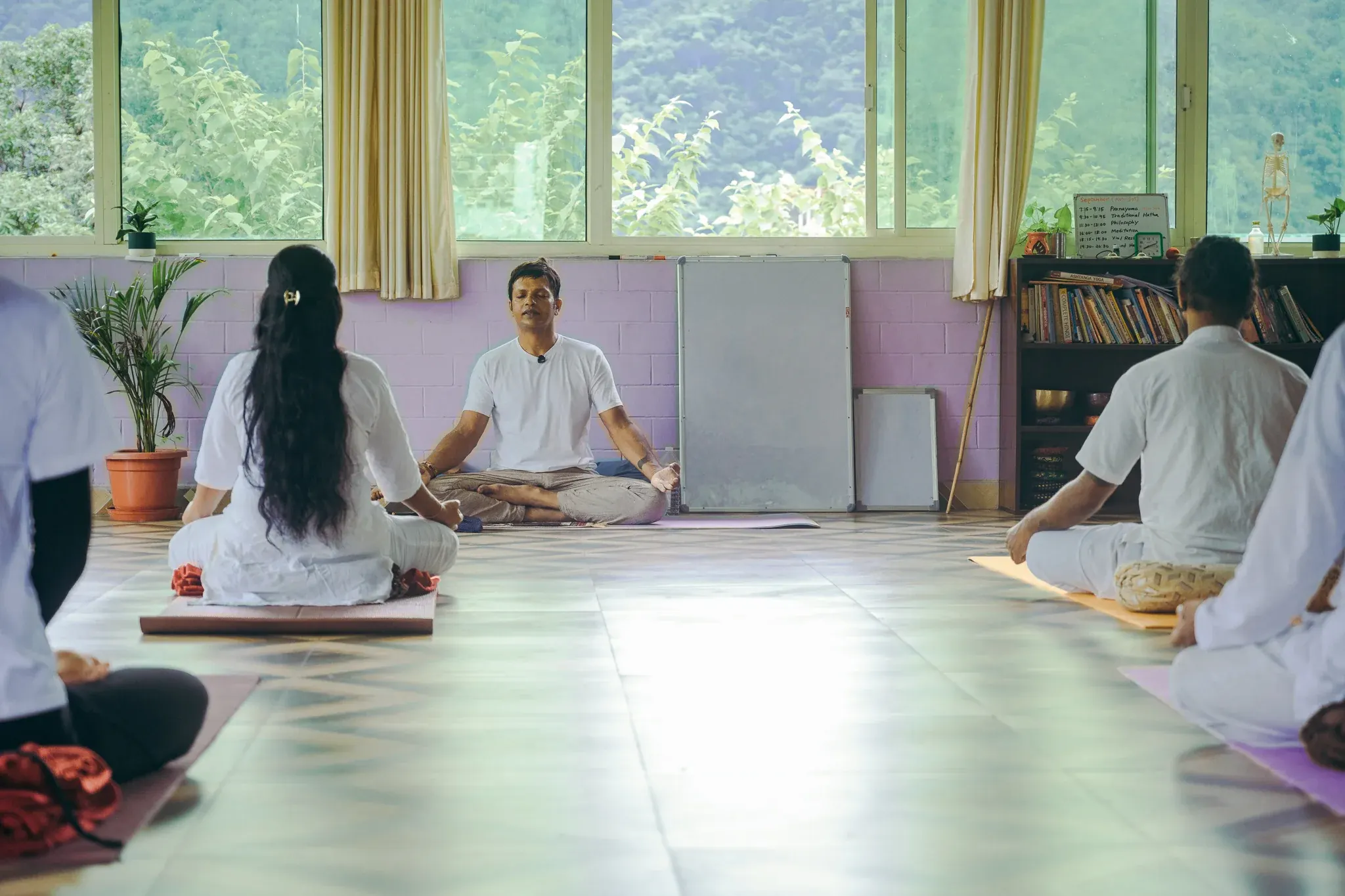
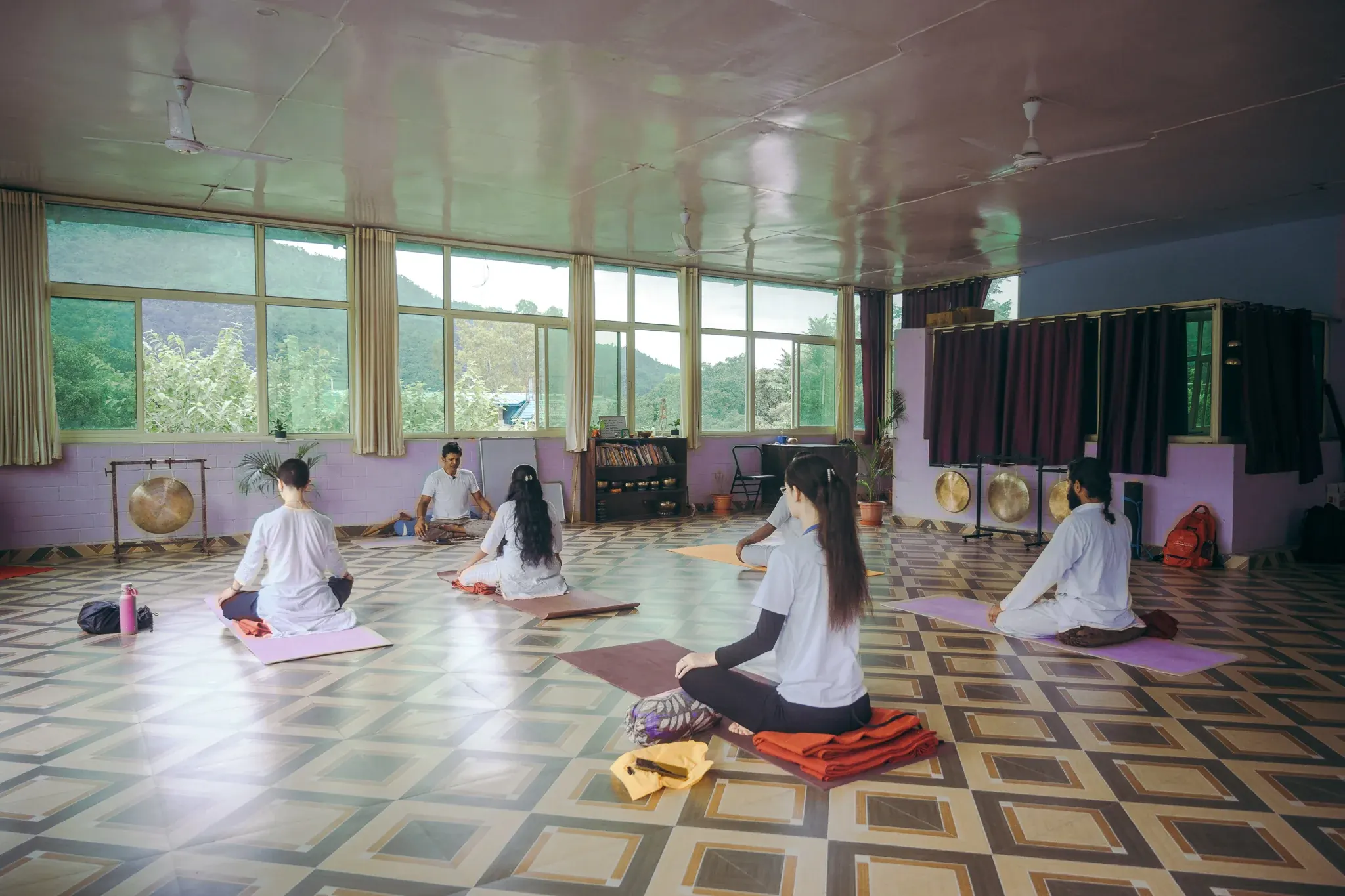
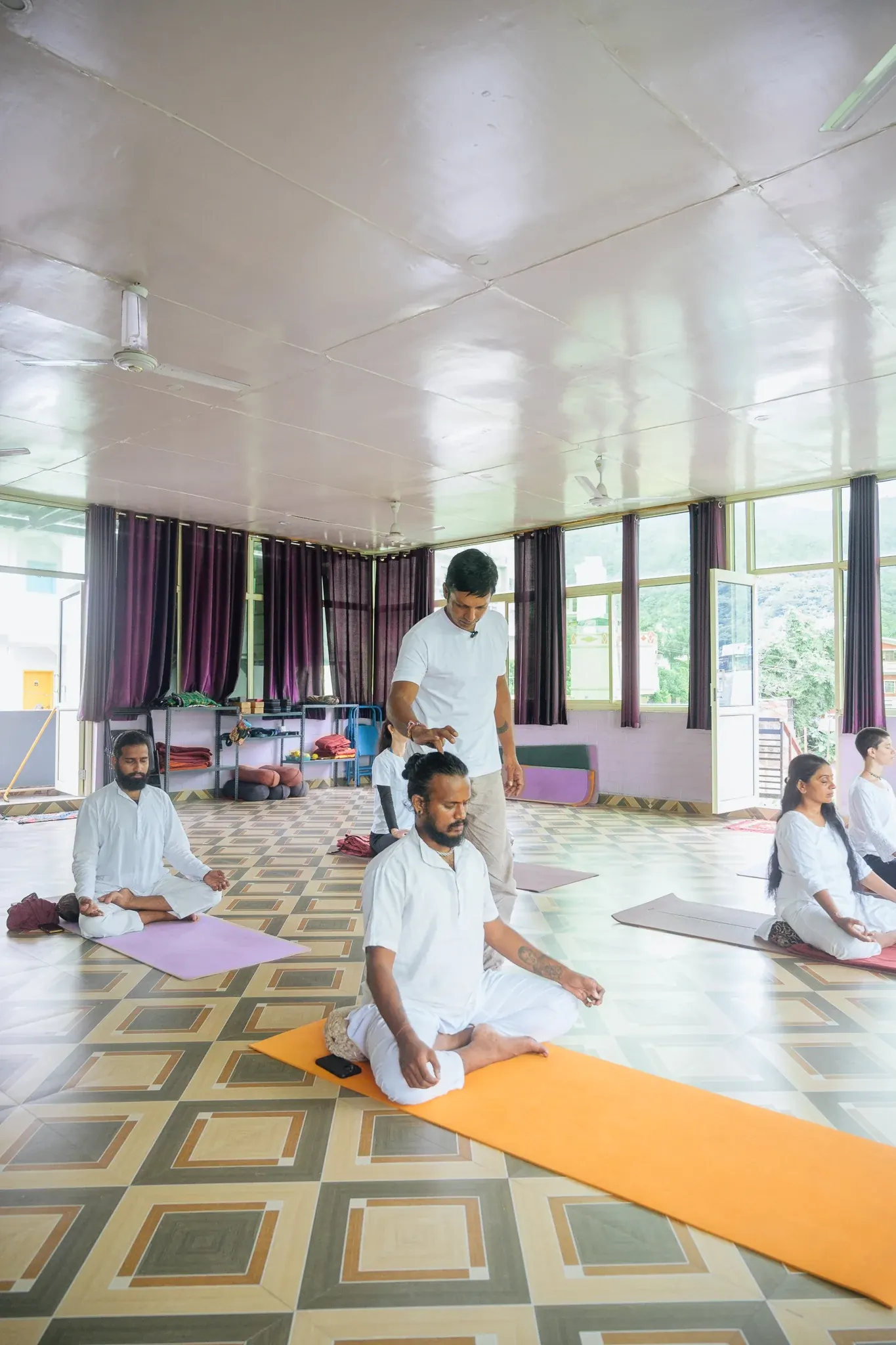
A practitioner pranayama course teaches you to practise the breath well yourself, with daily corrections and the theory behind each technique. Our Advanced Pranayama & Yoga Philosophy Course is this kind of course. It runs Monday to Saturday, with Sunday as a rest day. From 07:30 to 09:00 the group practises. From 11:30 to 13:00 there are corrections, more practice, and the science and philosophy of pranayama, drawing on classical texts such as Patanjali's Yoga Sutras and the Hatha Yoga Pradipika.
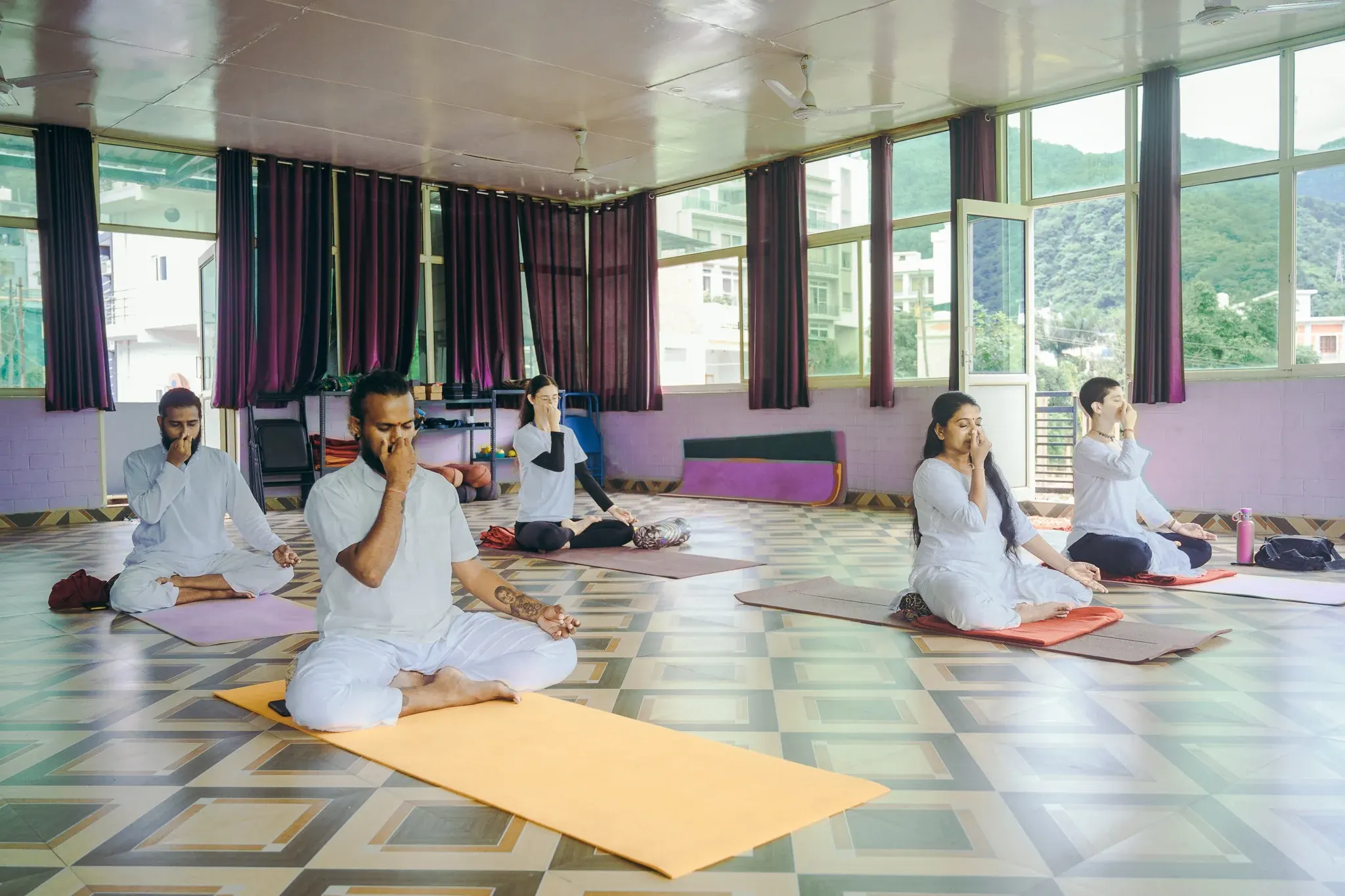
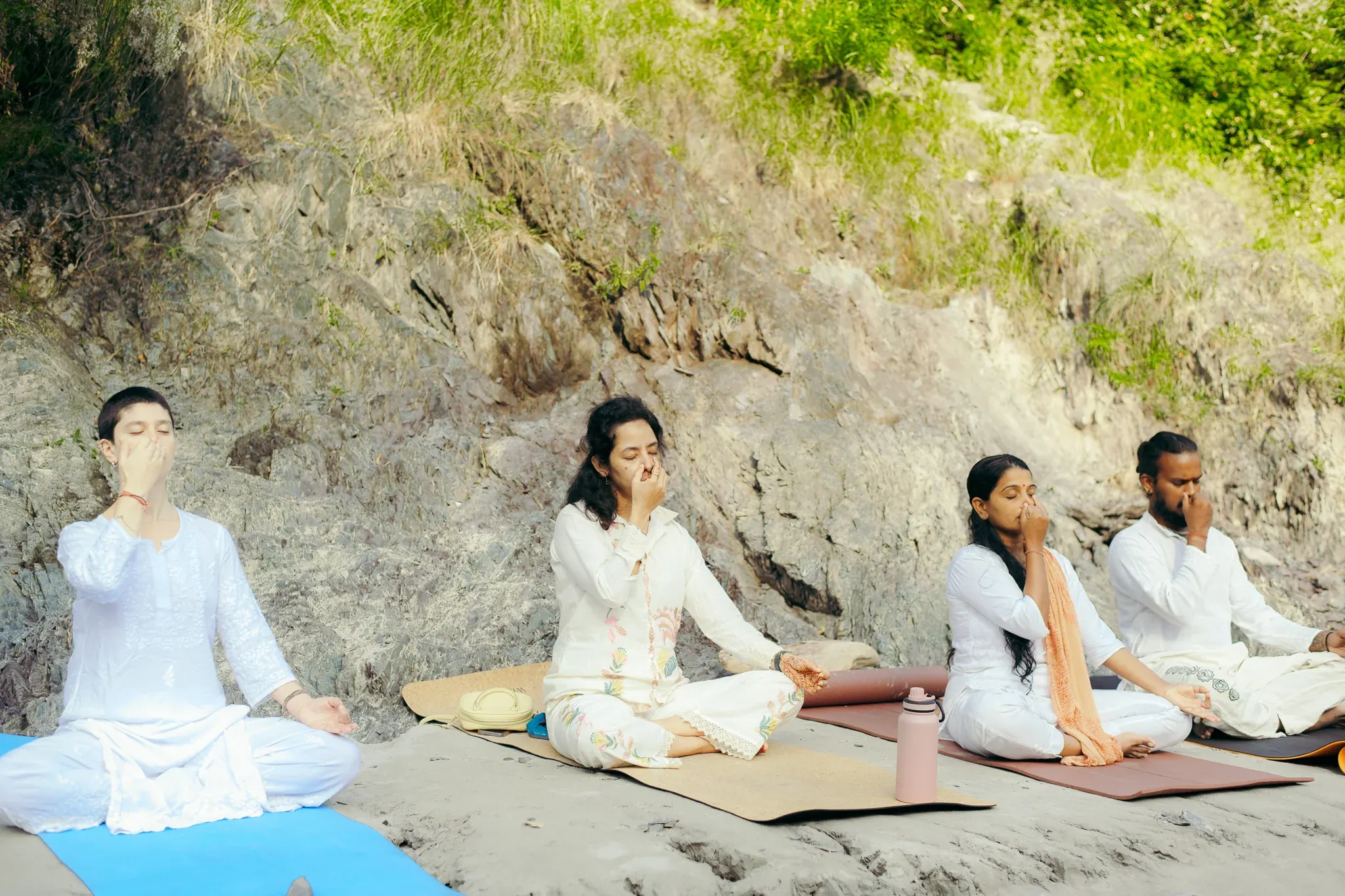
The first week covers kapalabhati, bhastrika, yogic breath, agnisara, ujjayi, the three bandhas, Nadi Shodhana with Chandra and Surya nadi bhedana, and antar and bahya kumbhaka with the bandhas. The 15-day and 30-day courses build on that with Maha bandha, the nadi pranayamas, the kumbhakas developed further and, in the month, the chakra pranayamas. In every course, mudras and bija mantras are coordinated with the practices, and you learn to observe how each practice influences the mind, the nervous system, the body and the energies.
It is not a teacher training, and no certificate is claimed for it. Its value is the depth and pace of your own practice.
What is a 50-hour pranayama or breathwork training?
A 50-hour training is a short, intensive programme that adds teaching skills to your own practice, usually in a single week. Fitting 50 hours into six or seven days means long days: practice in the morning, theory and teaching practice later, and often chanting or meditation in the evening. Many listings in India bundle accommodation and meals, because students are on site from early morning to night.
The content varies by school. Some lean towards modern breathwork methods; others stay close to classical pranayama. Look for three things in the curriculum: which breathing practices are taught and how retention is handled, how much of the week is teaching methodology, and who the teachers are.
How do the two formats compare on price?
The headline numbers are hard to compare because they include different things. Our practitioner course is tuition only: US$149 for 7 days, US$229 for 15 days and US$349 for 30 days, with an optional 20% deposit to reserve a place. A room and meals are extra and are your choice. A 50-hour training is usually priced as a package. Ours, the 50-Hour Advanced Pranayama & Bhakti Yoga Meditation Teacher Training, is US$600 all-inclusive: tuition, accommodation and meals.
For a fair comparison, compare like with like: tuition against tuition, or a package against our tuition plus the room and food you'd choose. Then ask each school how many hours a day are guided, what the group size is, and what the refund terms are.
Which other 50-hour trainings run in India?
Several schools run 50-hour pranayama or breathwork trainings, mostly in Rishikesh and Goa. These are short, factual notes from each school's own listing in 2026; prices are approx. and dates change, so confirm everything directly.
- Moola Yoga Rishikesh: a 6-day, 50-hour breathwork and pranayama training in Rishikesh. Its own listing gives tiered prices of approx. €400 without accommodation, €500 in a shared room and €600 in a private room, with early-booking discounts. The curriculum lists pranayama and breathwork techniques, bandhas and mudras, subtle anatomy, and integrating breathwork into classes.
- MSIYS (Multi Style Indian Yoga School), Goa: a 7-day, 50-hour holistic healing pranayama and meditation training. Its own listing gives approx. US$400 without food and accommodation, US$500 with one of the two, and US$600 with both.
- Anantadrishti Yoga, Rishikesh (our school): one batch, 2–8 November 2026, US$600 all-inclusive. It combines advanced pranayama, bija mantras and mudras, meditation, scientific understanding, teaching methodology and Bhakti Yoga, including daily puja, Vedic mantra chanting and kirtan.
If a training mentions a registration or certificate, check that claim directly with the body that issues it before you pay.
Who should choose a practitioner course?
Choose a practitioner course if your goal is your own practice and you want time to absorb it. Three guided hours a day, with a long gap between sessions, gives the nervous system time to settle before you add more. That matters most for kumbhaka, which we teach gradually with short, comfortable holds. A course also suits you if you can't fit a fixed batch into your plans, because ours starts every month, and if you'd like to choose your own room and food in Tapovan.
Some prior yoga or breathing practice helps, and healthy, sincere beginners can join the 7-day course. If you have more time, the 30-day course is the most thorough way to learn; our one-month course guide describes how the practice develops over the month.
Who should choose a 50-hour training?
Choose a 50-hour training if you already practise regularly and want to start sharing breath practices with others. Yoga teachers often use one to add pranayama to their classes. Expect a demanding week: a lot is packed into seven days, so arrive rested and with some practice behind you.
A short training is a starting point for teaching, not the end of learning. Many people find that a month of their own practice, before or after, makes the teaching skills far more useful.
Is either format safe for everyone?
Neither format is suitable for everyone, because intensive breathing and breath retention place real demands on the body. If you are pregnant, or have high blood pressure, a heart condition, recent surgery, glaucoma or raised eye pressure, epilepsy, or a serious psychiatric condition, consult your doctor before booking either one and tell the teacher. Neither a course nor a training is medical treatment.
How do you decide?
Ask yourself one question: do you want to practise, or to practise and teach? If it's the first, a practitioner course gives you more time per technique for less money. If it's the second, a 50-hour training gives you the teaching tools in one week. You can read about Somashekar, who has devoted more than fifteen years to the study and teaching of yoga, pranayama, yoga philosophy and Vedic chanting, before you write to us.
To start with your own practice, see the 7-day course section of the Advanced Pranayama & Yoga Philosophy Course page for the curriculum, dates and an enquiry form. Enquiring costs nothing, and a 20% deposit can reserve a place when you're ready.
Frequently asked questions
What is the difference between a pranayama course and a 50-hour pranayama training?
A practitioner course is built around your own practice: you learn the techniques, get corrected and study the theory. A 50-hour training adds teaching skills, such as sequencing a session, demonstrating and correcting others, and is usually a single intensive week. Choose the course to deepen your practice, and the training if you also want to start teaching breath work.
How much does a 50-hour pranayama or breathwork training cost in India?
Listings we found in 2026 ranged from approx. €400 without accommodation to approx. US$600 or €600 with a room and meals. Anantadrishti Yoga's 50-Hour Advanced Pranayama & Bhakti Yoga Meditation Teacher Training (2–8 November 2026) is US$600 all-inclusive: tuition, accommodation and meals. Always check what each price includes.
How much does a practitioner pranayama course cost in Rishikesh?
At Anantadrishti Yoga, the Advanced Pranayama & Yoga Philosophy Course costs US$149 (7 days), US$229 (15 days) or US$349 (30 days) in tuition. Accommodation and meals are not included; the school helps you find a room nearby.
Can I teach pranayama after a practitioner course?
A practitioner course is not a teacher training and does not lead to a teaching qualification. It gives you a sound personal practice, which is the foundation for teaching, but if you want to teach, a training with a teaching-methodology component is the better fit.
Is breathwork the same as pranayama?
Not quite. Pranayama is the traditional yogic discipline of the breath, described in texts such as Patanjali's Yoga Sutras and the Hatha Yoga Pradipika. Breathwork is a broader modern term that can include pranayama alongside newer methods. Many 50-hour trainings in India teach both.
CategoryPranayama