Pranayama guide · The locks
The Bandhas: Yoga’s Energy Locks
A bandha, a lock, is a steady, deliberate hold at one point of the body: the pelvic floor, the abdomen or the throat. In hatha yoga the bandhas are joined to pranayama and breath retention. This guide explains each lock, how it is engaged, what goes wrong, and when not to practise.
In short
The bandhas are three muscular locks used in yoga with the breath. Mula bandha is the root lock at the pelvic floor. Uddiyana bandha draws the abdomen in and up, with the lungs empty. Jalandhara bandha is the chin lock at the throat. Held together, they form Maha bandha, the great lock.
리시케시에서 배우기Mula, Uddiyana and Jalandhara bandha are taught in the first week of our 7-day pranayama course
The word and the practice
What is a bandha?
Bandha comes from a Sanskrit root meaning to bind, hold or lock. In practice a bandha is a contraction you can locate precisely, hold steadily and release completely. It is not a general clench: the rest of the body stays quiet.
The Haṭha Yoga Pradīpikā devotes its third chapter to ten mudras, practices of sealing and holding, and the three bandhas are among them, with Mahā Bandha. In the tradition they are said to contain prana and turn it toward the central channel, suṣumnā. Students usually begin with something more concrete: where each lock is, how it feels, and how it changes the breath.
Each lock is learned on its own before they are combined, and a steady, upright seat comes first.
The bandhas at a glance
Mula bandharoot lock
- Where
- Pelvic floor
- Breath, as commonly taught
- Any phase; often held through a retention
Uddiyana bandhaupward abdominal lock
- Where
- Abdomen, under the ribs
- Breath, as commonly taught
- Breath held out (bahya kumbhaka)
Jalandhara bandhachin lock
- Where
- Throat and chin
- Breath, as commonly taught
- Breath held in (antar kumbhaka)
Maha bandhathe great lock
- Where
- All three together
- Breath, as commonly taught
- Usually with the breath held out
| Lock | Where | Breath, as commonly taught |
|---|---|---|
| Mula bandharoot lock | Pelvic floor | Any phase; often held through a retention |
| Uddiyana bandhaupward abdominal lock | Abdomen, under the ribs | Breath held out (bahya kumbhaka) |
| Jalandhara bandhachin lock | Throat and chin | Breath held in (antar kumbhaka) |
| Maha bandhathe great lock | All three together | Usually with the breath held out |
The root lock
Mula bandha
Mūla means root. Mula bandha is a gentle upward lift at the pelvic floor, at the base of the trunk. It is the quietest of the three locks, and in pranayama it is often held right through a retention, whether the breath is in or out.
The Haṭha Yoga Pradīpikā describes it as pressing the perineum with the heel and contracting, so that apāna, the downward-moving breath, is drawn upward.
Cues
- Think of a lift, not a squeeze.
- The movement is felt at the centre of the pelvic floor, not at the buttocks or the abdomen.
Common mistakes
- Squeezing the buttocks or the thighs
- Tightening the abdomen along with it
- Holding the breath without meaning to
- Gripping so hard that the lock cannot be fully released
How to practise Mula bandha
Find a steady seat
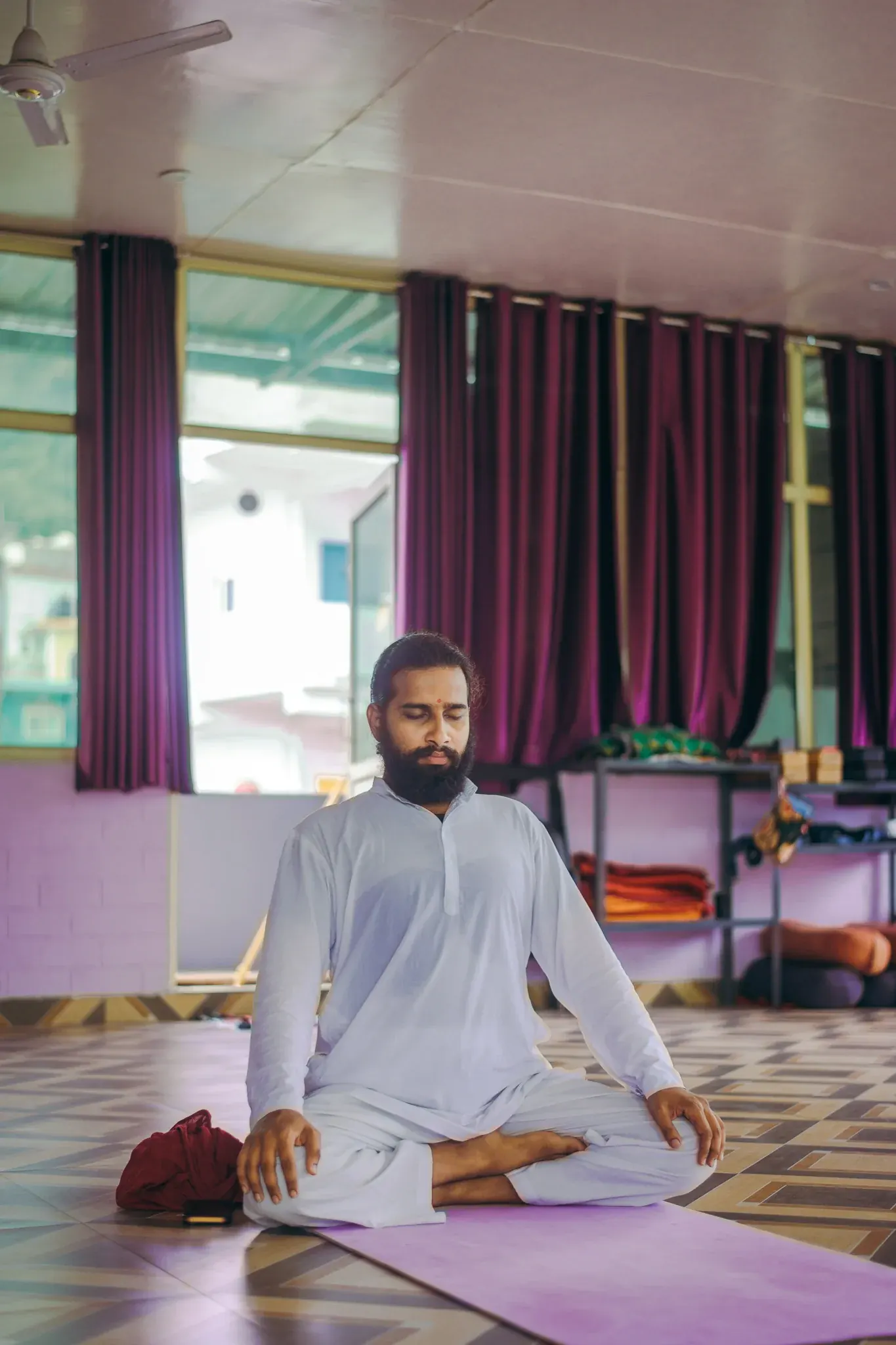
Sit upright in a steady cross-legged posture, with the spine long and the hands on the knees. Siddhasana, in which one heel presses the perineum, is the traditional seat; any steady seat will do to begin.
Settle and locate
Close the eyes and let the breath settle. Bring your attention to the centre of the pelvic floor, the perineum.
Lift
On an exhalation, gently draw the pelvic floor in and up, as if lifting it toward the navel.
Hold lightly
Hold the lift lightly for a few breaths, keeping the buttocks, thighs and abdomen soft. Keep breathing.
Release
Release completely and rest for a few breaths. Repeat five to ten times.
The upward abdominal lock
Uddiyana bandha
Uḍḍīyāna means flying up. With the lungs empty, the abdomen is drawn back toward the spine and up under the ribs, leaving a hollow below the rib cage. Because the lift depends on empty lungs, it is practised with the breath held out, in bahya kumbhaka.
The Haṭha Yoga Pradīpikā describes it as drawing the abdomen back, above the navel, and explains the name: through this lock, prana 'flies up' the central channel.
Cues
- The hollow comes from the mock inhalation, not from pushing the belly in with force.
- If the next breath gasps in, the hold was too long.
Common mistakes
- Trying it with air still in the lungs
- Letting air sneak in during the hold
- Forcing the abdomen in with muscular effort
- Practising after a meal
How to practise Uddiyana bandha
Prepare standing
Practise on an empty stomach. To learn it, stand with the feet hip-width apart and the knees slightly bent, lean forward a little and rest the hands on the thighs.
Breathe out completely
Breathe in, then breathe out fully, emptying the lungs without strain.
Make a mock inhalation
Holding the breath out, expand the chest as if breathing in, without letting any air in. The abdomen draws in and up by itself.
Hold briefly
Hold only while it is comfortable, a few seconds at first. Keep the throat closed and the face soft.
Release, then breathe in
Relax the abdomen first, straighten up, and only then breathe in slowly. Take a few normal breaths before the next round.
Move to sitting
Once the standing form is easy, learn it seated, as it is used in pranayama.
The chin lock
Jalandhara bandha
Jāla means net or web, and dhara holding. In Jalandhara bandha the throat is gently contracted and the chin lowered toward the chest, with the back of the neck long. It is the lock of the held-in breath: traditionally it is applied after an inhalation, in antar kumbhaka.
The Haṭha Yoga Pradīpikā describes it as contracting the throat and placing the chin firmly on the chest, links its name to the 'net' of channels that it binds, and places it at the end of inhalation.
Cues
- The neck lengthens; the chin moves down and slightly back.
- A gentle swallow before the lock helps you feel the throat contract.
Common mistakes
- Dropping the head and collapsing the chest
- Straining the neck
- Breathing out before the head is raised
How to practise Jalandhara bandha
Sit upright
Sit in a steady cross-legged posture with the hands on the knees and the spine upright.
Breathe in and hold
Breathe in to a comfortable fullness and hold the breath.
Lower the chin
Lengthen the back of the neck and lower the chin toward the top of the breastbone, gently contracting the throat. Some teachers ask you to straighten the arms and lift the shoulders slightly to deepen the lock.
Hold briefly
Hold only while it is comfortable.
Head up, then breathe out
Release the throat and raise the head first. Only then breathe out slowly.
The great lock
Maha bandha
Mahā means great. Maha bandha, the great lock, is most often taught today as the three locks held together: Mula, Uddiyana and Jalandhara bandha. Because Uddiyana needs empty lungs, the full form is usually practised with the breath held out. Schools differ in the details. The Haṭha Yoga Pradīpikā’s own description, in its third chapter, is of a seated practice in which one heel presses the perineum, the chin lock is applied and the breath is held.
Maha bandha asks for each lock to be steady on its own first. One common order is to breathe out, then apply Jalandhara, Uddiyana and Mula in turn; to release them in reverse order; and to breathe in only once the head is raised and the abdomen soft. Holds stay short, and the same safety notes apply as for each lock.
In our course, Maha bandha is a second-week practice: the 15-day course joins it to Bhastrika and to slow, deep breaths.
Preparation for Uddiyana
Agnisara: training the abdomen
Agni means fire. Agnisara, often glossed as fire cleansing and also called agnisar kriya, is a cleansing practice and the usual preparation for Uddiyana bandha. With the breath held out, the abdominal wall is drawn in and released in a steady rhythm, several times on one held exhalation.
It trains control of the abdomen on an empty breath, which is exactly what Uddiyana needs.
How to practise Agnisara
Empty stomach
Practise first thing in the morning, before eating. Stand as for Uddiyana bandha, knees bent and hands on the thighs, or sit.
Breathe out
Breathe out completely and hold the breath out.
Move the abdomen
Draw the abdomen in and release it, again and again, in a smooth, steady rhythm, without letting any air in.
Stop in time
Before you need to breathe, stop, relax the abdomen completely and breathe in slowly.
Rest between rounds
Take a few natural breaths between rounds. Begin with a few movements and a few rounds, and build up gradually.
Locks and breath
The bandhas with pranayama and kumbhaka
On their own, the bandhas are a study in attention and precise muscular control. Their traditional place is within pranayama, joined to breath retention.
The Haṭha Yoga Pradīpikā says that the three locks together turn prana into the central channel. For the retentions themselves, read our guide to kumbhaka.
- Antar kumbhaka, the breath held in
- Jalandhara bandha, with Mula bandha held through the retention.
- Bahya kumbhaka, the breath held out
- Uddiyana bandha, with Mula and often Jalandhara bandha.
- Maha bandha, at a later stage
- All three locks together, usually with the breath held out.
As practice matures, the locks are joined to whole techniques. In the second week of our course, for example, Kapalabhati and Ujjayi are practised with Mula and Uddiyana bandha, and Bhastrika and slow, deep breaths with Maha bandha. Students observe how each combination influences the mind, the nervous system, the body and the energy.
Safety
Who should not practise the bandhas
The bandhas, especially with breath retention, change the pressure inside the abdomen and chest. Learn them with a teacher and never force a lock. This guide is not medical advice. If any of the following applies to you, do not practise them on your own: consult your doctor first, and tell your teacher before any class.
- Pregnancy
- High blood pressure
- Heart conditions
- Recent surgery, especially to the abdomen, chest, eyes or head
- Glaucoma or raised eye pressure
- Epilepsy
- Serious psychiatric conditions
Panic disorder or severe anxiety: when the locks are joined to breath-holding, keep the holds short and untimed, under guidance, and stop at the first sign of distress.
Uddiyana bandha and Agnisara: also avoid them with a hernia, a stomach or intestinal ulcer, or soon after a meal.
Many traditional teachers advise not practising Uddiyana bandha or Agnisara during menstruation. Follow your teacher's guidance and your own experience.
Stop at once and breathe normally if you feel dizzy, light-headed, breathless, any pain, or pressure in the head, eyes or ears.
Classical sources
What the texts say
पार्ष्णिभागेन सम्पीड्य योनिमाकुञ्चयेद्गुदम् । अपानमूर्ध्वमाकृष्य मूलबन्धोऽभिधीयते ॥
pārṣṇi-bhāgena sampīḍya yonim ākuñcayed gudam | apānam ūrdhvam ākṛṣya mūla-bandho 'bhidhīyate ||
Pressing the perineum with the heel, contract the anus and draw apāna, the downward breath, upward. This is called Mūla bandha.
- Haṭha Yoga Pradīpikā, chapter 3
- Presents ten mudras, among them Mahā Bandha, Uḍḍīyāna, Mūla bandha and Jālandhara bandha, and describes how each is done.
- Haṭha Yoga Pradīpikā, chapter 2
- Joins the bandhas to kumbhaka: Jālandhara at the end of inhalation, Uḍḍīyāna at the end of retention.
Verse numbers differ slightly between editions of the Haṭha Yoga Pradīpikā. Translations on this page are our own plain renderings.
Lower Tapovan, Rishikesh
Learning the bandhas in Rishikesh
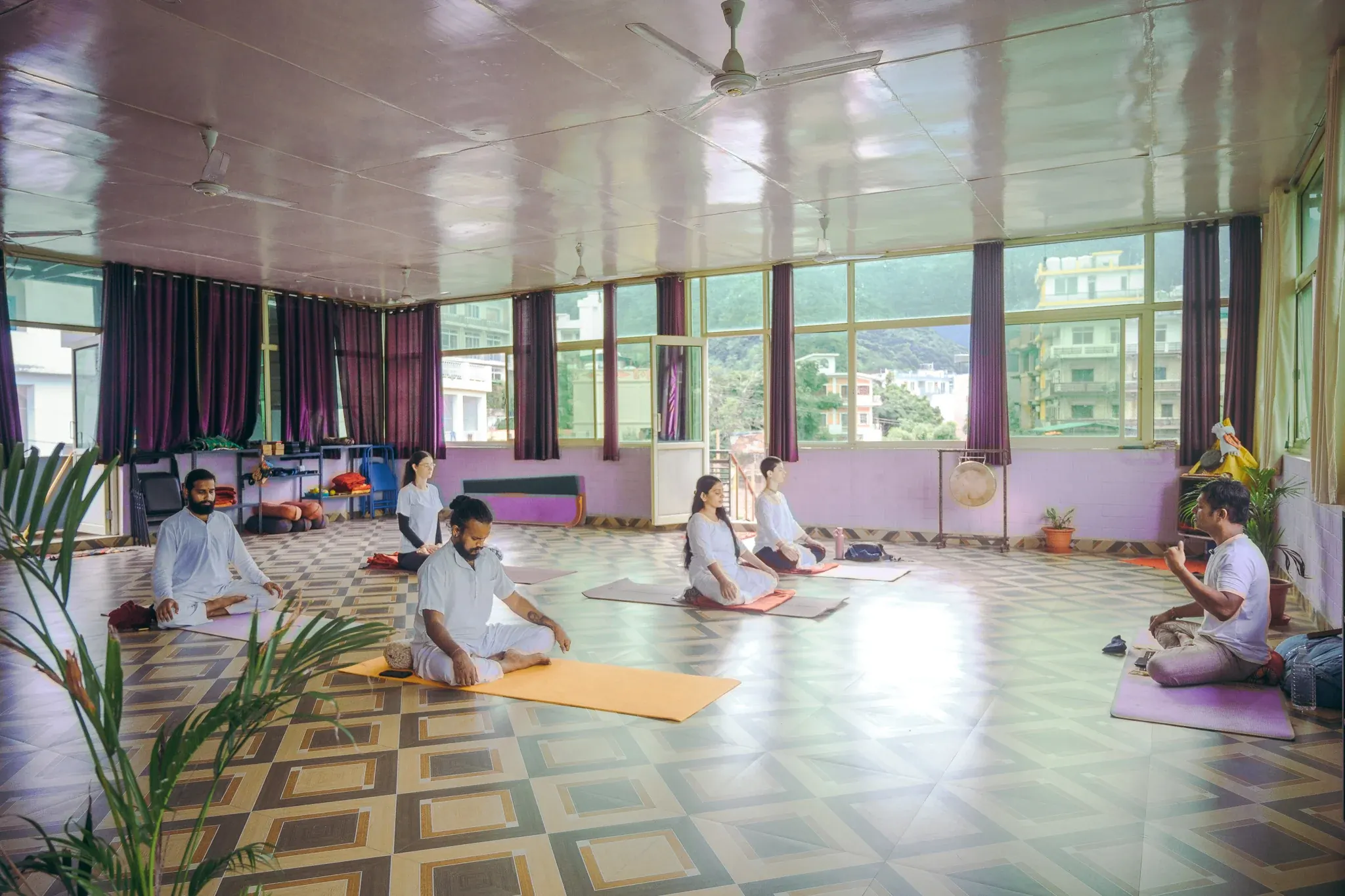
At Anantadrishti Yoga in Lower Tapovan, Rishikesh, beside the Ganga, the three bandhas and Agnisara are part of the first week: they are taught in our 7-day pranayama course. You learn where each lock is held and how it is released, and kumbhaka is practised with the bandhas from the start.
Each teaching day has two sessions. The 07:30–09:00 session is for practice. The 11:30–13:00 session covers corrections, practice, and the science and philosophy of pranayama. Maha bandha follows in the second week, for students on the 15-day or 30-day course.
Advanced Pranayama Course
Go deeper: Maha bandha and the nadi pranayamas
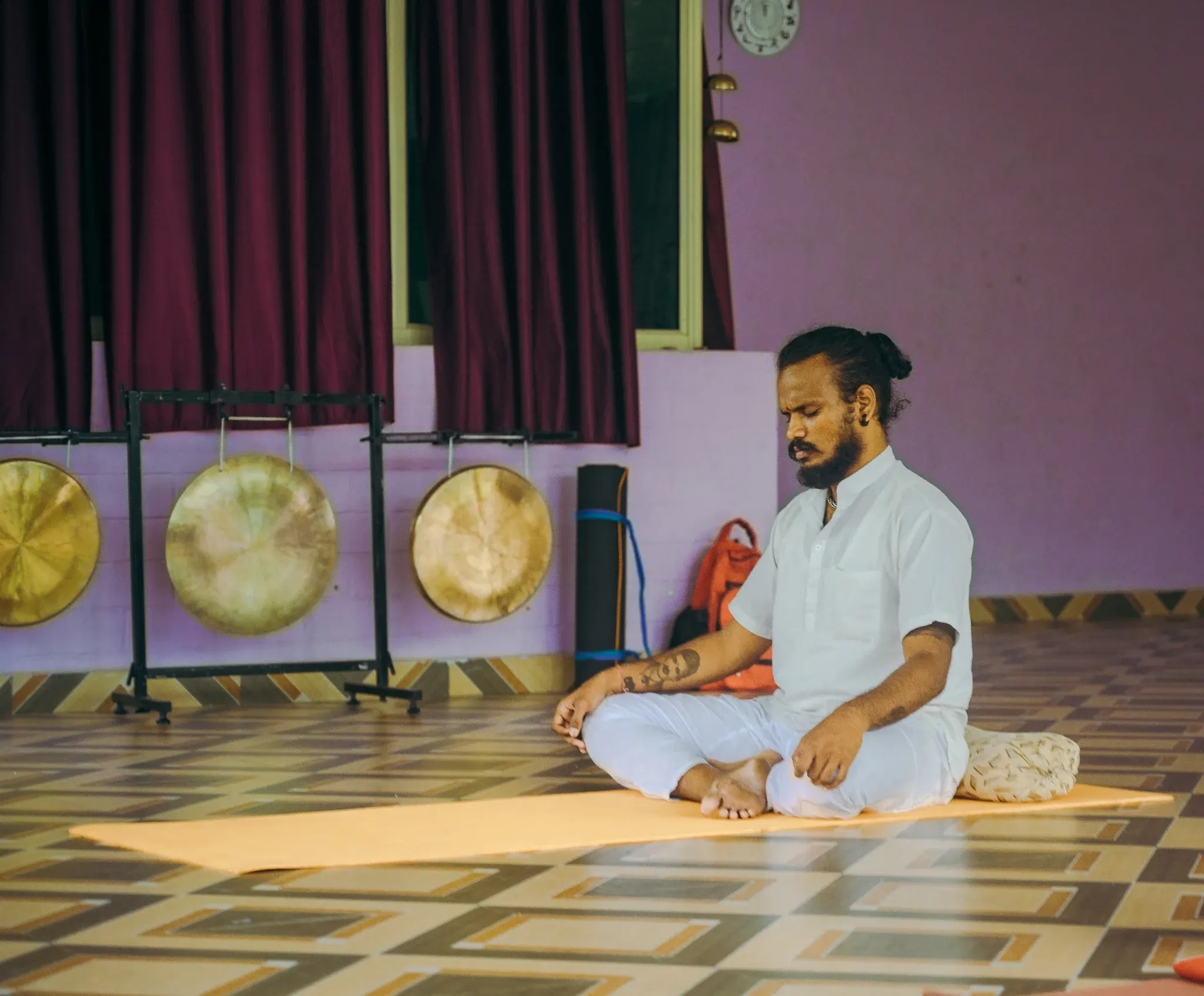
The second week of our advanced pranayama course joins the practices to the locks, including Kapalabhati and Ujjayi with Mula and Uddiyana bandha, and Bhastrika and deep breaths with Maha bandha, and adds the nadi pranayamas.
- Practice 07:30–09:00
- Study 11:30–13:00
- A new start every month
TuitionUS$229₹20,000
Questions
The bandhas: frequently asked
What are the three bandhas in yoga?
What is Maha bandha?
How do I engage Mula bandha?
Is Uddiyana bandha done with the breath in or out?
What is Agnisara, and how does it relate to Uddiyana bandha?
Who should not practise the bandhas?
Where can I learn the bandhas in Rishikesh?
Keep reading
Related pranayama guides
- Kumbhaka: Breath RetentionAntar, bahya and kevala kumbhaka, with the locks.
- Kapalbhati PranayamaThe skull-shining breath, later practised with Mula and Uddiyana bandha.
- Ujjayi PranayamaThe victorious breath, later joined to Mula and Uddiyana bandha.
- Bhastrika with Maha BandhaThe bellows breath with the three locks.
- Ujjayi with Maha BandhaThe victorious breath with the three locks.
- All pranayama guidesEvery technique guide on one page.