Pranayama
Where to Learn Kumbhaka (Breath Retention) Safely in Rishikesh
How kumbhaka, breath retention, is taught safely in Rishikesh: short, comfortable holds built up gradually with the bandhas, what the classical texts say, who should not practise it, and the questions to ask any school.
Somashekar
Written by Somashekar, founder and head teacher of Anantadrishti Yoga. Disclosure: this is our own school, and we've tried to describe how we teach kumbhaka plainly, including who shouldn't practise it.
Kumbhaka, the pause or retention of the breath, is the part of pranayama people are most curious about and most likely to get wrong on their own. Videos make long holds look easy, and breath-hold challenges make them look like a test of will. The classical texts and good teachers say the opposite: the hold is meant to grow out of a steady, unforced breath. This guide explains how kumbhaka is taught safely, where it fits in a course in Rishikesh, and what to ask before you sign up anywhere.
At a glance
| Question | At Anantadrishti Yoga |
|---|---|
| Where is kumbhaka taught? | Inside the Advanced Pranayama & Yoga Philosophy Course, Lower Tapovan, Rishikesh |
| First week (7-day course) | Antar kumbhaka (breath held in) and bahya kumbhaka (breath held out), practised with the bandhas |
| Days 8–15 (15-day course) | The kumbhakas developed further, with Maha bandha and the nadi pranayamas |
| Days 16–30 (30-day course) | Advanced pranayama practices and the chakra pranayamas |
| How long are the holds? | Short and comfortable at first, never forced; they grow with your capacity |
| Schedule | Monday to Saturday, 07:30–09:00 and 11:30–13:00; Sunday is a rest day |
| Tuition | US$149 (7 days) / US$229 (15 days) / US$349 (30 days), tuition only |
| Not suitable for | Pregnancy, high blood pressure, heart conditions, recent surgery, glaucoma, epilepsy, serious psychiatric conditions, unless your doctor agrees |
What is kumbhaka?
Kumbhaka is the deliberate pause of the breath within pranayama, either after breathing in or after breathing out. The word comes from kumbha, a pot: when the breath is held in, the torso is like a full pot. Holding the breath in, after the inhalation, is called antar (or antara) kumbhaka. Holding it out, after the exhalation, is bahya kumbhaka. Our kumbhaka guide explains both in more detail, with the ratios teachers use.
Kumbhaka is rarely practised on its own. It sits inside other pranayamas, such as Nadi Shodhana, and it is closely tied to the bandhas: Jalandhara, the chin lock; Uddiyana, the upward abdominal lock; and Mula, the root lock. Learning the locks well is part of learning the hold.
What do the classical texts say about breath retention?
The classical texts treat retention as central to pranayama and insist that it be developed slowly. In the Yoga Sutras, Patanjali describes pranayama as external, internal or suspended, and regulated by place, time and number (Yoga Sutra 2.50); in the next sutra he names a fourth kind that goes beyond the external and the internal. Retention is built into the definition of the practice.
The Hatha Yoga Pradipika gives pranayama a whole chapter. It lists eight classical kumbhakas: Surya bhedana, Ujjayi, Sitkari, Sitali, Bhastrika, Bhramari, Murchha and Plavini (2.44). Earlier in the same chapter it gives the image every pranayama teacher knows: just as lions, elephants and tigers are tamed gradually, so the breath should be brought under control slowly (2.15). We read verses like these in the late-morning session of the course, beside what students have just felt in their own practice. Our article on how philosophy is taught in Rishikesh describes that session.
How is kumbhaka taught safely?
Kumbhaka is taught safely when the holds start short, stay comfortable and lengthen only as your steadiness grows. In practice, that means a few things:
- The breath comes first. Before any hold, you learn to breathe slowly and evenly through the nose, with ujjayi and yogic breath.
- The locks come with the hold. Antar and bahya kumbhaka are practised with the bandhas, so the hold has a shape and a clear way out.
- The release tells the truth. If you gasp, rush the next breath or tense your face and shoulders, the hold was too long. A good hold ends in a smooth, controlled breath.
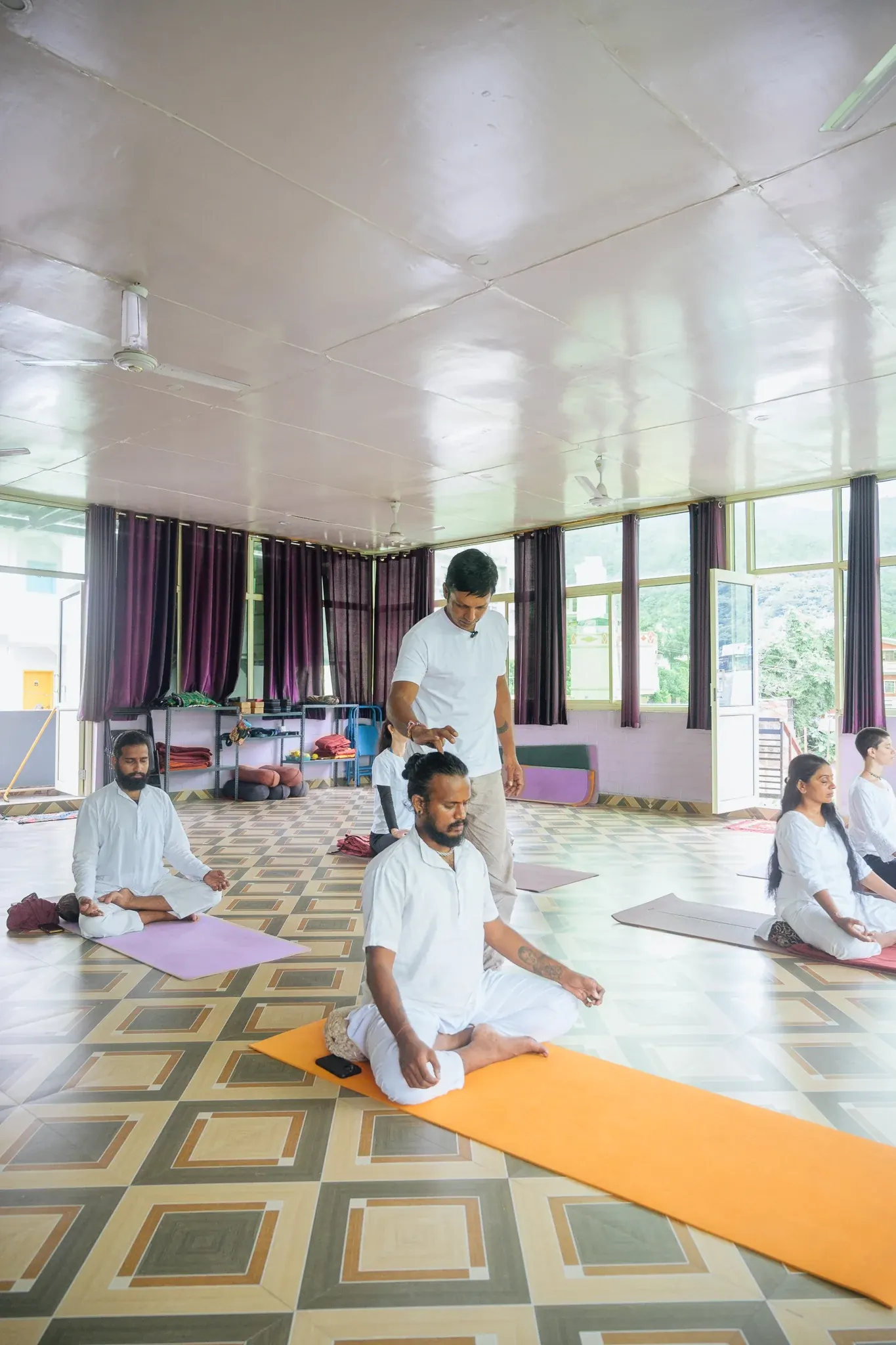
- A teacher watches. Corrections matter more here than anywhere else in pranayama. Small faults in posture or effort are easy to miss on your own.
- No counting contests. The number on a timer is not the point. Steadiness is.
If you feel dizzy, light-headed or anxious during a hold, stop, breathe normally and tell your teacher. That isn't failure; it is information about where your practice is today.
How is kumbhaka taught in the Advanced Pranayama & Yoga Philosophy Course?
At Anantadrishti Yoga, kumbhaka is introduced in the first week and then deepened stage by stage. All three course lengths start together on the 1st of the month (Monday the 2nd when the 1st is a Sunday), so everyone shares the same foundation.
Days 1–7: the foundation
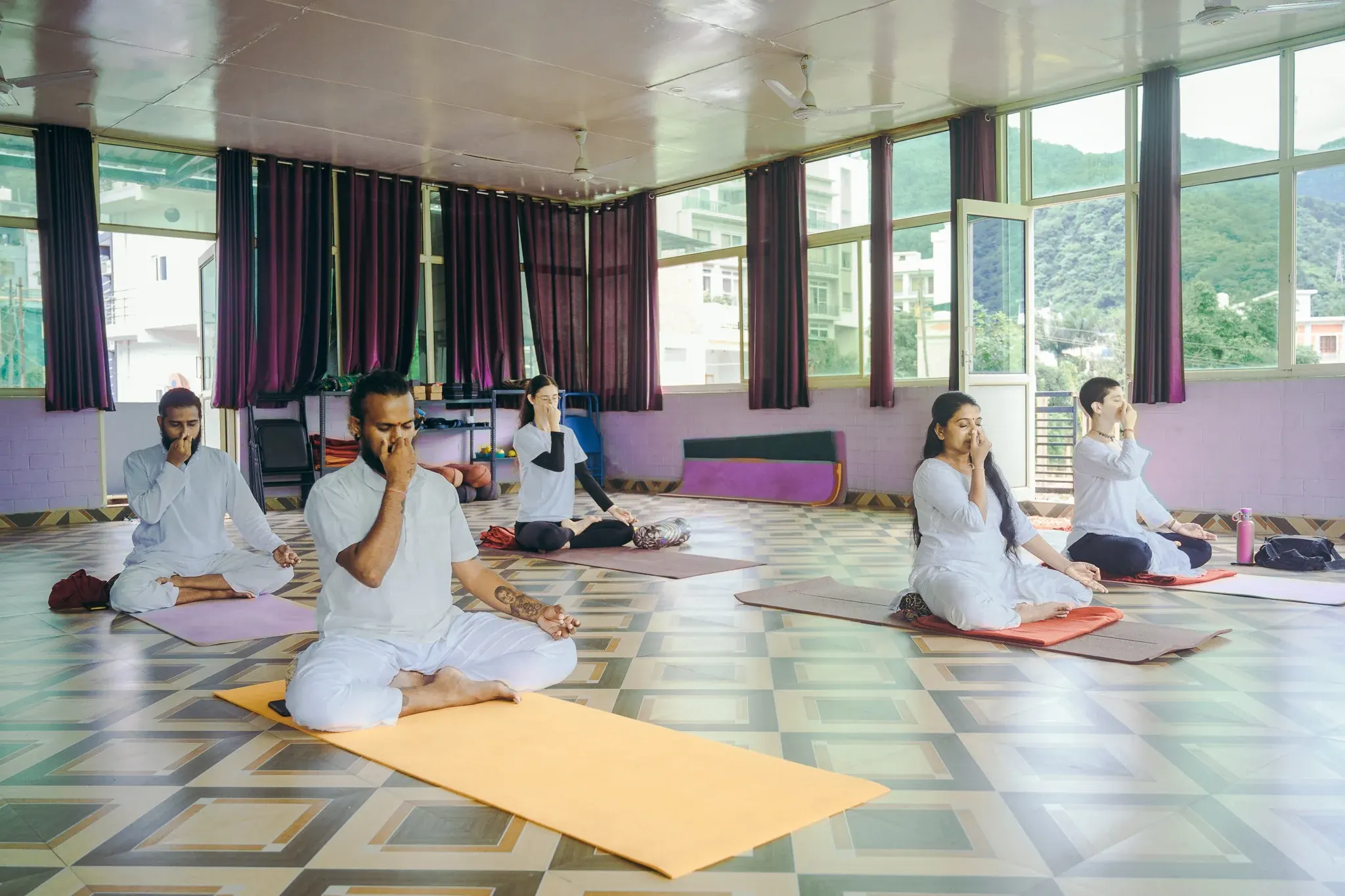
The first week teaches kapalabhati, bhastrika, yogic breath, agnisara and ujjayi; the three bandhas; Nadi Shodhana with Chandra and Surya nadi bhedana; and antar and bahya kumbhaka with the bandhas. The holds in this week are deliberately short. This is the whole of the 7-day course.
Days 8–15: the kumbhakas developed
In the second stage, the practices you know are joined to the locks: kapalabhati and ujjayi with Mula and Uddiyana bandha, bhastrika and deep breathing with Maha bandha, Nadi Shodhana with Muladhara and Ida and Pingala nadi stimulation, and the nadi pranayamas. The kumbhakas are developed further as your capacity grows. This is where the 15-day course ends.
Days 16–30: advanced practices
The 30-day course adds advanced pranayama practices and the chakra pranayamas. Throughout every stage, mudras and bija mantras are coordinated with the practices, and you learn to observe how each practice influences the mind, the nervous system, the body and the energies.
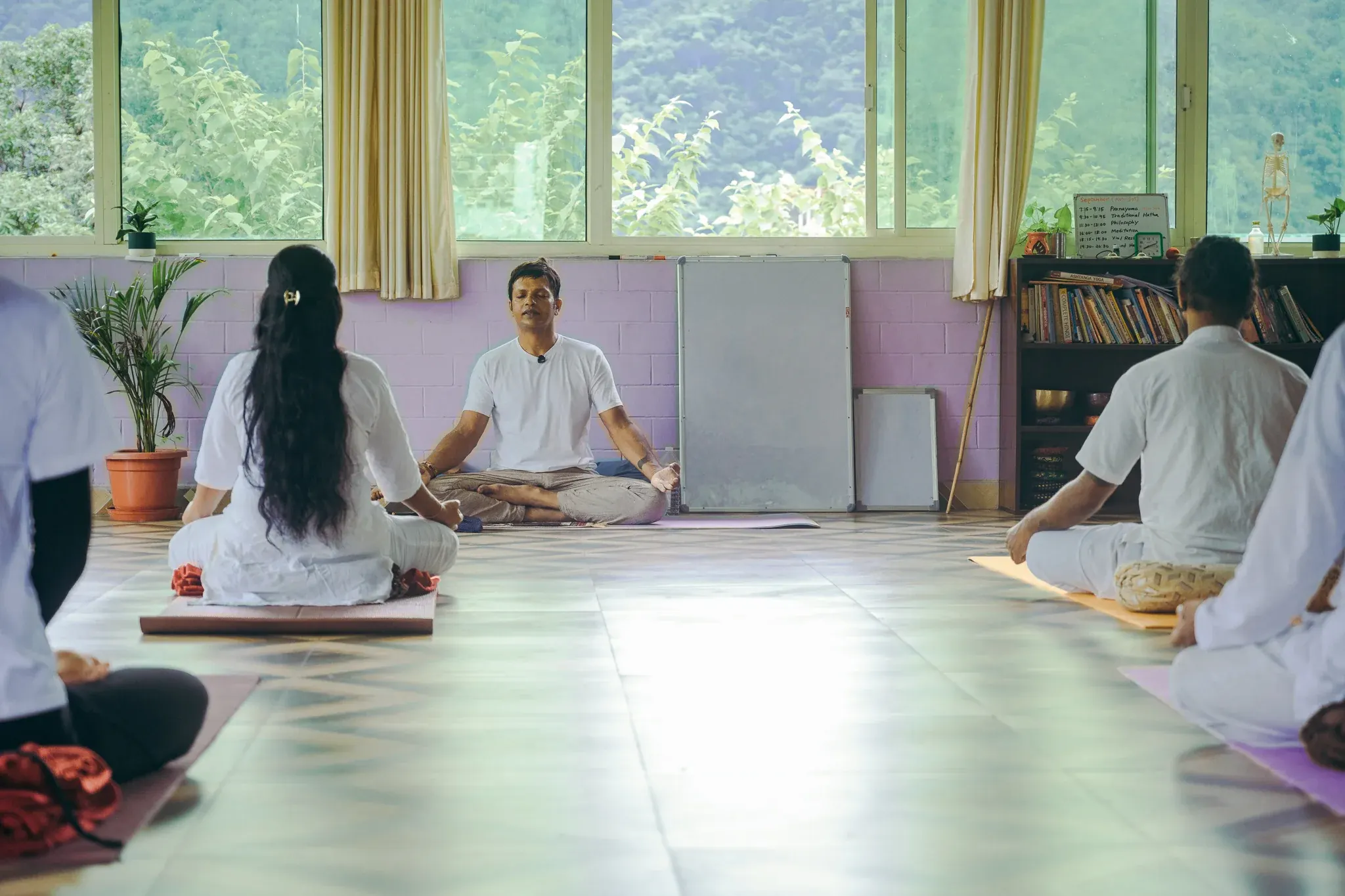
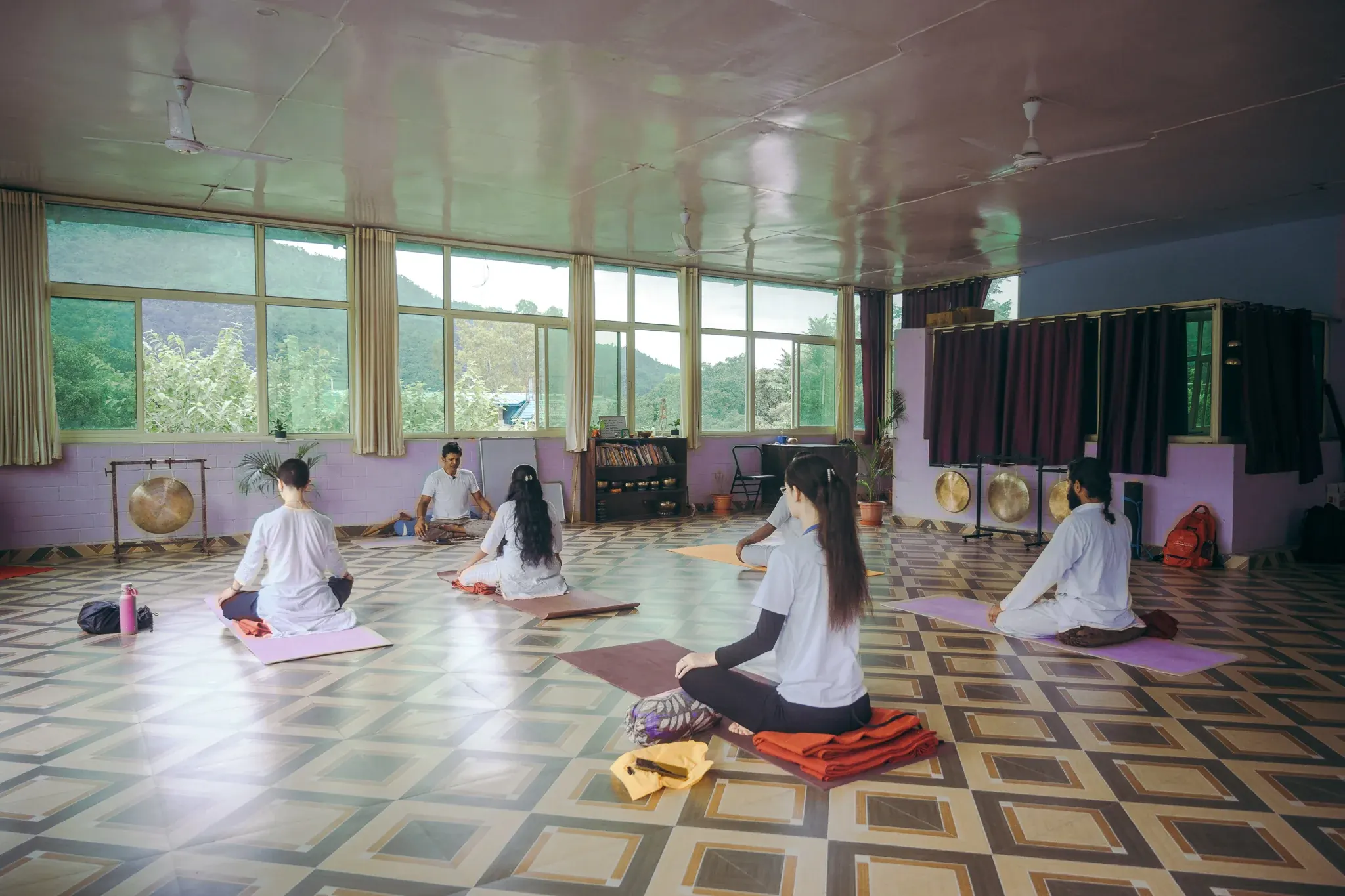
Every teaching day has two sessions: 07:30–09:00 for practice, and 11:30–13:00 for corrections and the science and philosophy of pranayama. Teaching is in English, in person, in small groups, led by Somashekar, who has devoted more than fifteen years to the study and teaching of yoga, pranayama, yoga philosophy and Vedic chanting.
Who should not practise kumbhaka?
Breath retention is not suitable for everyone, and a careful school will say so before you book. If you are pregnant, or have high blood pressure, a heart condition, recent surgery, glaucoma or raised eye pressure, epilepsy, or a serious psychiatric condition, consult your doctor before booking a course that includes kumbhaka, and tell the teacher when you enquire. Pranayama is a practice, not medical treatment, and nothing in a course replaces your doctor's advice.
If you are healthy but new, you don't need to wait. Some prior yoga or breathing practice helps, and healthy, sincere beginners can join the 7-day course. Describe your experience when you enquire so the teacher knows where you're starting from.
Can you learn kumbhaka online or from a book?
You can learn about kumbhaka from a book, but the practice itself is best learned in person. Reading helps you understand the terms and the reasons. What a book or a video can't do is see that your shoulders lift during the hold, that your chin lock is pinching the throat, or that your release is turning into a gasp. Those are the details a teacher corrects every day in a course. If you start at home, keep the holds very short and wait to go further until someone can watch you.
What should you ask any school about kumbhaka?
Ask every school the same few questions and compare the answers:
- When is kumbhaka introduced, and how long are the first holds? Listen for "gradually" and "comfortable", not a target number.
- Is it taught with the bandhas? Ask how Jalandhara, Uddiyana and Mula bandha are taught alongside it.
- How many hours a day are guided practice, and is there time for corrections?
- Who is it not suitable for? A careful school will name the health conditions above.
- Who teaches, and for how long have they practised?
Our guide to the pranayama courses in Rishikesh lists other options you might compare, and the one-month course guide explains how the practice develops over 30 days.
Where should you start?
Start with the time you have. A week gives you antar and bahya kumbhaka with the bandhas, learned properly. Fifteen days or a month give the holds time to mature with daily corrections. Tuition is US$149 (₹13,000) for 7 days, US$229 (₹20,000) for 15 days and US$349 (₹30,000) for 30 days; accommodation isn't included, but we help you find a room nearby in Tapovan.
If that sounds right, the Advanced Pranayama & Yoga Philosophy Course page has the full curriculum, upcoming dates and an enquiry form. Enquiring costs nothing.
Frequently asked questions
Where can I learn kumbhaka in Rishikesh?
Kumbhaka is usually taught inside a pranayama course rather than as a course of its own. At Anantadrishti Yoga in Lower Tapovan, Rishikesh, antar and bahya kumbhaka with the bandhas are part of the first week of the Advanced Pranayama & Yoga Philosophy Course (7, 15 or 30 days, from US$149 tuition), and the kumbhakas are developed further in the 15-day and 30-day courses.
Is kumbhaka safe for beginners?
It can be, when it is taught gradually. At Anantadrishti Yoga, healthy, sincere beginners can join the 7-day course, and kumbhaka starts with short, comfortable holds that are never forced. Breath retention is not suitable for everyone: if you are pregnant or have high blood pressure, a heart condition, recent surgery, glaucoma or raised eye pressure, epilepsy or a serious psychiatric condition, consult your doctor first and tell the teacher.
How long should I hold my breath in kumbhaka?
Only as long as stays comfortable. A hold is too long if you need to gasp, rush the next breath or strain your face and shoulders. The length of the hold grows slowly with regular practice and a teacher's corrections; it is never a target to push towards.
What is the difference between antar and bahya kumbhaka?
Antar kumbhaka is holding the breath in, after an inhalation. Bahya kumbhaka is holding the breath out, after an exhalation. In the course at Anantadrishti Yoga both are practised with the bandhas, the body locks, from the first week.
Is there a separate kumbhaka course at Anantadrishti Yoga?
No. Kumbhaka is taught as part of the Advanced Pranayama & Yoga Philosophy Course, alongside the other pranayamas, the bandhas, mudras and bija mantras, and the science and philosophy of pranayama. All course lengths start together on the 1st of the month (Monday the 2nd when the 1st is a Sunday).
CategoryPranayama