Philosophy
What the Hatha Yoga Pradipika Says About Pranayama
A guide to pranayama in the Hatha Yoga Pradipika: why the breath steadies the mind, the purification of the nadis, the eight kumbhakas, the bandhas and the text's warning to go slowly, with chapter 2 verse references.
Somashekar
Written by Somashekar, founder and head teacher of Anantadrishti Yoga. Disclosure: the course mentioned at the end is our own.
The Hatha Yoga Pradipika is the classical text most pranayama teachers return to. It is short, practical and often blunt. This guide walks through what its second chapter actually says about the breath, with verse references, and how those teachings show up in a pranayama practice today. It is a summary in plain English, not a translation; if you want to study the text closely, read it in a good edition with commentary.
At a glance
| Topic | Chapter 2 verses (approx.) | What the text says |
|---|---|---|
| Why practise pranayama | 2.1–2.3 | Once steady in asana, practise pranayama under a teacher; breath and mind move together |
| Purifying the nadis | 2.4–2.10 | Impure channels block prana; alternate-nostril breathing with retention purifies them |
| How much, and the signs | 2.11–2.12 | Regular practice through the day; sweating, trembling, then steadiness |
| Go slowly | 2.15 | Tame the breath gradually, as a lion, elephant or tiger is tamed |
| Cleansing practices | 2.21–2.35 | Six shatkarmas, including kapalabhati, for those who need them |
| The eight kumbhakas | 2.44 | Surya bhedana, Ujjayi, Sitkari, Sitali, Bhastrika, Bhramari, Murchha, Plavini |
| Kumbhaka and the bandhas | 2.45–2.46 | Jalandhara, Uddiyana and Mula bandha accompany retention |
| The three parts of the breath | 2.71–2.73 | Rechaka, puraka and kumbhaka; sahita and kevala kumbhaka |
Verse numbers vary by one or two between editions.
What is the Hatha Yoga Pradipika?
The Hatha Yoga Pradipika is a classical manual of hatha yoga attributed to Svatmarama, usually dated to around the 15th century CE. Its name means something like "a lamp on hatha yoga". It has four chapters: the first on asana, the second on pranayama and the cleansing practices, the third on mudras and bandhas, and the fourth on samadhi and the inner sound (nada). Unlike Patanjali's Yoga Sutras, which says relatively little about technique, the Pradipika is a practitioner's text. It tells you what to do, in what order, and what can go wrong.
Why does the text say the breath steadies the mind?
The second chapter's central claim is that breath and mind move together. Verse 2.2 says, in substance, that when the breath is unsteady the mind is unsteady, and when the breath is steady the mind becomes steady, and the yogi with it. Verse 2.3 adds that life lasts as long as the breath stays in the body, so the breath deserves to be cultivated.
This is the reason pranayama sits where it does in the tradition: after the body has been made steady in asana (2.1), and before the inward practices of concentration and meditation. The text assumes a teacher's guidance and a moderate diet from the very first verse. You can test the idea on yourself in a minute: notice how your breathing changes when you are anxious, and how your mind changes when you slow and smooth the breath.
What does it say about purifying the nadis?
The text teaches that the channels of prana, the nadis, must be purified before prana can move freely. Verses 2.4–2.6 describe the nadis as full of impurities that stop prana entering the central channel, sushumna. Verses 2.7–2.10 give the remedy: breathe in through one nostril, hold, breathe out through the other, and reverse, practised regularly.
That practice is the ancestor of Nadi Shodhana, alternate-nostril breathing, which is still taught as a foundation. Verse 2.11 recommends practising retention at several times of day and building up gradually, and 2.12 describes the signs of progress: sweating at first, then trembling, then steadiness. Modern teachers read those signs as a description of the nervous system adapting, not as goals to chase.
Why does the text warn you to go slowly?
The Pradipika insists that the breath be controlled gradually. Verse 2.15 compares prana to a lion, an elephant or a tiger: each can be tamed, but only slowly, and a careless approach harms the practitioner. It is one of the most quoted verses in the text, and for good reason.
In practical terms, this means short, comfortable holds before long ones, no forcing, and a teacher who watches how you come out of a retention, not just how long you held it. It also means that pranayama is not suitable for everyone in every form. Anyone who is pregnant, or has high blood pressure, a heart condition, glaucoma, epilepsy or another serious condition, should consult a doctor before practising breath retention.
Where does kapalabhati come from?
In the Pradipika, kapalabhati is one of six cleansing practices, the shatkarmas, rather than one of the kumbhakas. Verses 2.21–2.22 say the shatkarmas are for those with an excess of fat or phlegm, and list dhauti, basti, neti, trataka, nauli and kapalabhati. Verse 2.35 describes kapalabhati as rapid breathing like a blacksmith's bellows. Today it is usually taught as a preparatory breathing practice, which reflects that cleansing role.
What are the eight kumbhakas?
Verse 2.44 names eight kumbhakas: Surya bhedana, Ujjayi, Sitkari, Sitali, Bhastrika, Bhramari, Murchha and Plavini. The text calls them kumbhakas, "retentions", because in its view retention is the heart of pranayama; the inhale and exhale frame it. The verses that follow describe each one, among them Surya bhedana (from 2.48), Ujjayi (from 2.51) and Bhastrika (from about 2.59).
Not all eight are commonly taught today. Sitkari and Sitali are cooling practices (see our guide to Sheetali and Sheetkari), Bhramari is the humming breath, and Murchha and Plavini are rarely taught at all. Surya bhedana is usually taught alongside its counterpart, Chandra bhedana.
How does the text join kumbhaka and the bandhas?
The Pradipika treats the bandhas as part of retention, not as a separate topic. Verses 2.45–2.46 describe applying Jalandhara bandha (the chin lock) at the end of the inhalation, and Uddiyana bandha at the end of the retention as the exhalation begins, with Mula bandha engaged. The third chapter then describes the bandhas and mudras in more detail.
This pairing is why, in a classical pranayama course, kumbhaka and the bandhas are learned together from the first week. A long hold without the bandhas, or bandhas forced without the breath, is not what the text describes.
What are sahita and kevala kumbhaka?
The text divides pranayama into exhalation (rechaka), inhalation (puraka) and retention (kumbhaka), and then distinguishes two kinds of retention. Verses 2.71–2.73 describe sahita kumbhaka, retention joined to a deliberate inhale and exhale, and kevala kumbhaka, retention that arises on its own without effort. Sahita is the practice; kevala is presented as its fruit. The chapter closes by saying that hatha yoga and raja yoga need each other (2.76): the breath work serves the stillness of the mind.
How do these teachings show up in practice today?
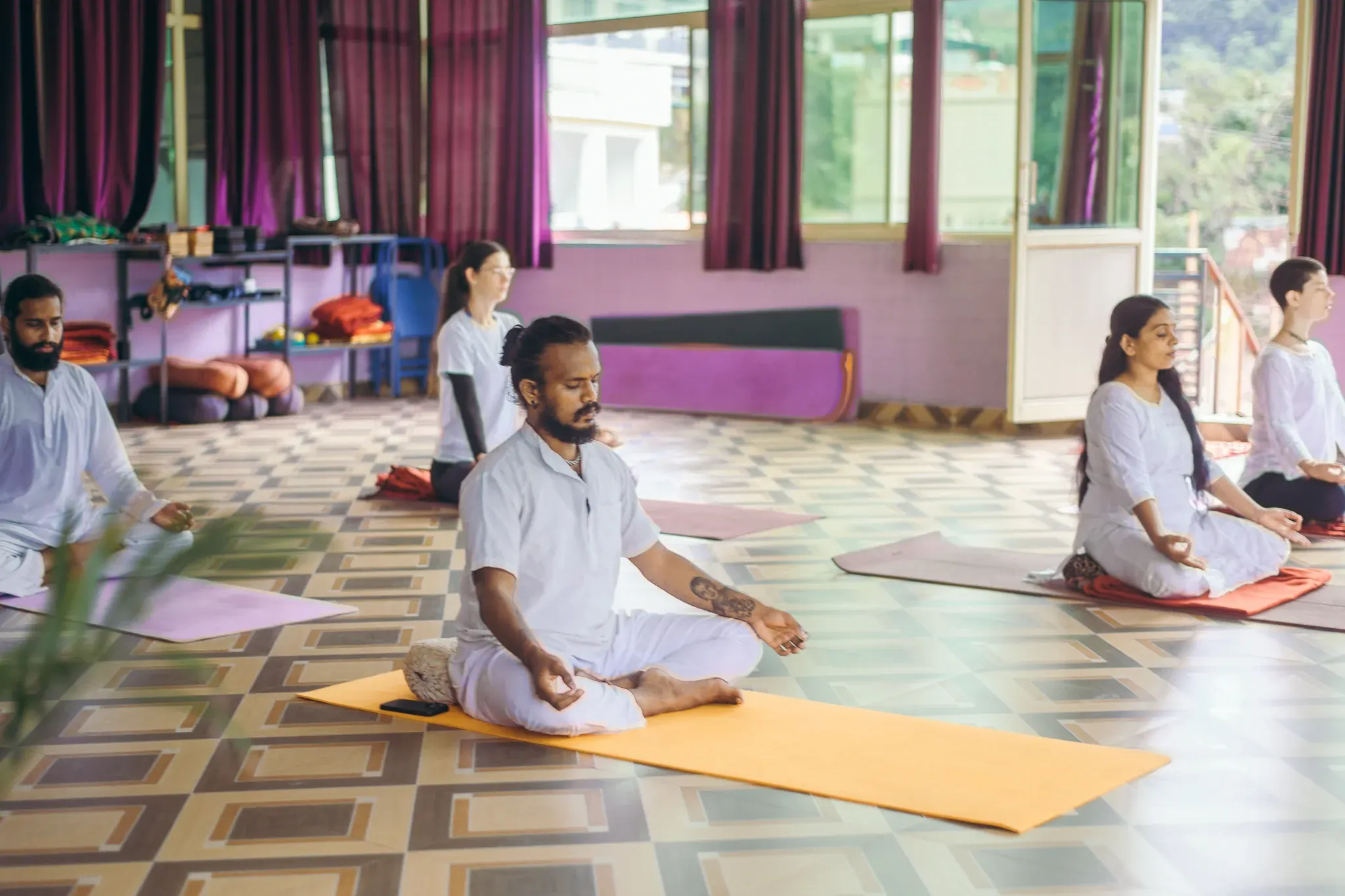
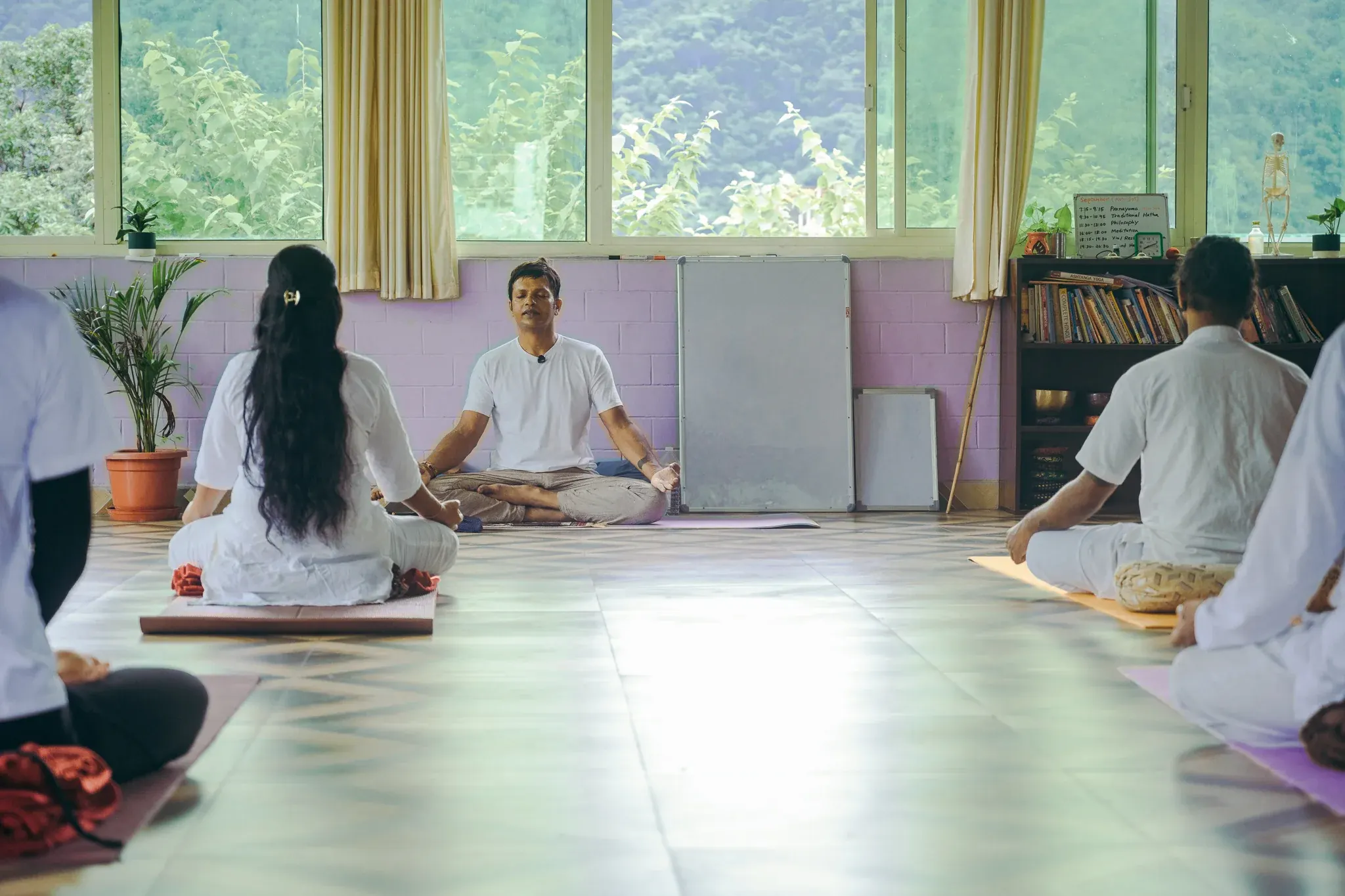
A classical approach takes the text's order and caution seriously. At Anantadrishti Yoga, the first week of the Advanced Pranayama & Yoga Philosophy Course covers kapalabhati, bhastrika, yogic breath, agnisara, ujjayi, the three bandhas, Nadi Shodhana with Chandra and Surya nadi bhedana, and antar and bahya kumbhaka with the bandhas, introduced with short, comfortable holds. The 15-day and 30-day courses develop the kumbhakas and Maha bandha further.
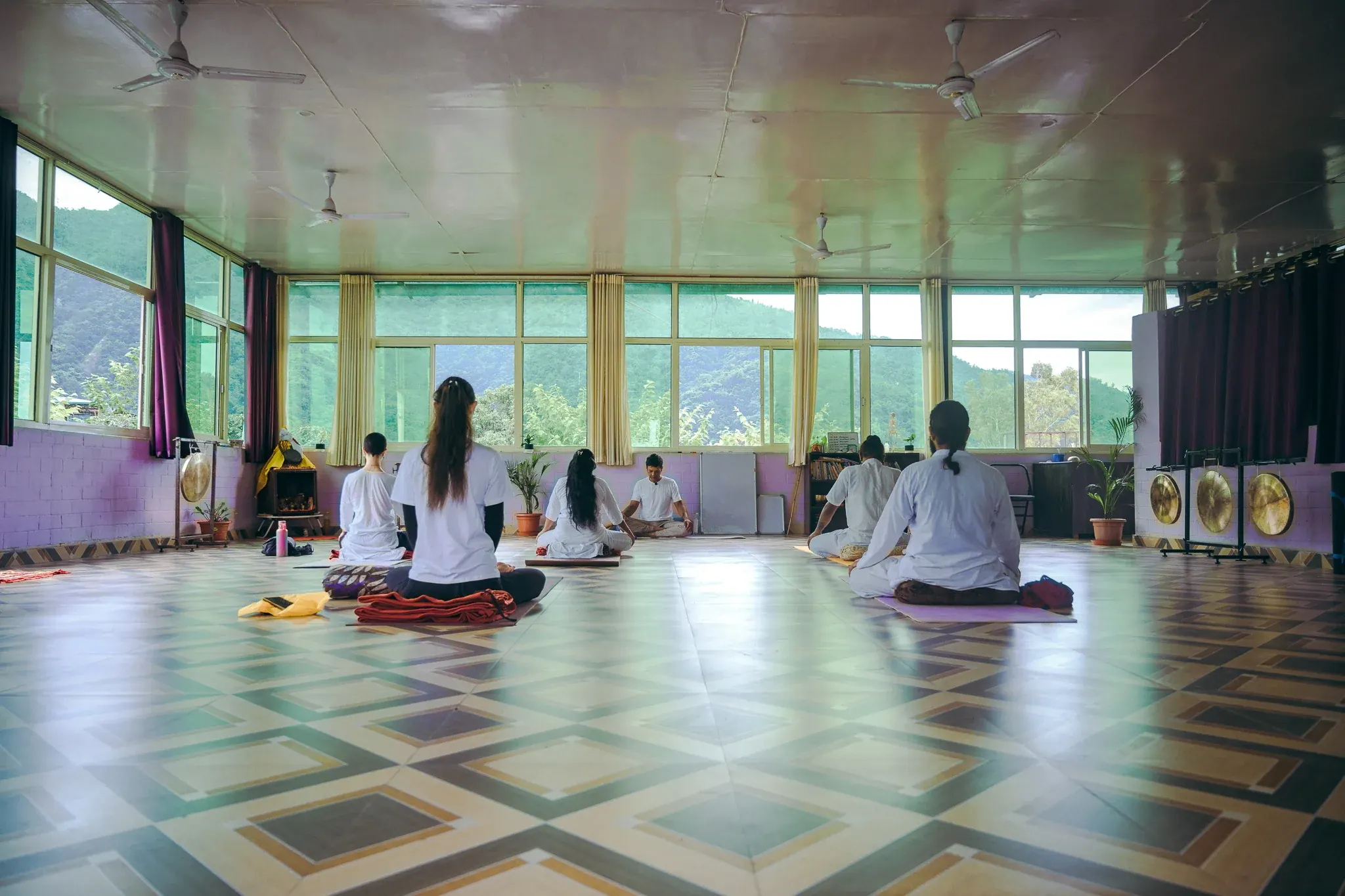
The daily 11:30–13:00 session covers corrections and the science and philosophy of pranayama, drawing on classical texts such as the Hatha Yoga Pradipika and Patanjali's Yoga Sutras. It is not a chapter-by-chapter study of the text; the ideas are set beside what you observe in your own practice. There is no separate philosophy course: philosophy is woven into the daily session. Our yoga philosophy page explains the approach, and our guide to yoga philosophy courses in Rishikesh compares the formats.
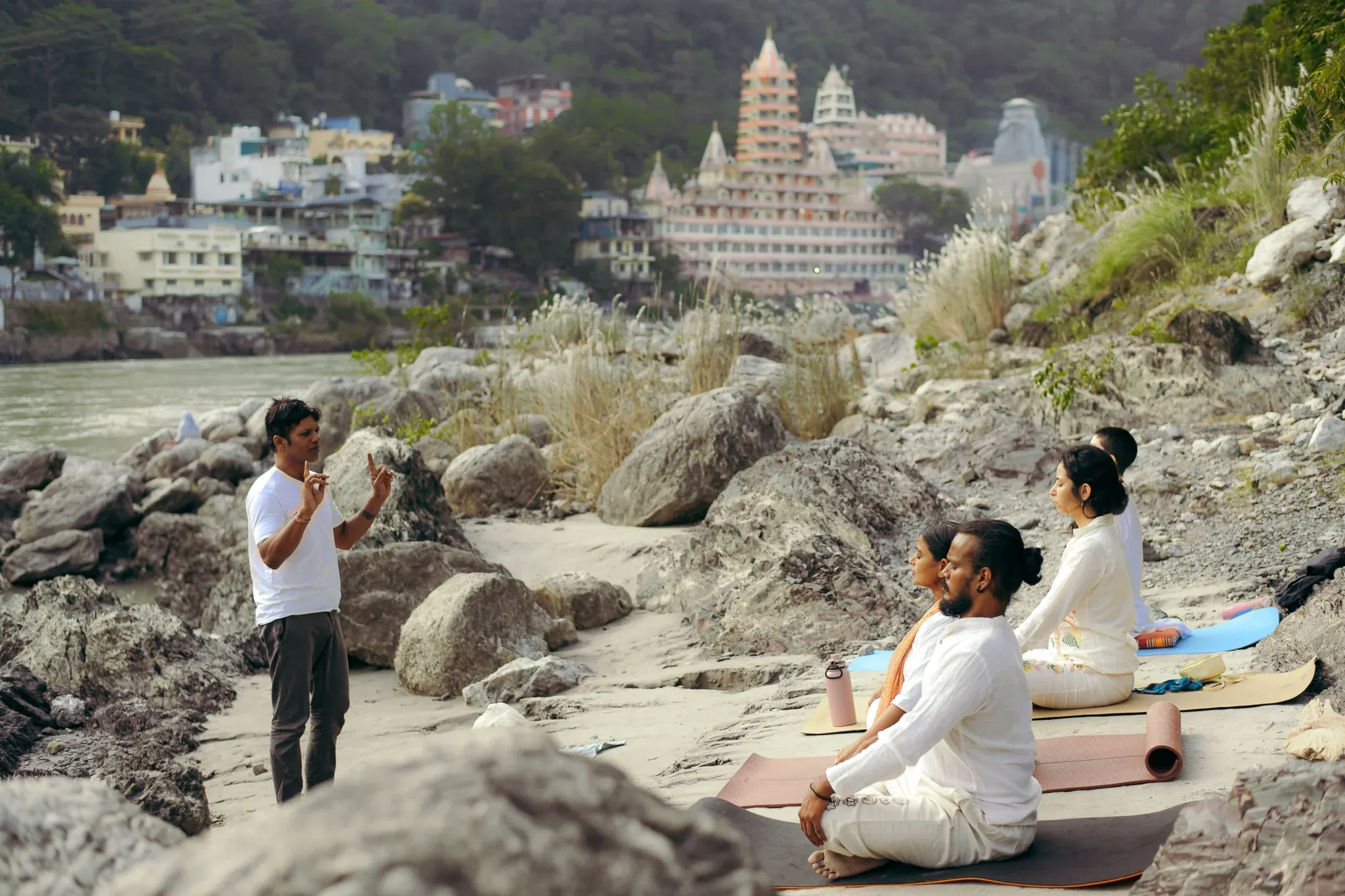
The course is taught in English, in person, in small groups, near Moktan Coffee Shop in Lower Tapovan, Rishikesh, by Somashekar, who has devoted more than fifteen years to the study and teaching of yoga, pranayama, yoga philosophy and Vedic chanting. It is a practitioner course, not a teacher training.
If you'd like to study the Pradipika's teachings on the breath in practice, see the 7-day, 15-day and 30-day options on the course page. Courses start on the 1st of the month (Monday the 2nd when the 1st is a Sunday), tuition starts at US$149, and enquiring costs nothing.
Frequently asked questions
What does the Hatha Yoga Pradipika say about pranayama?
Its second chapter is devoted to pranayama. It teaches that when the breath is unsteady the mind is unsteady, and when the breath is steady the mind becomes steady (2.2). It describes purifying the nadis with alternate-nostril breathing, lists eight kumbhakas (2.44), joins retention to the bandhas, and warns that the breath must be brought under control gradually (2.15).
What are the eight kumbhakas in the Hatha Yoga Pradipika?
Verse 2.44 names Surya bhedana, Ujjayi, Sitkari, Sitali, Bhastrika, Bhramari, Murchha and Plavini. Each is then described in the verses that follow. In the text, kumbhaka (retention) is the heart of pranayama, which is why these practices are called kumbhakas.
Who wrote the Hatha Yoga Pradipika?
It is attributed to Svatmarama and is usually dated to around the 15th century CE. It has four chapters, on asana, pranayama (with the cleansing practices), mudras and bandhas, and samadhi.
Why do verse numbers differ between translations?
Manuscripts and editions number the verses slightly differently, so a verse may sit one or two places away in another translation. The numbers in this guide follow the widely used chapter 2 numbering found in common English editions.
Where can I study the Hatha Yoga Pradipika with pranayama practice in Rishikesh?
At Anantadrishti Yoga in Lower Tapovan, Rishikesh, the Advanced Pranayama & Yoga Philosophy Course (7, 15 or 30 days, from US$149 tuition) draws on classical texts such as the Hatha Yoga Pradipika and Patanjali's Yoga Sutras in its daily 11:30 session. It is not a chapter-by-chapter text study.
CategoryPhilosophy
Advanced Pranayama Course
Go deeper: the Advanced Pranayama Course in Rishikesh
- 7, 15 or 30 days
- A new start every month
- Taught in English
Tuition from$149₹13,000