Pranayama guide
Kapalbhati Pranayama: The Complete Guide to Skull-Shining Breath
A classical cleansing practice of rapid, forceful exhalations and passive inhalations: how to do it step by step, what practitioners notice, and who should avoid it.
Learn it in RishikeshKapalabhati is taught in the first week of our 7-day pranayama course
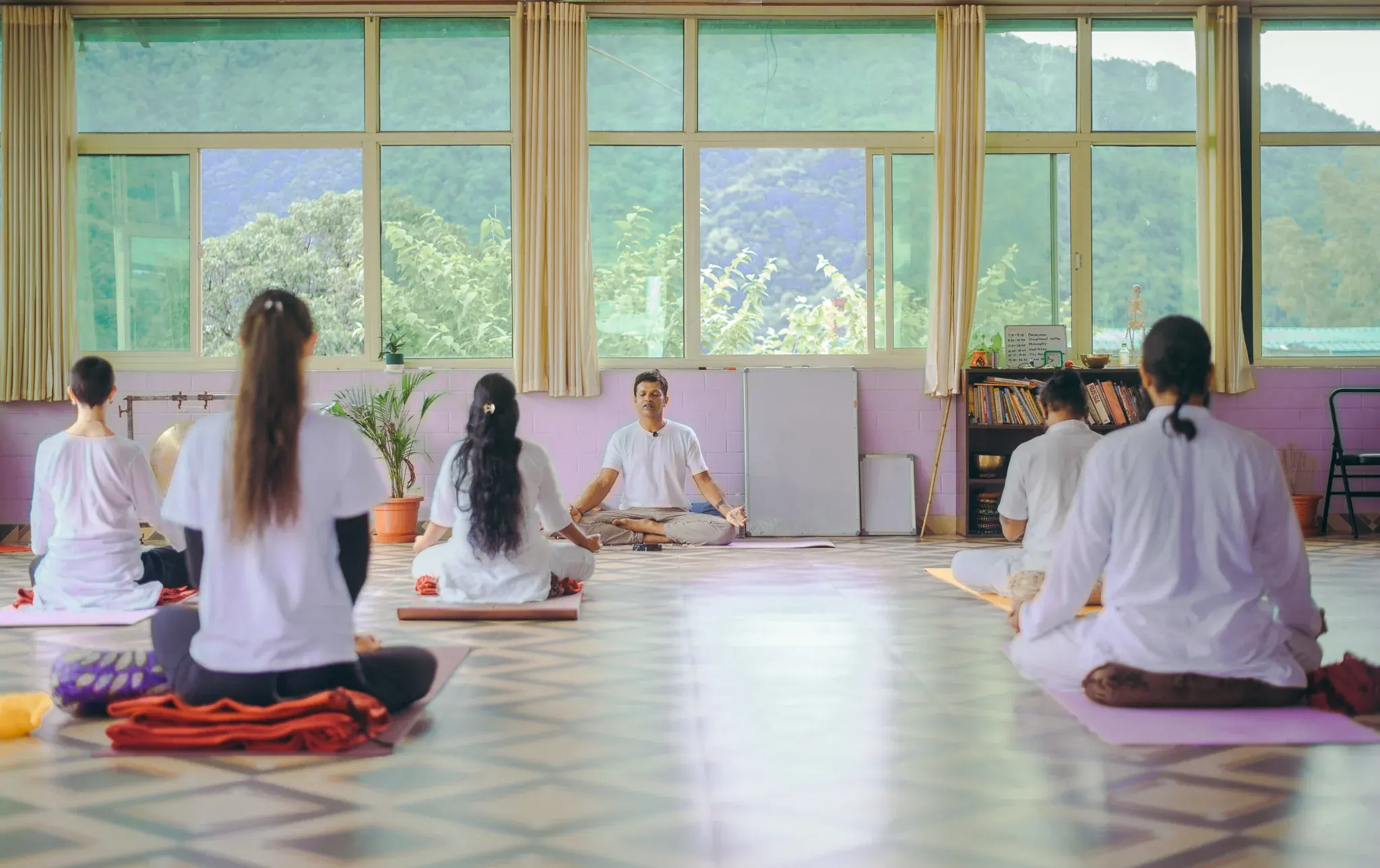
What is Kapalbhati Pranayama?
Kapalbhati is one of the most widely practiced and recognized yogic breathing techniques in the world. The name comes from two Sanskrit words: "kapala" meaning skull or cranium, and "bhati" meaning shining, illuminating, or radiant. The name "skull-shining breath" refers to the brilliant mental clarity and the luminous sensation in the forehead region that practitioners experience after a round of practice.
Technically, kapalbhati is classified as a shatkarma (one of the six cleansing practices of hatha yoga) rather than a pranayama. In the Gheranda Samhita, it is described under the heading of purification techniques, alongside practices like neti (nasal cleansing), dhauti (digestive tract cleansing), and trataka (concentrated gazing). However, because it works primarily through the regulation of breath, it is commonly taught alongside pranayama techniques in most yoga schools today.
The technique involves a series of rapid, forceful exhalations through the nose, driven by sharp contractions of the abdominal muscles, followed by passive, automatic inhalations. In the hatha tradition, this rhythmic pumping is understood to cleanse the nasal passages and airways. The strong abdominal movement works the muscles of the belly, and most practitioners feel a marked warmth through the body.
Kapalbhati is traditionally taught as a preparation: it clears and energises before the subtler pranayamas. Practised correctly and consistently, it builds the steadiness on which those practices rest.
How to Practice Kapalbhati: Step-by-Step Instructions
Sit in a stable, comfortable posture
Choose a seated position such as Sukhasana (easy pose), Padmasana (lotus pose), or Vajrasana (thunderbolt pose). You may also sit on a chair with your feet flat on the floor. Ensure your spine is erect, shoulders are relaxed, and the head is balanced directly over the spine. The upright posture is essential because the abdominal muscles must be free to move vigorously during the practice.
Place your hands on your knees
Rest your palms on your knees. You may use Jnana Mudra (tip of the index finger touching the tip of the thumb, other fingers extended) or simply lay the palms flat. Relax the arms, shoulders, and facial muscles. The hands remain passive throughout the practice — all the work is done by the abdominal muscles and the diaphragm.
Take two to three normal breaths to settle
Before beginning kapalbhati, take two or three deep, natural breaths through the nose to settle into the posture and establish awareness. Bring your attention to the abdominal region. Notice the natural movement of the belly with each breath. This preparation phase helps you connect with the muscles that will drive the practice.
Exhale sharply through the nose by contracting the abdomen
Begin kapalbhati by forcefully contracting the abdominal muscles inward (toward the spine), which drives a sharp, rapid burst of air out through the nose. The exhalation should be short, explosive, and audible. Focus all the effort on the exhalation. The abdominal contraction should be quick and firm, like a pumping action. The chest and shoulders remain still — only the belly moves.
Allow the inhalation to happen passively
Immediately after each sharp exhalation, release the abdominal contraction. The inhalation happens automatically and passively as the abdominal muscles relax and the diaphragm drops, drawing air naturally into the lungs. Do not actively try to inhale — the breath will come in on its own. The passive inhalation is what distinguishes kapalbhati from bhastrika (where both inhale and exhale are active). Focus your entire attention on the sharp, pumping exhalations.
Complete 30 repetitions for one round, then rest
Continue the rapid exhalation-relaxation cycle for 30 repetitions (beginners may start with 15 to 20). After completing one round, stop and take 3 to 5 slow, deep, natural breaths. Observe the sensations in the abdomen, the warmth in the skull region, and the heightened mental clarity. Practice 3 rounds total, resting between each round. Advanced practitioners may increase to 60 to 120 repetitions per round and up to 5 rounds, but this should be developed gradually over weeks and months.
Benefits of Kapalbhati Pranayama
A Classical Cleansing Practice
The Gheranda Samhita and the Hatha Yoga Pradipika list kapalbhati among the shatkarmas, the cleansing practices of hatha yoga. Many practitioners notice that the nose and airways feel clearer after a round.Works the Abdomen
Each exhalation is a firm contraction of the abdominal muscles. Regular practice trains the strength and control of the abdomen.Digestion & Agni
The pumping of the abdomen is traditionally said to kindle agni, the digestive fire. Always practise on an empty stomach, never after a meal.Alertness
The name means “skull-shining”. Most practitioners feel noticeably more awake and alert after a round, which is why it is usually practised in the morning.Enhanced Concentration
The focused attention required during practice — maintaining awareness of the rhythm, the abdominal movement, and the counting — trains the faculty of concentration and strengthens mental discipline.Warmth & Energy
Kapalbhati generates heat (tapas) in the body. Many practitioners use a few rounds in the morning to wake up; it is not a substitute for rest.
Important Contraindications and Precautions
Kapalbhati is a powerful technique and must be practiced with awareness. The following conditions are contraindications:
- Pregnancy: Absolutely contraindicated during all trimesters. The forceful abdominal contractions create dangerous pressure changes in the abdominal and pelvic cavities.
- Hernia (abdominal, inguinal, or hiatal): The intense intra-abdominal pressure created during kapalbhati can worsen existing hernias or cause new ones in susceptible individuals.
- Uncontrolled high blood pressure: The rapid breathing pattern temporarily elevates blood pressure. Those with uncontrolled or severe hypertension should avoid kapalbhati until their condition is medically managed.
- Heart disease or recent heart surgery: The cardiovascular demands of kapalbhati are significant. Those with diagnosed heart conditions, recent cardiac events, or heart surgery should consult their cardiologist before practicing.
- Epilepsy or seizure disorders: The rapid breathing pattern can alter brain chemistry in ways that may lower the seizure threshold in susceptible individuals.
- Recent abdominal surgery: Wait at least 3 to 6 months after any abdominal surgery before resuming kapalbhati. The forceful contractions can stress healing surgical sites.
- Menstruation (debated): Some yoga traditions advise women to avoid kapalbhati during menstruation due to the strong downward-moving energy (apana) generated by the abdominal contractions. Others consider it acceptable at a gentle intensity. Follow the guidance of your teacher and listen to your body.
- Acute respiratory illness: Avoid kapalbhati during active infections such as pneumonia, bronchitis, or severe sinusitis. Wait until fully recovered before resuming practice.
Common Mistakes to Avoid
Active inhalation
The inhalation in kapalbhati must be completely passive. If you are actively sucking air in, you are doing bhastrika, not kapalbhati. Simply release the abdominal contraction and let the breath flow in naturally.Moving the chest and shoulders
All movement should be isolated to the abdomen. The chest, shoulders, and upper body should remain completely still throughout the practice. If your shoulders are rising, slow down and refocus on the belly.Practicing too fast too soon
Beginners should start with approximately one exhalation per second. Trying to match the rapid pace of an experienced practitioner immediately leads to hyperventilation, dizziness, and poor technique. Build speed gradually over weeks.Scrunching the face
Keep the face relaxed throughout the practice. Tension in the jaw, forehead, or around the eyes indicates that you are applying too much force or that the pace is too fast for your current capacity.Practicing on a full stomach
Always practice kapalbhati on an empty stomach — at least 3 to 4 hours after a heavy meal or 2 hours after a light snack. Practicing after eating can cause nausea and abdominal discomfort.
Frequently Asked Questions About Kapalbhati Pranayama
Is kapalbhati pranayama good for weight loss?
How many times should I do kapalbhati per day?
What is the difference between kapalbhati and bhastrika?
Can kapalbhati be done during pregnancy?
Why do I feel dizzy during kapalbhati?
Advanced Pranayama Course
Go deeper: Kapalabhati in the 7-day pranayama course
- 7, 15 or 30 days
- A new start every month
- Taught in English
Tuition$149₹13,000
Continue Exploring Pranayama
- Pranayama: Complete GuideOverview of yogic breathing, the five pranas, and our programs.
- Types of PranayamaComplete list of 15+ techniques with difficulty levels and benefits.
- Bhramari PranayamaThe calming humming bee breath — a perfect complement to energizing kapalbhati.
- Pranayama BenefitsWhat research and the yogic tradition say about regular practice.
- Bandhas: Yoga's energy locksMula, Uddiyana, Jalandhara and Maha bandha: what each lock is, and how it joins pranayama and kumbhaka.
From the breathwork library