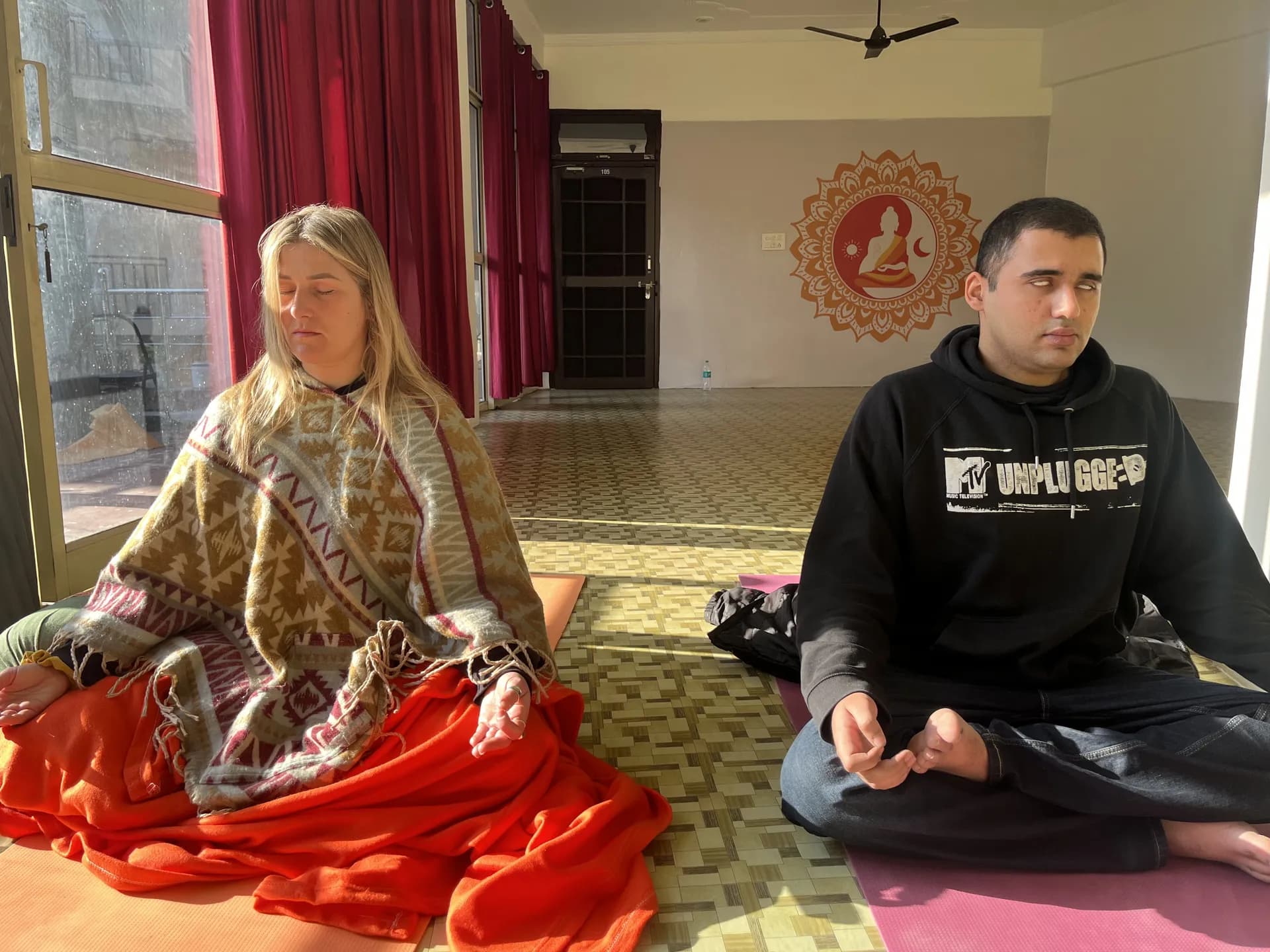
Modern neuroscience is revealing what yogis have known for millennia: conscious breathing physically changes how the brain operates. When you combine Ujjayi Pranayama with Maha Bandha (the three energy locks), the effects on brain wave patterns are profound and measurable. This article maps the science behind the transformation.
Understanding Brain Waves
The brain operates through different frequency bands, each associated with a distinct state of consciousness:
| Brain Wave | Frequency | Associated State |
|---|---|---|
| Beta | 13–30 Hz | Active thinking, problem-solving, stress |
| Alpha | 8–12 Hz | Relaxed awareness, calm focus |
| Theta | 4–8 Hz | Deep meditation, creativity, insight |
| Delta | 0.5–4 Hz | Deep sleep, unconscious processing |
Ujjayi Pranayama with Maha Bandha helps shift the brain progressively: Beta → Alpha → Theta (and sometimes Delta in deep states while remaining conscious).
Ujjayi’s Direct Effect on Brain Waves
Mechanism: Slow, controlled breathing with gentle throat constriction creates continuous sensory feedback through the Ujjayi sound.
Brain wave impact:
- Reduces Beta waves (mental chatter, overthinking)
- Increases Alpha waves (calm, centered awareness)
Result: Within minutes of establishing Ujjayi breathing, practitioners experience reduced anxiety and overthinking. The rhythmic sound provides an auditory anchor that the brain synchronizes with, naturally downshifting from scattered high-frequency activity to coherent, relaxed alertness.
Maha Bandha + Kumbhaka: Triggering Theta States
Mechanism: Breath retention (Antar Kumbhaka) combined with the three pressure locks (throat, abdomen, pelvic floor) creates a temporary rise in CO₂.
Brain wave impact:
- Triggers Theta wave activity
- Suppresses external sensory processing
Result: Deep inward awareness and the beginnings of meditative absorption. The brain, briefly deprived of its normal oxygen-CO₂ rhythm, shifts into a state associated with creativity, insight, and deep meditation.
Vagus Nerve Stimulation & Parasympathetic Activation
The vagus nerve — the longest cranial nerve — is stimulated by Ujjayi’s throat constriction, slow exhalation, and the pressure changes created by bandhas.
Effect:
- Slows heart rate
- Reduces stress hormones (cortisol, adrenaline)
- Activates the relaxation response
Brain wave outcome: Stable Alpha waves with a smooth transition into Theta. This creates a brain state that is simultaneously calm and alert — the ideal condition for both deep practice and focused work.
Parasympathetic Activation: The Prefrontal-Limbic Balance
During Ujjayi with bandhas, the prefrontal cortex (responsible for focus, decision-making, and higher awareness) becomes more active, while the limbic system (the emotional brain, including the amygdala) becomes regulated.
Brain wave result:
- Reduced chaotic Beta activity
- Increased stable Alpha coherence
Result: Emotional stability and clear thinking. The practitioner gains greater control over reactive emotions without suppressing them.
Reticular Activating System (RAS) Regulation
The RAS controls wakefulness and attention — it decides what your brain pays attention to and what it filters out.
What happens:
- Ujjayi provides rhythmic sensory input (sound + breath rhythm)
- Bandha + retention create internalization (sensory withdrawal)
Brain wave effect: Reduces scattered Beta activity and stabilizes a focused Alpha–Theta state.
Result: High concentration with reduced distraction. The brain stops chasing external stimuli and turns its attention inward — what the yogic tradition calls pratyahara.
Nada & Brain Entrainment
In the Goraksha Shataka and other yogic texts, the external Ujjayi sound is described as a gateway to internal Nada (subtle inner sound). From a neuroscience perspective, this maps to brain entrainment:
- The brain synchronizes its electrical activity with rhythmic external stimuli (in this case, the Ujjayi sound).
- Promotes Theta coherence — synchronized Theta waves across brain regions.
- Enhances meditative depth significantly.
In essence, the Ujjayi sound acts like a neural anchor — a rhythmic signal that guides the brain into progressively deeper states of coherence.
CO₂ Tolerance & Neural Stability
During breath retention (kumbhaka):
- CO₂ rises slightly in the bloodstream
- The brain adapts to this shifted internal environment
Effect:
- Enhances neural resilience
- Promotes slower wave dominance (Alpha and Theta)
With consistent practice, this builds greater tolerance to stress and facilitates deeper meditative states. The brain literally trains itself to remain calm under internal pressure — a skill that transfers directly to daily life.
Summary: The Brain Wave Transformation
| Practice Phase | Brain Wave Shift | Experience |
|---|---|---|
| Ujjayi breathing established | Alpha increases | Calm awareness, reduced mental chatter |
| Bandha + breath retention | Theta increases | Deep inward awareness, meditative absorption |
| Sustained practice (15+ min) | Alpha–Theta coherence | Alert yet deeply calm, internally absorbed |
| Advanced / long-term | Alpha–Theta bridge stabilizes | Pratyahara, Dhyana, Laya (absorption) |
The final state — an alert, deeply calm, and inwardly absorbed mind — is what classical texts describe as the threshold of meditation.
Important note: Overdoing breath retention can cause dizziness. Brain wave benefits come from consistency, not force. Regular, gentle practice over weeks and months creates far more profound neural changes than aggressive sessions.
Reading about these brain changes is one thing; feeling them is another. The advanced pranayama immersion in Rishikesh gives you the structured, expert-guided practice needed to experience these states safely and consistently.
Explore further: Breathwork for Healing | Pranayama Benefits | Breathwork Techniques
Share this guide
Category
ScienceWritten by
Somesh
RYT 500 · Yoga Philosophy & Pranayama
An experienced yoga teacher and Registered Yoga Teacher (RYT 500) specializing in yoga philosophy and pranayama at Anantadrishti Yoga in Rishikesh, India.
More articles by Somesh