Bhastrika Pranayama combined with Maha Bandha is one of the most powerful techniques in the Hatha Yoga tradition. Where Ujjayi is subtle and meditative, Bhastrika is dynamic and activating — rapid, forceful breathing that oxygenates the blood, stimulates the nervous system, and prepares the body for deep retention with the three energy locks.
भस्त्रावल्लोहकारस्य रेचपूरौ ससंभ्रमौ ।
कुर्यात् पवनसंरोधं भस्त्रिका नामिका भवेत् ॥
— Hatha Yoga Pradipika (2.64)Translation: Like the rapid movement of a blacksmith’s bellows, the yogi should inhale and exhale forcefully and quickly. This practice is known as Bhastrika Pranayama.
वातपित्तश्लेष्महरं शरीराग्निविवर्धनम् ।
कुण्डलीबोधकं क्षिप्रं भस्त्रिका प्राण उच्यते ॥
— Hatha Yoga Pradipika (2.65)Translation: Bhastrika destroys the imbalances of Vata, Pitta, and Kapha, increases the digestive fire, and quickly awakens Kundalini energy.
ब्रह्मनाडीमुखे संस्थं कफाद्यर्गलनाशनम् ।
भस्त्रिका कुरुते योगी प्राणायामं सुखप्रदम् ॥
— Hatha Yoga Pradipika (2.66)Translation: It removes blockages at the entrance of the Brahma Nadi (Sushumna) and allows energy to flow freely, bringing deep comfort and vitality.
Preparation
This is an advanced pranayama sequence that combines powerful breathing with internal locks. It should be practiced with precision, awareness, and gradual progression.
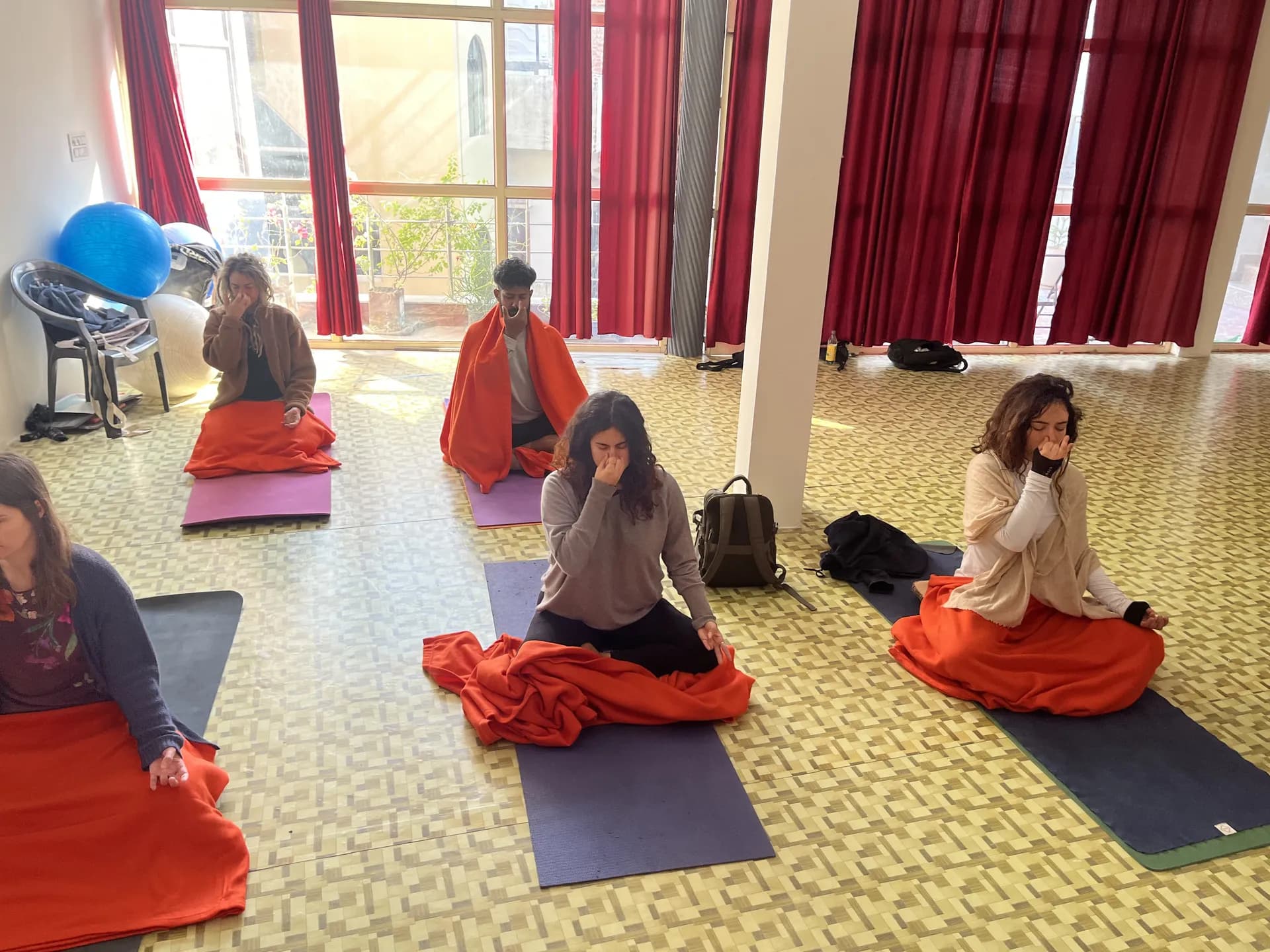
- Sit in Padmasana, Siddhasana, or Vajrasana.
- Spine erect, shoulders relaxed.
- Hands on knees in Chin Mudra or Jnana Mudra.
- Eyes closed, awareness directed inward.
Step-by-Step Technique
Step 1: Bhastrika (Bellows Breathing)
- Inhale forcefully through the nose.
- Exhale forcefully through the nose.
- Apply equal force on both inhale and exhale.
- Use the diaphragm as the primary driver (not just the chest).
Rhythm:
- Beginners: 10–15 breaths per round
- Intermediate: 20–30 breaths per round
Keep it fast but controlled, like a steady bellows. The rhythm should be even — not erratic.
Step 2: Deep Inhalation
After the last forceful exhalation, take a deep, full inhalation. Fill the lungs completely: abdomen, then ribs, then chest.
Step 3: Apply Maha Bandha (Three Locks)
- Jalandhara Bandha (Throat Lock): Lower the chin to the sternum, gently compressing the throat. This influences the brainstem and vagal pathways.
- Mula Bandha (Root Lock): Contract the perineum (the area between the genitals and anus). This activates the pelvic nerves and the base of the spine.
- Uddiyana Bandha (Abdominal Lock): Apply a gentle, slight inward lift of the abdomen (not a strong vacuum — the lungs are full). This creates upward pressure toward the diaphragm.
Step 4: Breath Retention (Antar Kumbhaka)
- Hold the breath comfortably with all three locks engaged.
- Focus on Ajna (between the eyebrows) or Sahasrara (crown of the head).
Duration:
- Beginners: 5–10 seconds
- Advanced: 20–40+ seconds
No strain — comfort is key.
Step 5: Release Sequence
Release the locks in the correct order:
- Release Uddiyana Bandha
- Release Mula Bandha
- Release Jalandhara Bandha (lift head last)
Then exhale slowly and completely.
Step 6: Rest and Observe
Take a few normal breaths and observe sensations in the brain and body. Notice the contrast between the dynamic activation of Bhastrika and the deep stillness that follows.
Rounds
- Beginners: 3 rounds
- Intermediate: 5 rounds
- Advanced: 7+ rounds
Internal Awareness: What You May Experience
During practice, you may notice:
- Heat rising in the body
- Pressure or lightness in the head
- Stillness after retention
- Sharp mental clarity
These effects arise from the combined dynamics of forceful breathing, nervous system regulation, and the pressure locks of Maha Bandha.
Safety Guidelines
Avoid this practice or learn under direct guidance if you have:
- High blood pressure
- Heart disease
- Hernia or abdominal surgery
- Pregnancy
- Vertigo or anxiety disorders
Common mistakes:
- Forcing the breath too aggressively
- Holding beyond comfort
- Tightening the face or shoulders
- Collapsing the spine
Anatomical Benefits
Bhastrika provides measurable physiological effects across multiple body systems:
- Diaphragm: Strengthens the primary breathing muscle, improving breathing depth and control. A well-trained diaphragm leads to better oxygenation and a calmer nervous system.
- Lymphatic system: The diaphragm acts as a pump for lymphatic movement, enhancing immune function and detoxification.
- Neurological: Stimulates the sympathetic system (activation) followed by a parasympathetic rebound (relaxation), creating a controlled stress-relaxation cycle that strengthens resilience over time.
- Circulatory: Rapid pressure changes in the chest improve venous return to the heart, enhance overall blood circulation, and support oxygen delivery to tissues.
8 Effects of Bhastrika with Maha Bandha on the Brain
1. Rapid Oxygenation & Controlled Retention
Bhastrika’s rapid breathing increases oxygen supply, followed by kumbhaka with Maha Bandha, which creates a temporary rise in CO₂. This improves cerebral blood flow, enhances oxygen delivery after release, and trains the brain’s tolerance to CO₂ fluctuations.
Result: Sharper cognition and increased mental endurance.
2. Vagus Nerve Stimulation & Parasympathetic Activation
The vagus nerve is stimulated strongly by breath retention, the throat lock (Jalandhara Bandha), and abdominal pressure changes. This activates the parasympathetic nervous system, reduces stress signals from brain to body, and calms emotional centers.
Result: Deep calm and emotional stability after the intense activation phase.
3. Baroreceptor Reflex & Blood Pressure Regulation
The bandhas create pressure changes in the chest and neck, stimulating baroreceptors (pressure sensors in the arteries). These send signals to the brainstem (medulla) that help regulate blood pressure and heart rate.
Result: Improved autonomic balance between sympathetic and parasympathetic systems.
4. Brainstem Activation
Breath retention challenges the respiratory centers in the brainstem, specifically the medulla oblongata and pons. This improves breath control capacity and increases neural resilience to stress.
Result: Greater respiratory and stress resilience.
5. Increased Intracranial Awareness
Maha Bandha creates upward pressure from the abdomen (Uddiyana + Mula) and a downward lock at the throat (Jalandhara), forming a closed pressure system. This produces a subtle, controlled increase in intracranial pressure and enhances circulation of blood and cerebrospinal fluid (CSF).
Result: Better nourishment of brain tissues and heightened internal awareness.
6. Reticular Activating System (RAS) Stimulation
The alternation between hyperventilation (Bhastrika) and retention stimulates the brain’s arousal centers — the Reticular Activating System, which controls wakefulness and attention.
Result: Increased alertness, meditative clarity, and an “awakened” mental state.
7. Limbic System Regulation
Strong breath cycles influence the emotional brain centers, regulating the amygdala (fear and stress) and the hypothalamus (hormonal control).
Result: Reduced anxiety, emotional balance, and greater control over reactive patterns.
8. Prefrontal Cortex Activation (Higher Awareness)
Increased oxygen combined with focused retention and post-retention stillness activates the prefrontal cortex — the seat of decision-making, executive function, and self-awareness.
Result: Improved concentration, access to deep meditative states, and enhanced self-awareness.
The Overall Brain Impact
Combining Bhastrika with Maha Bandha creates a two-phase neurological process:
- Activation Phase: Increased oxygen, sympathetic stimulation, and brain arousal through Bhastrika.
- Integration Phase: Parasympathetic dominance, deep neural regulation, and internal awareness through retention with bandhas.
The final result is a highly alert yet deeply calm brain state — similar to what EEG studies observe in advanced meditators. In classical yoga, this is described as the threshold of Dhyana (meditation).
Yogic Interpretation: In the Hatha Yoga Pradipika, Bhastrika forces prana upward while Maha Bandha locks and directs prana into the Sushumna (central channel). From a modern perspective, this corresponds to coordinated neuro-respiratory control and enhanced central nervous system integration.
Because Bhastrika with Maha Bandha is a powerful, activating practice, it should be learned under qualified guidance. Our advanced pranayama immersion in Rishikesh teaches this technique step by step with the safety and adjustment a self-guided practice cannot offer.
Continue exploring: Pranayama Hub | Breathwork Techniques | Brain Waves & Breathwork
Share this guide
Category
Practice GuideWritten by
Somesh
RYT 500 · Yoga Philosophy & Pranayama
An experienced yoga teacher and Registered Yoga Teacher (RYT 500) specializing in yoga philosophy and pranayama at Anantadrishti Yoga in Rishikesh, India.
More articles by Somesh