Pranayama
Pranayama Course for Beginners in Rishikesh: Can You Start Here?
Can a beginner join a pranayama course in Rishikesh? Who can start straight away, what the first week asks of you, how breath retention is introduced safely, and when it is wiser to wait or check with a doctor first.
Somashekar
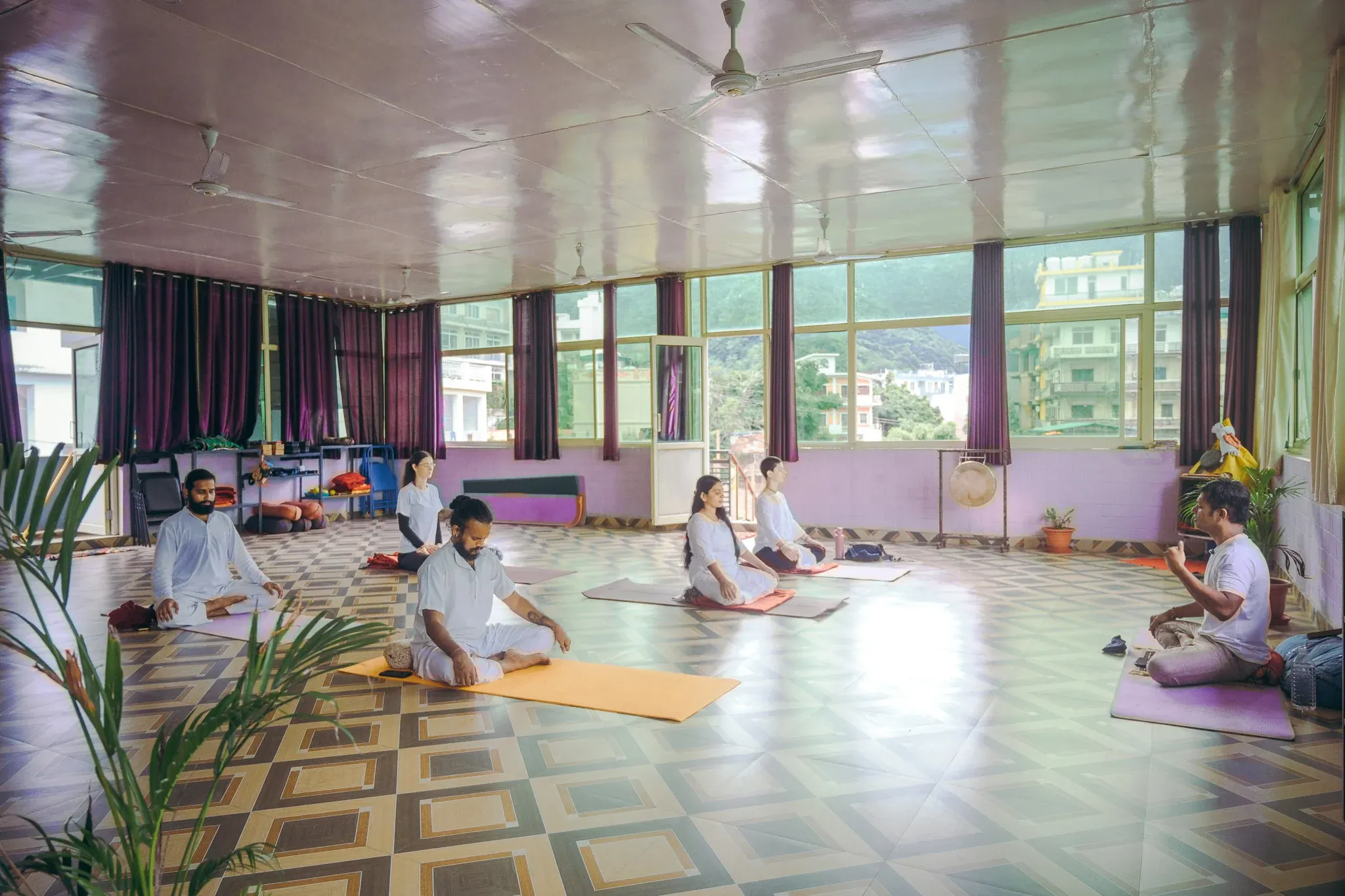
Written by Somashekar, founder and head teacher of Anantadrishti Yoga. Disclosure: this is our own school, and the course described here is ours.
Many people who write to us start with the same worry: "The course is called advanced. Am I allowed to come if I've never done pranayama?" It's a fair question. This guide answers it honestly: who can start straight away, what the first week asks of you, how the harder practices are introduced, and when it is wiser to wait.
At a glance
| Question | Answer for beginners |
|---|---|
| Can beginners join? | Yes, if healthy and sincere; some prior yoga or breathing practice helps |
| Best starting course | The 7-day course, US$149 (₹13,000), tuition only |
| Starts | The 1st of the month (Monday the 2nd when the 1st is a Sunday); no mid-month starts |
| Daily sessions | 07:30–09:00 practice; 11:30–13:00 corrections plus the science and philosophy of pranayama |
| Rest day | Sunday; classes run Monday to Saturday |
| Breath retention | Short, comfortable holds; never forced |
| Language and format | English, in person, small groups |
| Accommodation | Not included; help finding a room nearby |
| Check with a doctor first if | Pregnant, high blood pressure, heart condition, recent surgery, glaucoma, epilepsy or a serious psychiatric condition |
Why is a course called "advanced" open to beginners?
The word "advanced" describes where the course goes, not where you must already be. The Advanced Pranayama & Yoga Philosophy Course runs for 7, 15 or 30 days, and all three lengths start together on the same day with the same first week. That first week is the foundation: the basic techniques, the bandhas and gentle breath retention. The more demanding practices, such as Maha bandha, the nadi pranayamas, longer kumbhakas and the chakra pranayamas, belong to the 15-day and 30-day courses, and they are built on what the first week establishes.
So a beginner in the 7-day course isn't thrown into advanced work. You learn the same foundation everyone learns, with corrections from the teacher every day.
Who can start straight away?
If you are healthy and willing to practise sincerely, you can start. Some prior yoga or breathing practice helps, because you will already know how to sit for a while and pay attention to the breath. But it is not a requirement for the 7-day course. People who arrive with no pranayama at all often do well, because they have no habits to unlearn.
Things that genuinely help in the first week:
- Being able to sit on the floor or a cushion, with an upright spine, for a few minutes at a time. Props are fine.
- Arriving rested. Plan to reach Rishikesh a day or two before the 1st.
- Practising on an empty or light stomach in the morning.
- Being honest with the teacher about anything that feels wrong.
What does the first week teach?
The first week teaches the foundation of classical pranayama, one practice at a time. Over six teaching days you learn:
- Kapalabhati, bhastrika, yogic breath and agnisara
- Ujjayi pranayama
- The three bandhas: Mula, Uddiyana and Jalandhara
- Nadi Shodhana with Chandra nadi and Surya nadi bhedana
- Antar and bahya kumbhaka with the bandhas
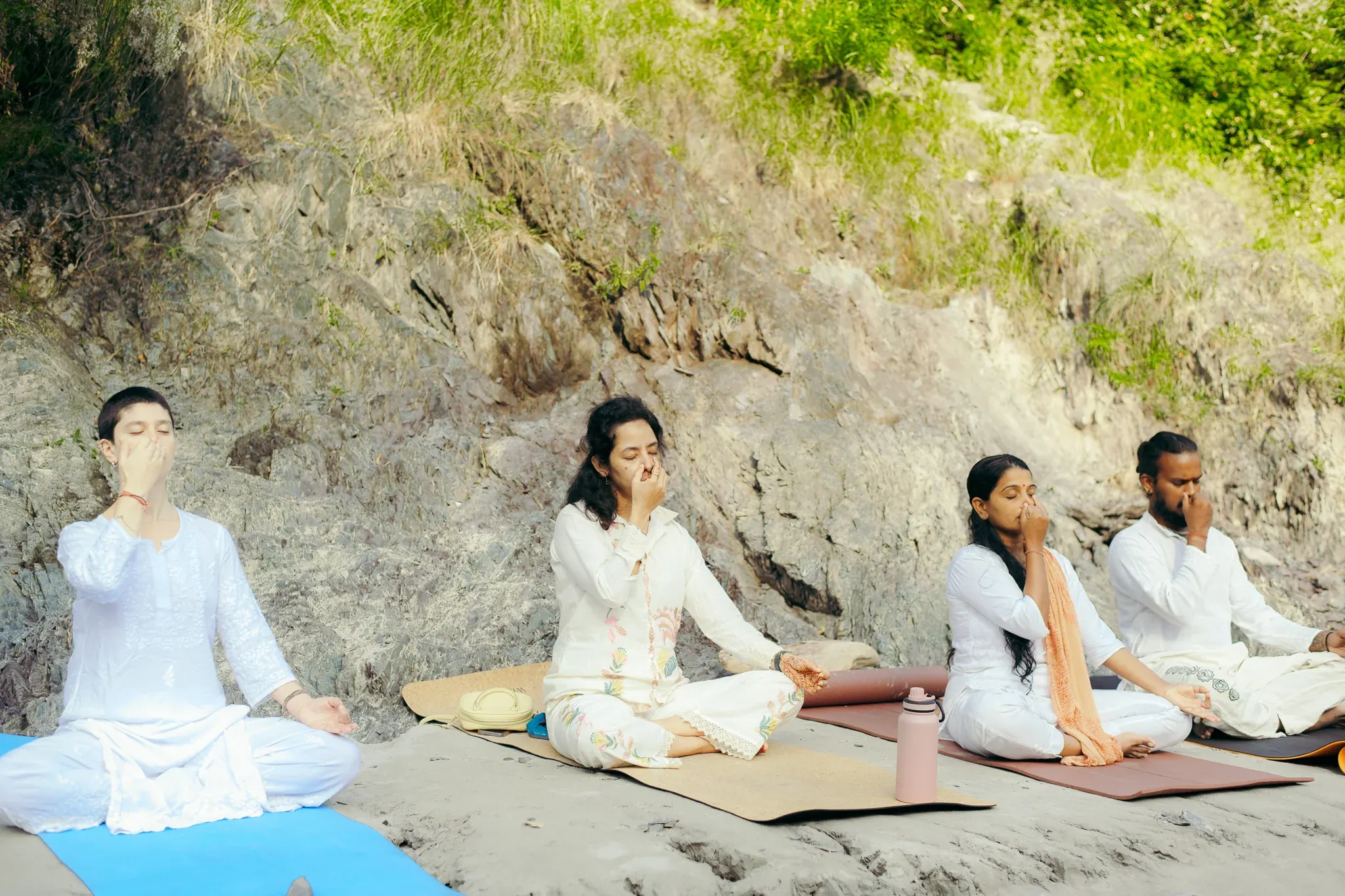
Mudras and bija mantras are coordinated with the practices, and from the start you learn to observe how each practice influences the mind, the nervous system, the body and the energies. If you'd like to know what the names mean before you arrive, our guide to the types of pranayama is a good primer.
What does a beginner's day feel like?
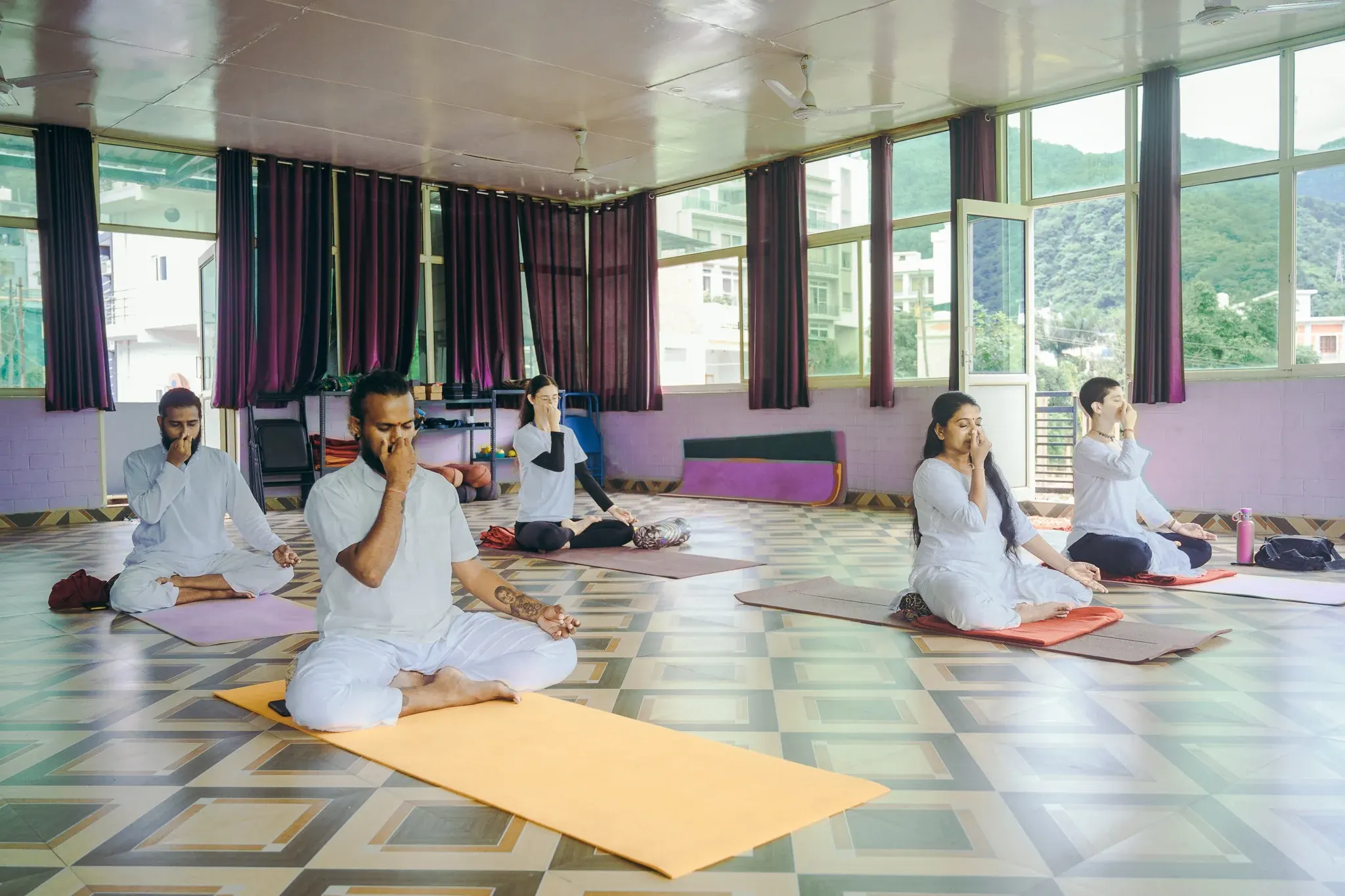
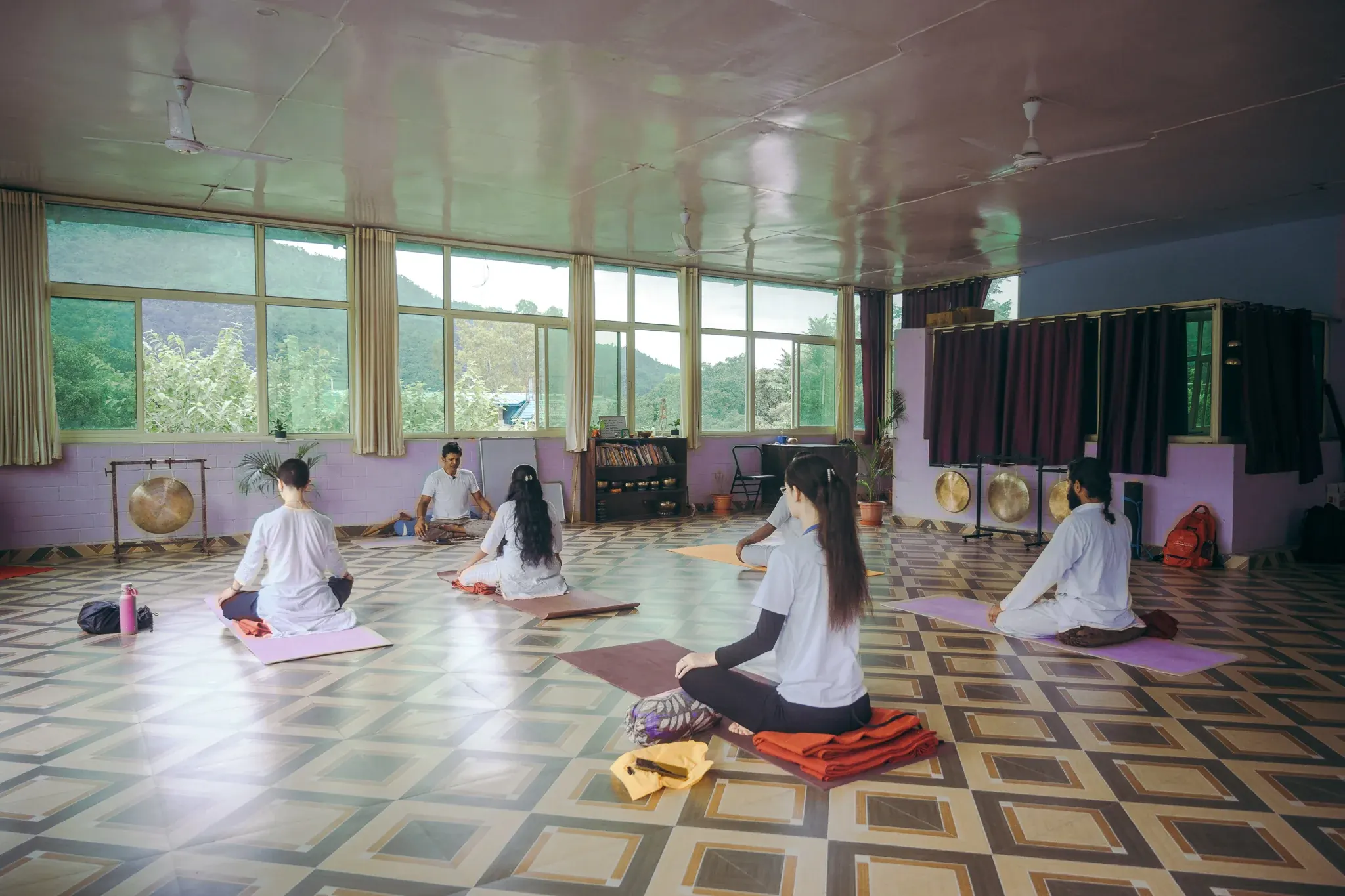
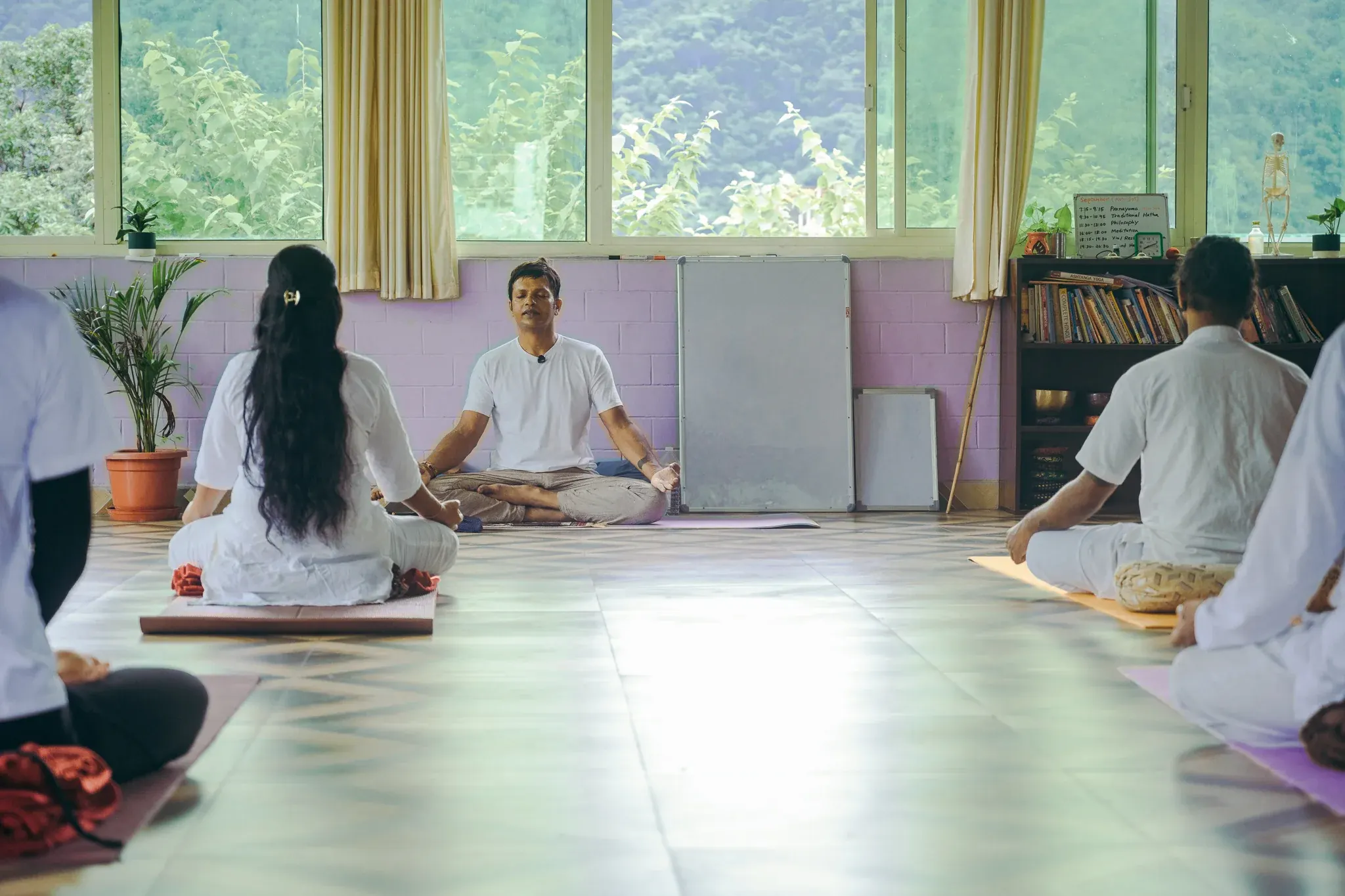
A teaching day is two focused sessions with a long gap between them. From 07:30 to 09:00 the group practises the day's techniques in sequence. You then have breakfast and rest. From 11:30 to 13:00 there are corrections and more practice, followed by the science and philosophy of pranayama, drawing on classical texts such as Patanjali's Yoga Sutras and the Hatha Yoga Pradipika. The afternoon is free.
Beginners are often surprised that three guided hours a day can feel like a lot. Pranayama is quiet work, but it asks for steady attention, and the body needs time to absorb it. The gap between sessions is part of the method, not a gap in the teaching. Small groups mean the teacher can see each student's breath and posture and correct them individually.
How is breath retention introduced safely?
Kumbhaka is introduced gradually, with short, comfortable holds, and never forced. This is the part of pranayama beginners worry about most, and with good reason: the classical texts themselves warn that the breath should be brought under control slowly. In the first week the aim is to hold without strain and come out of the hold smoothly, not to hold for long. A hold that leaves you gasping on the exhale has gone too far.
The bandhas are taught alongside kumbhaka from the beginning, because in the classical method they belong together. Our longer guide to learning kumbhaka safely in Rishikesh explains how retention develops over 15 and 30 days.
When is it wiser to wait, or ask a doctor first?
If you have certain health conditions, talk to your doctor before you book. Forceful breathing and breath retention are not suitable for everyone. Consult your doctor first, and tell the teacher, if you:
- are pregnant
- have high blood pressure or a heart condition
- have had recent surgery
- have glaucoma or raised eye pressure
- have epilepsy
- have a serious psychiatric condition
A pranayama course is a practice and study course. It is not medical treatment, and we make no claim that it treats or cures any condition. If your doctor advises against some practices, tell us when you enquire; it is far better to know before you travel.
It may also be worth waiting if you can only arrive mid-month. All three course lengths start on the 1st of the month (Monday the 2nd when the 1st is a Sunday), and there are no mid-month starts, because each day builds on the one before.
Should a beginner choose 7, 15 or 30 days?
Most beginners should start with 7 days. It gives you the complete foundation in one week and lets you find out how your body and mind respond to daily pranayama. The 7-day course guide sets out exactly what the US$149 tuition covers and what it doesn't.
If you are new but have more time, the 15-day course (US$229, ₹20,000) or the 30-day course (US$349, ₹30,000) continues from the same first week. Because every length starts on the same day, you need to choose before you arrive. Describe your experience when you enquire, and the teacher will help you decide honestly.
Is it a teacher training?
No. The Advanced Pranayama & Yoga Philosophy Course is an in-depth practitioner course for your own practice. It is not a yoga teacher training, it doesn't lead to a teaching qualification, and no certificate is claimed. For a beginner, that is usually the right place to start: a sound personal practice comes before teaching anyone else.
How do you plan the trip?
The shala is near Moktan Coffee Shop in Lower Tapovan, Rishikesh, a short walk from Laxman Jhula and the Ganga. The nearest airport is Jolly Grant, Dehradun, about 22 km away. Tuition doesn't include accommodation, but we help you find a room nearby when you enquire. Our Tapovan guide describes the area, and upcoming start dates are on the dates page.
Your teacher is Somashekar, who has devoted more than fifteen years to the study and teaching of yoga, pranayama, yoga philosophy and Vedic chanting.
When you're ready, the 7-day course section of the Advanced Pranayama & Yoga Philosophy Course page has the curriculum, dates and an enquiry form. Tell us a little about your practice, or that you have none yet. Enquiring costs nothing, and a 20% deposit can reserve a place when you're sure.
Frequently asked questions
Can a complete beginner join a pranayama course in Rishikesh?
Often, yes. At Anantadrishti Yoga, some prior yoga or breathing practice helps, but healthy, sincere beginners can join the 7-day Advanced Pranayama & Yoga Philosophy Course (US$149 tuition). Describe your experience when you enquire so the teacher knows where you are starting from.
Which course length should a beginner choose?
The 7-day course is the natural starting point. It is the same first week every longer course begins with, so nothing is skipped. If you are new but have the time and want to go further, describe your experience when you enquire and the teacher will help you decide between 7, 15 and 30 days.
Will a beginner be asked to hold the breath for long?
No. Kumbhaka (breath retention) is taught gradually with short, comfortable holds, and it is never forced. The length of a hold matters far less in the first week than learning to hold without strain.
Who should not start pranayama without medical advice?
If you are pregnant, or have high blood pressure, a heart condition, recent surgery, glaucoma or raised eye pressure, epilepsy or a serious psychiatric condition, consult your doctor before booking and tell the teacher. A pranayama course is not medical treatment.
Do I need to know Sanskrit or yoga philosophy before the course?
No. The course is taught in English. The practices keep their Sanskrit names and each one is explained, and the philosophy is introduced in the daily 11:30 session from the beginning.
CategoryPranayama
Cours de pranayama avancé
Aller plus loin : le cours de pranayama avancé, 7, 15 ou 30 jours
- 7, 15 ou 30 jours
- Un nouveau départ chaque mois
- Enseigné en anglais
Frais de cours dès149 $US13 000 ₹