Sacred traditions · Rishikesh
Vedic Rituals in Rishikesh
Havan, puja and offerings at the Ganga belong to the living tradition that surrounds yoga in Rishikesh. Here is what each ritual is, what it is for, and how it sits beside the practice of the breath.
अग्निमीळे पुरोहितं यज्ञस्य देवमृत्विजम्
agnim īḷe purohitaṃ yajñasya devam ṛtvijam
I praise Agni, the household priest, the divine minister of the offering.
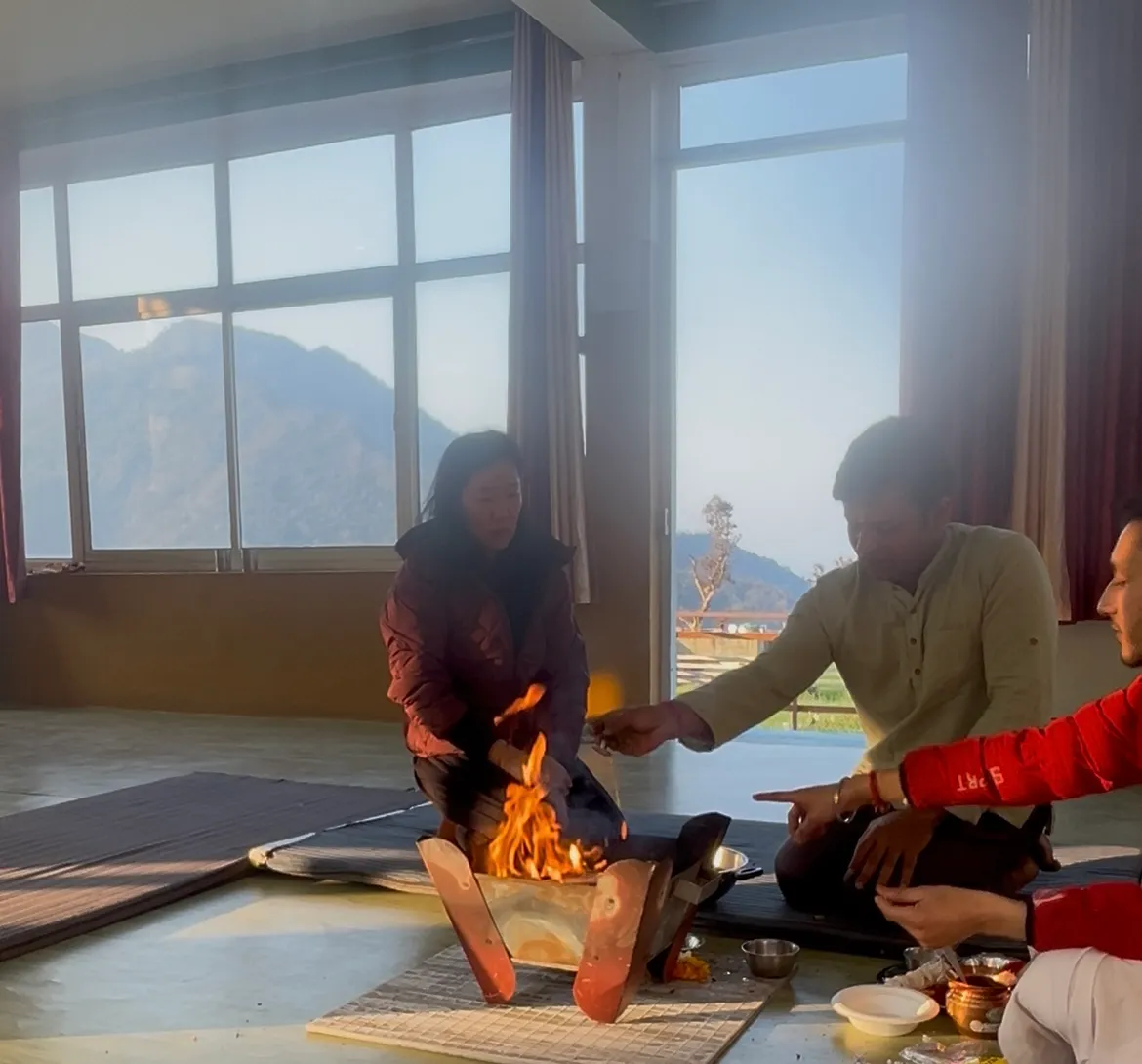
Yajña
What a ritual is for
In the Vedic tradition a ritual, yajña, is an offering made with full attention: to fire, to water, to light. It is not a performance. The care with which the offering is prepared, the mantra spoken and the gesture made is itself the practice.
Practitioners use ritual to steady the mind, to mark an intention, and to give thanks. The same qualities, attention and steadiness, are what pranayama trains through the breath.
अयं यज्ञो भुवनस्य नाभिः
ayaṃ yajño bhuvanasya nābhiḥ
This offering is the navel of the world.
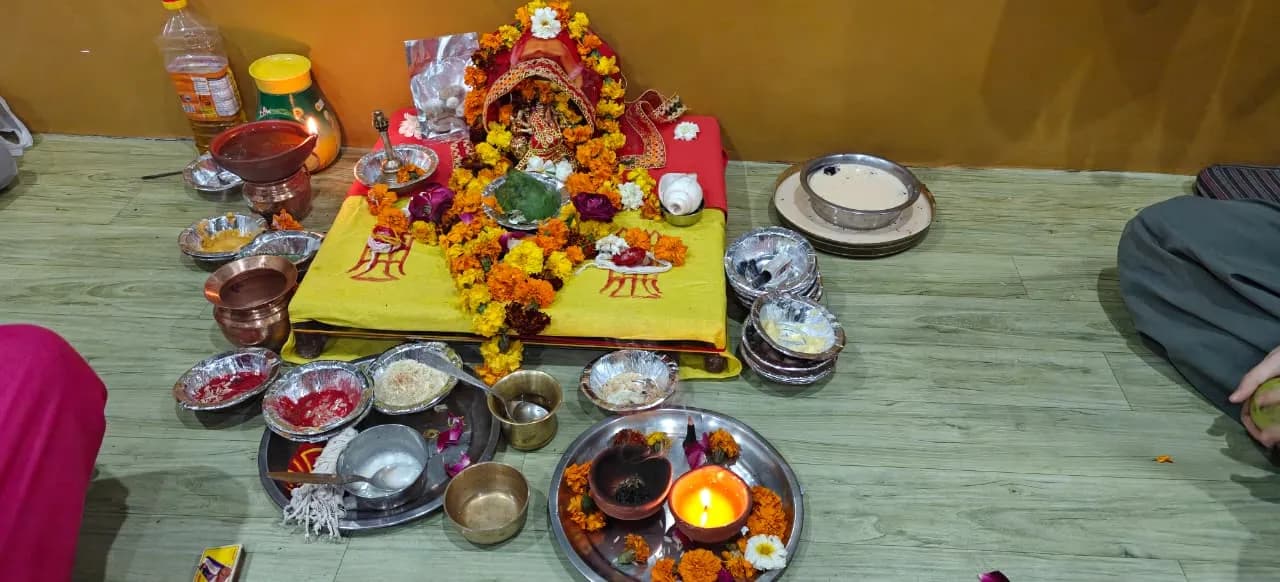
Sacred offerings
Four rituals you will meet in Rishikesh
Havan (fire offering)
A Vedic fire ritual. Ghee, grains and herbs are offered into a consecrated fire, Agni, while mantras are chanted.
Ganga aarti
An evening offering of light to the river Ganga: priests circle large flaming lamps while bells ring and the crowd sings. In Rishikesh it is held at Triveni Ghat and at Parmarth Niketan.
Kirtan and bhajan
Call-and-response chanting of divine names and devotional songs, sung together.
Puja (worship)
Worship with flowers, incense, light and food, offered before a deity or a sacred image.
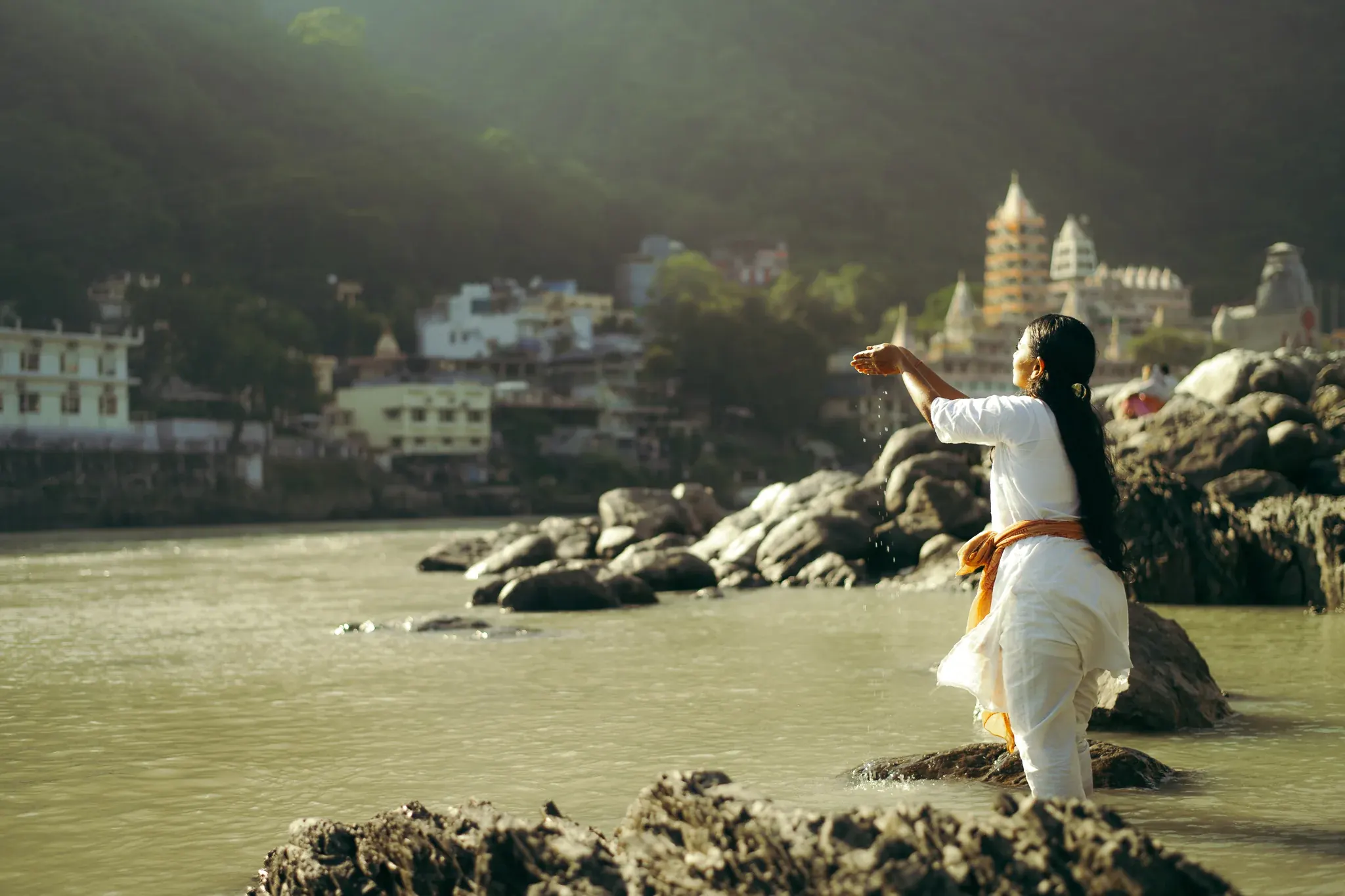
Arghya · the water offering
Offerings at the Ganga
Water is lifted from the river in cupped hands and offered back, facing the sun. In Rishikesh it is made from the ghats and the riverbank.
Water offering (arghya) on the banks of the Ganga, Rishikesh
In photographs
Havan, puja and the Ganga
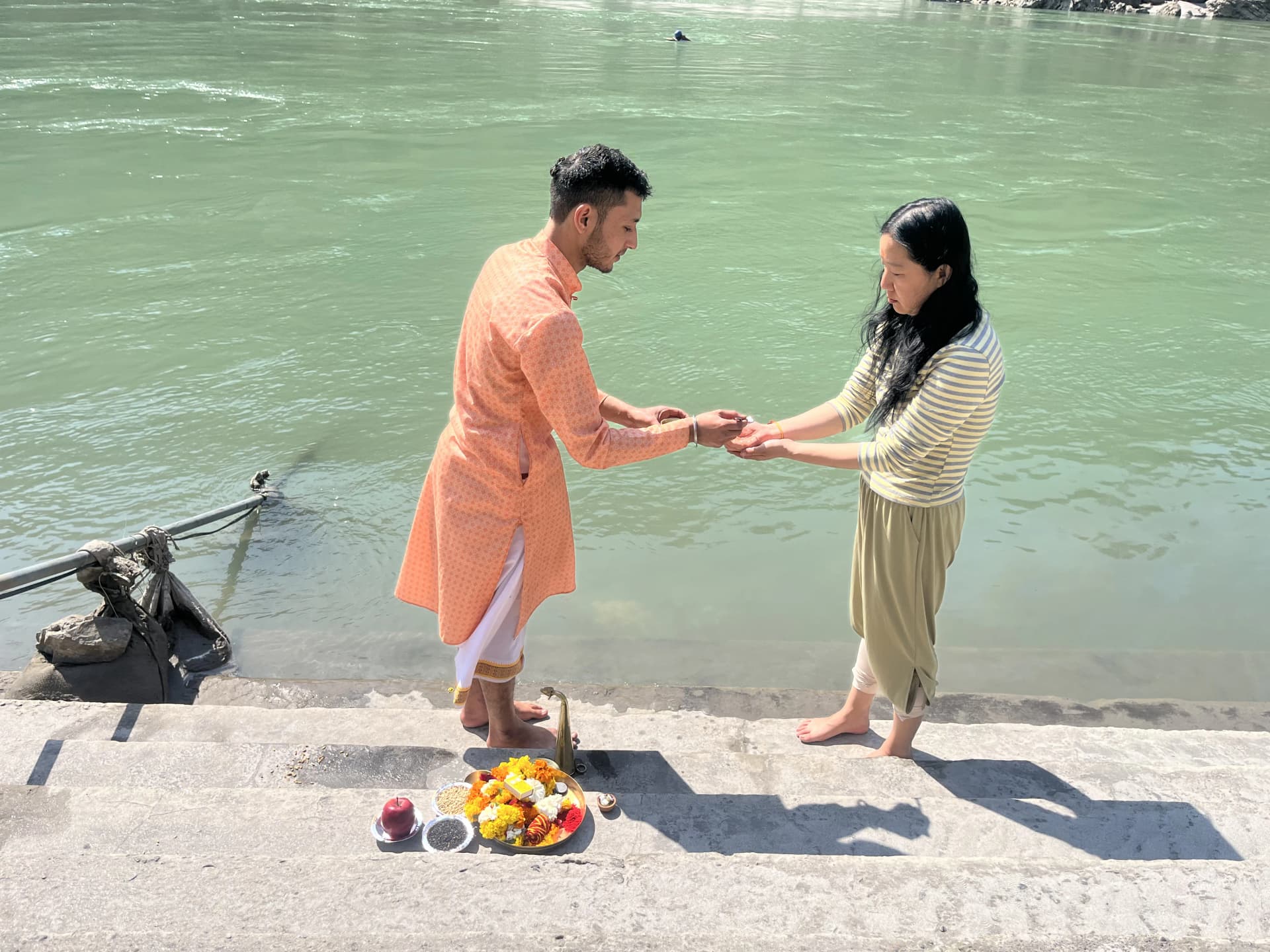
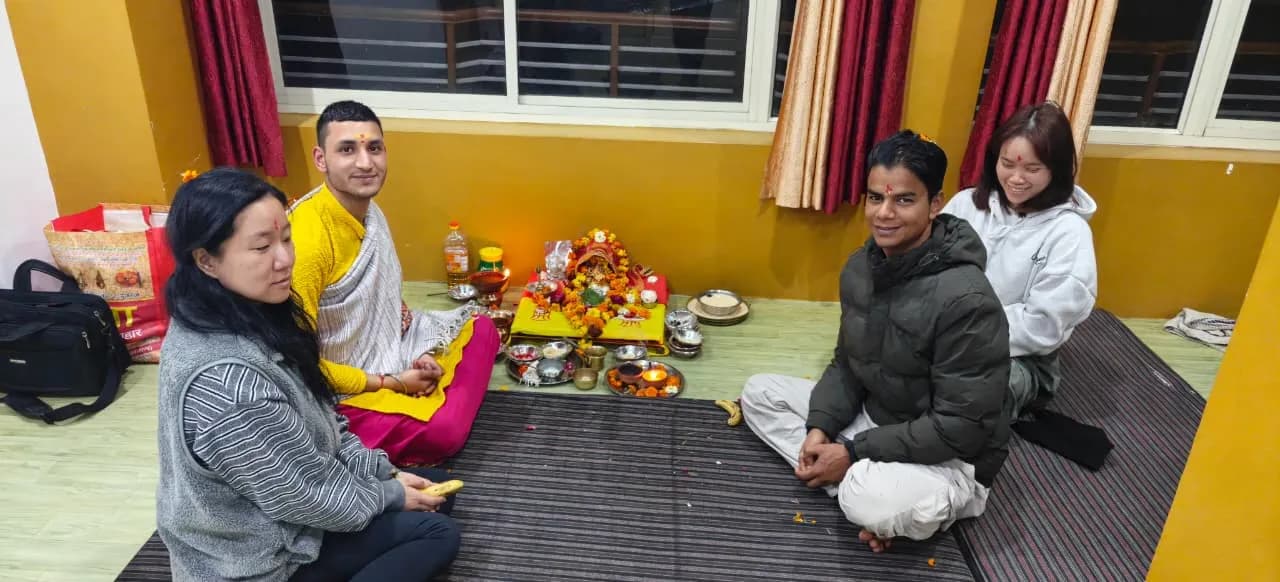
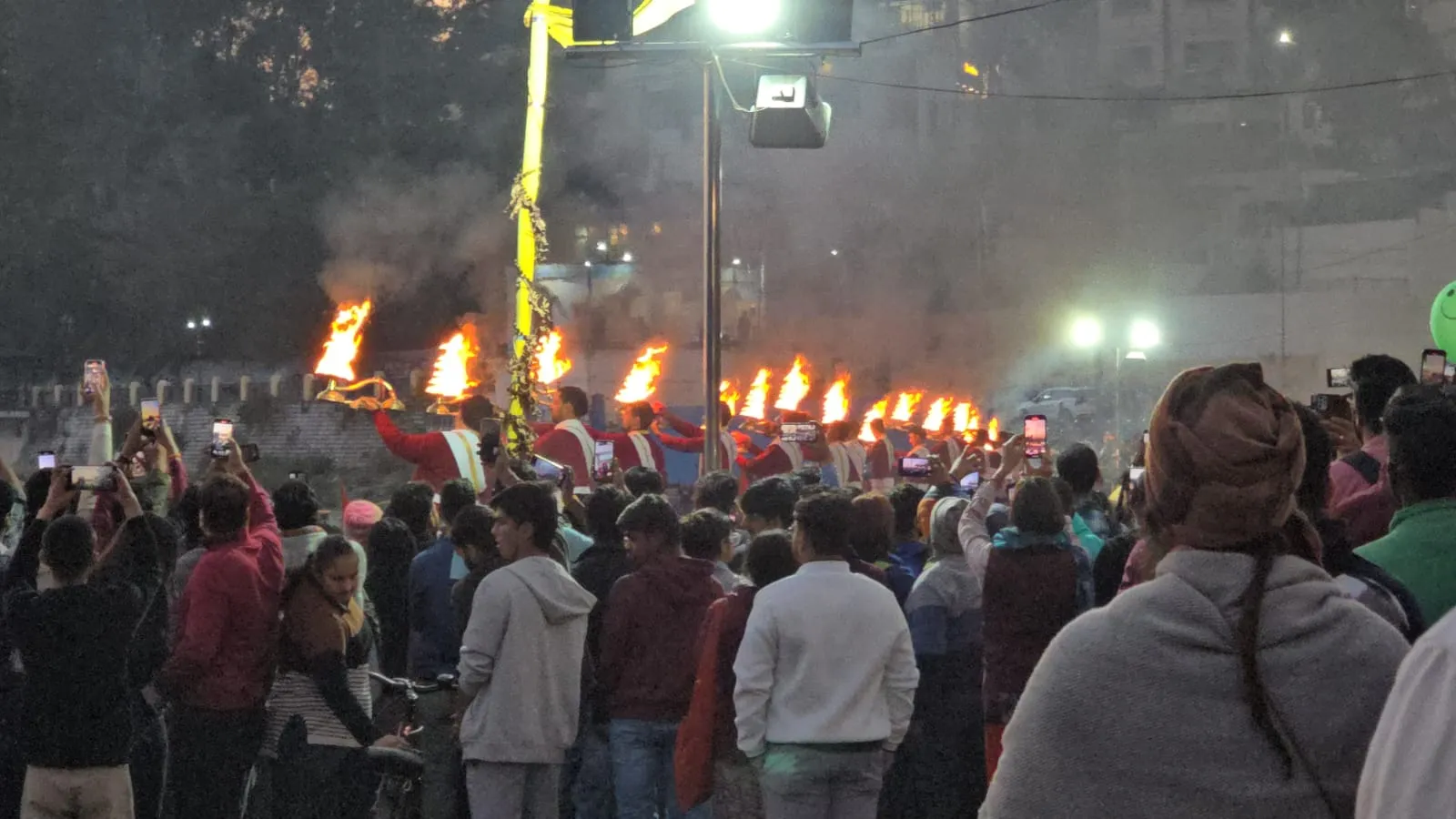
More in the gallery.
Vedic wisdom
Ancient chants
ॐ असतो मा सद्गमय । तमसो मा ज्योतिर्गमय । मृत्योर्मा अमृतं गमय ।
oṃ asato mā sad gamaya | tamaso mā jyotir gamaya | mṛtyor mā amṛtaṃ gamaya |
Lead me from the unreal to the real. Lead me from darkness to light. Lead me from death to immortality.
ॐ पूर्णमदः पूर्णमिदं पूर्णात्पूर्णमुदच्यते ।
oṃ pūrṇam adaḥ pūrṇam idaṃ pūrṇāt pūrṇam udacyate |
That is full; this is full. From fullness, fullness comes.
Advanced Pranayama & Yoga Philosophy Course
Mantra and breath, taught together
- 7, 15 or 30 days
- A new start every month
- Tuition only
Tuition from149 $US13 000 ₹
Visiting Rishikesh and curious about a havan or a puja? Ask us what is planned during your dates.
Keep exploring