Pranayama
50-Hour Pranayama & Bhakti Yoga Training in Rishikesh, 2–8 November 2026
The 50-hour Advanced Pranayama & Bhakti Yoga Meditation programme at Anantadrishti Yoga in Rishikesh: dates, the US$600 all-inclusive fee, the curriculum, the daily rhythm and who it suits.
Somashekar
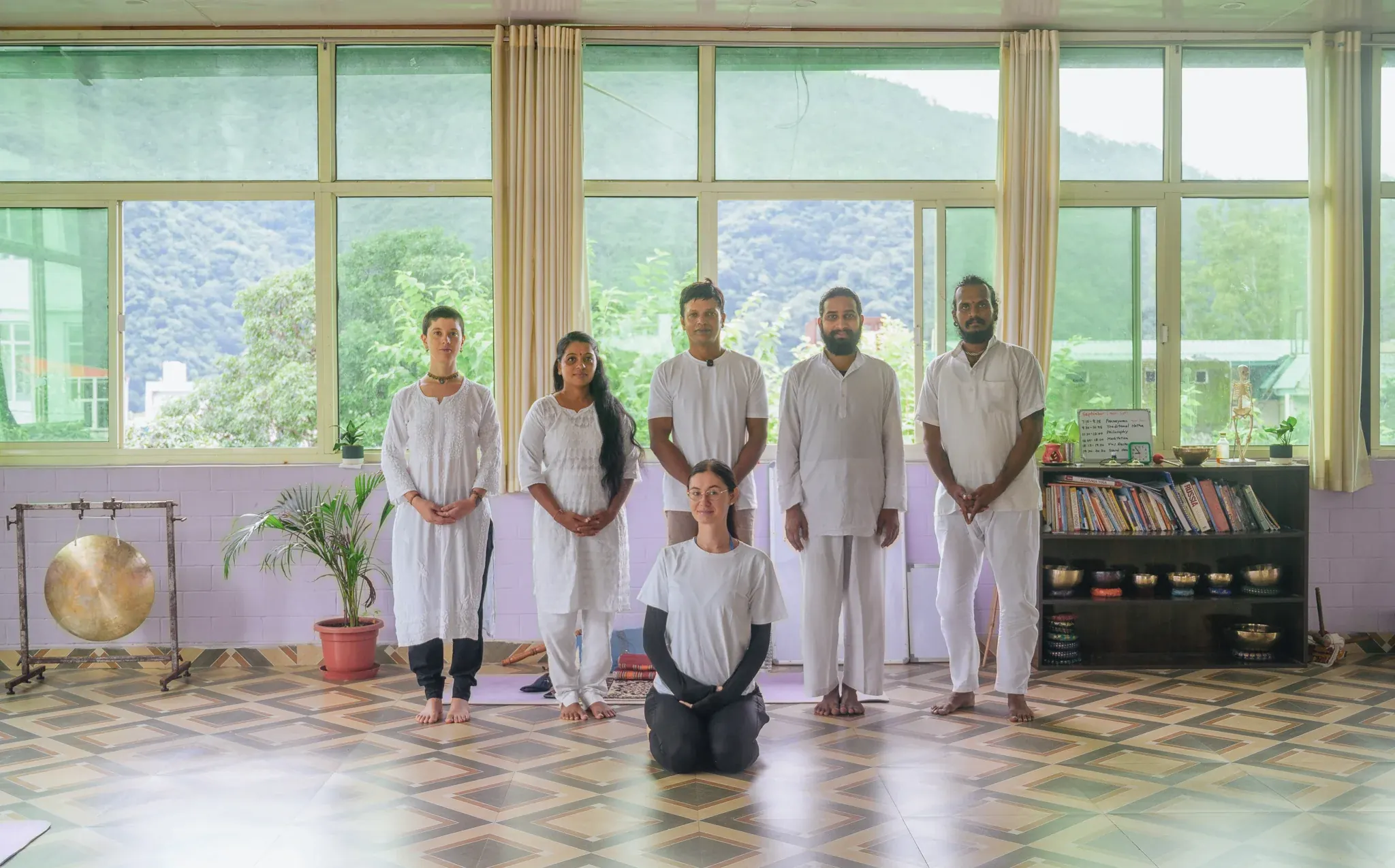
Written by Somashekar, founder and head teacher of Anantadrishti Yoga. Disclosure: this is our own school's training.
Most of our students come for the monthly Advanced Pranayama & Yoga Philosophy Course, which is built around their own practice. Each year some of them ask for something more: a way to learn to share these practices with others, and to spend a week living the devotional side of yoga as well as the breath. The 50-hour training is our answer. This guide sets out the facts, so you can decide whether it suits you before you write to us.
At a glance
| Detail | 50-Hour Advanced Pranayama & Bhakti Yoga Meditation Teacher Training |
|---|---|
| Dates | 2–8 November 2026 (one batch) |
| Length | 7 days, 50 hours |
| Fee | US$600, all-inclusive |
| Included | Tuition, accommodation and meals |
| Where | Near Moktan Coffee Shop, Lower Tapovan, Rishikesh, Uttarakhand 249192 |
| Language | English, in person |
| Main areas | Advanced pranayama, bija mantras and mudras, meditation, scientific understanding, teaching methodology, Bhakti Yoga |
| How to join | Enquire Now form or WhatsApp; a 20% deposit can reserve a place |
What is the 50-hour training?
It is an intensive seven-day programme that brings together traditional yogic knowledge, scientific understanding, experiential practice and Bhakti Yoga. It is designed to deepen your personal practice and to develop your teaching skills. Pranayama and meditation are explored from several angles: neurological, psychological, emotional, physiological and the traditional energetic view, with care taken to tell traditional interpretations apart from what science has established.
The training is guided by Patanjali's Yoga Sutra II.1, which names three principles: tapas (disciplined effort), svadhyaya (self-study) and Ishvara pranidhana (devotion and surrender). Together they shape the week: disciplined practice, observation of your own experience, and devotion.
What does the curriculum cover?
The curriculum has six areas, each practised and studied every day.
- Advanced pranayama: kapalabhati, bhastrika, ujjayi, the nadi pranayamas, bandhas, kumbhakas and chakra-oriented practices.
- Bija mantras and mudras: their traditional principles, how they are applied, and how they combine with pranayama and meditation.
- Meditation: breath awareness, mantra meditation, sound-based practices and contemplative techniques.
- Scientific understanding: respiratory physiology, nervous-system regulation, attention, emotional responses and self-observation.
- Teaching methodology: sequencing a session, demonstration, practical corrections, appropriate adaptations and safe instruction.
- Bhakti Yoga: daily puja, Rudrabhisheka, Vedic mantra chanting, kirtan and sound healing.
What is a day on the training like?
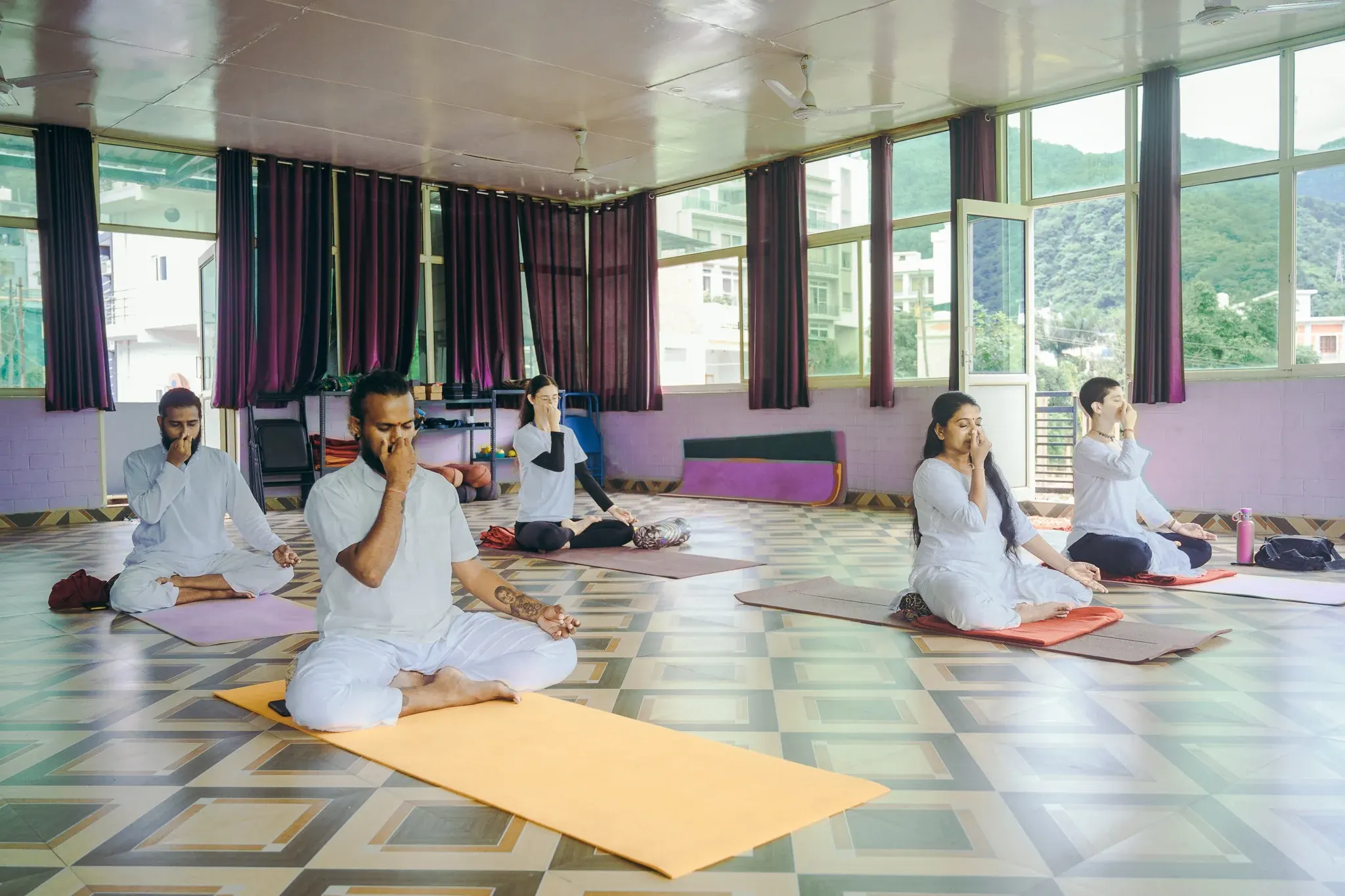
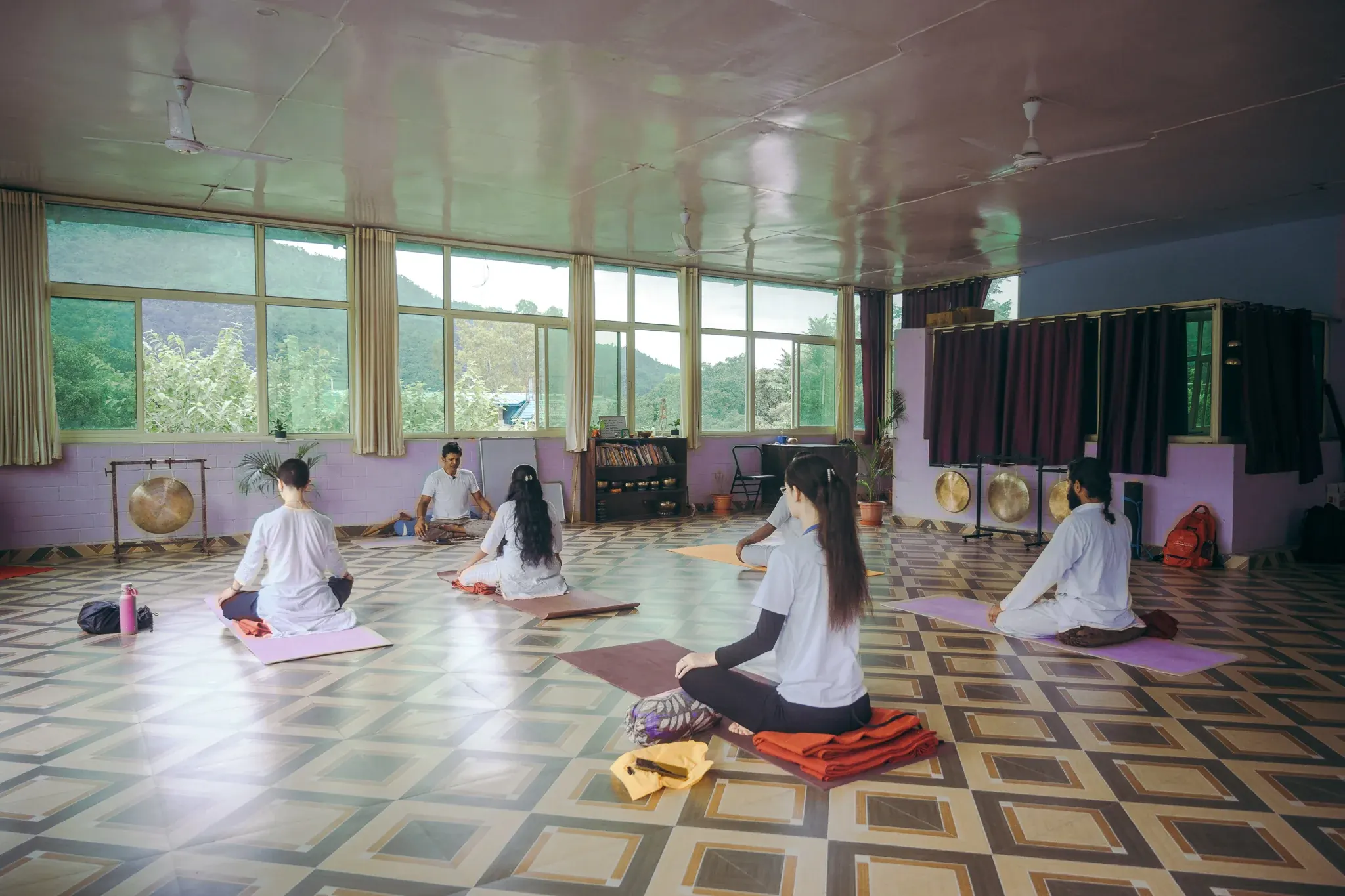
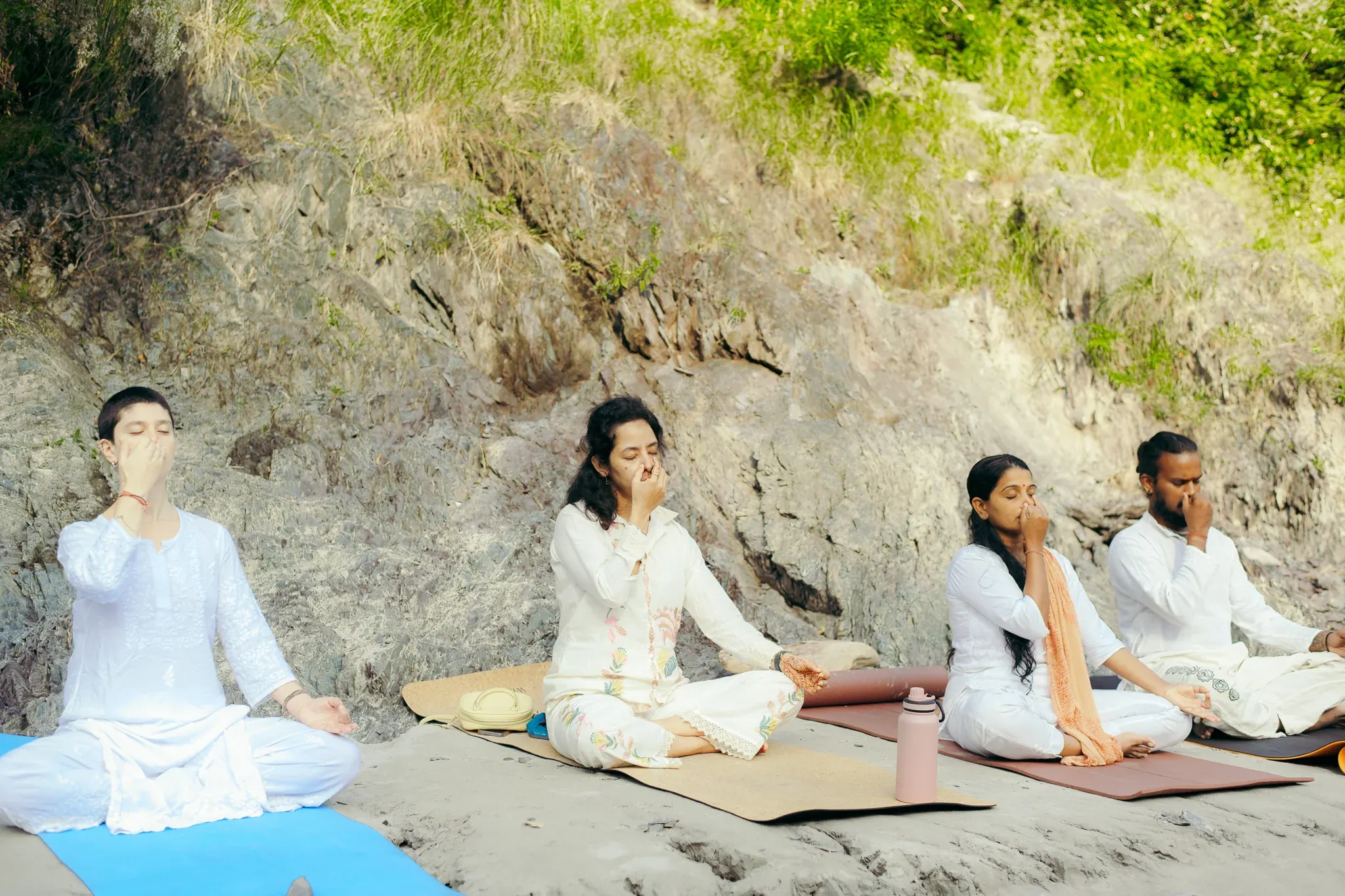
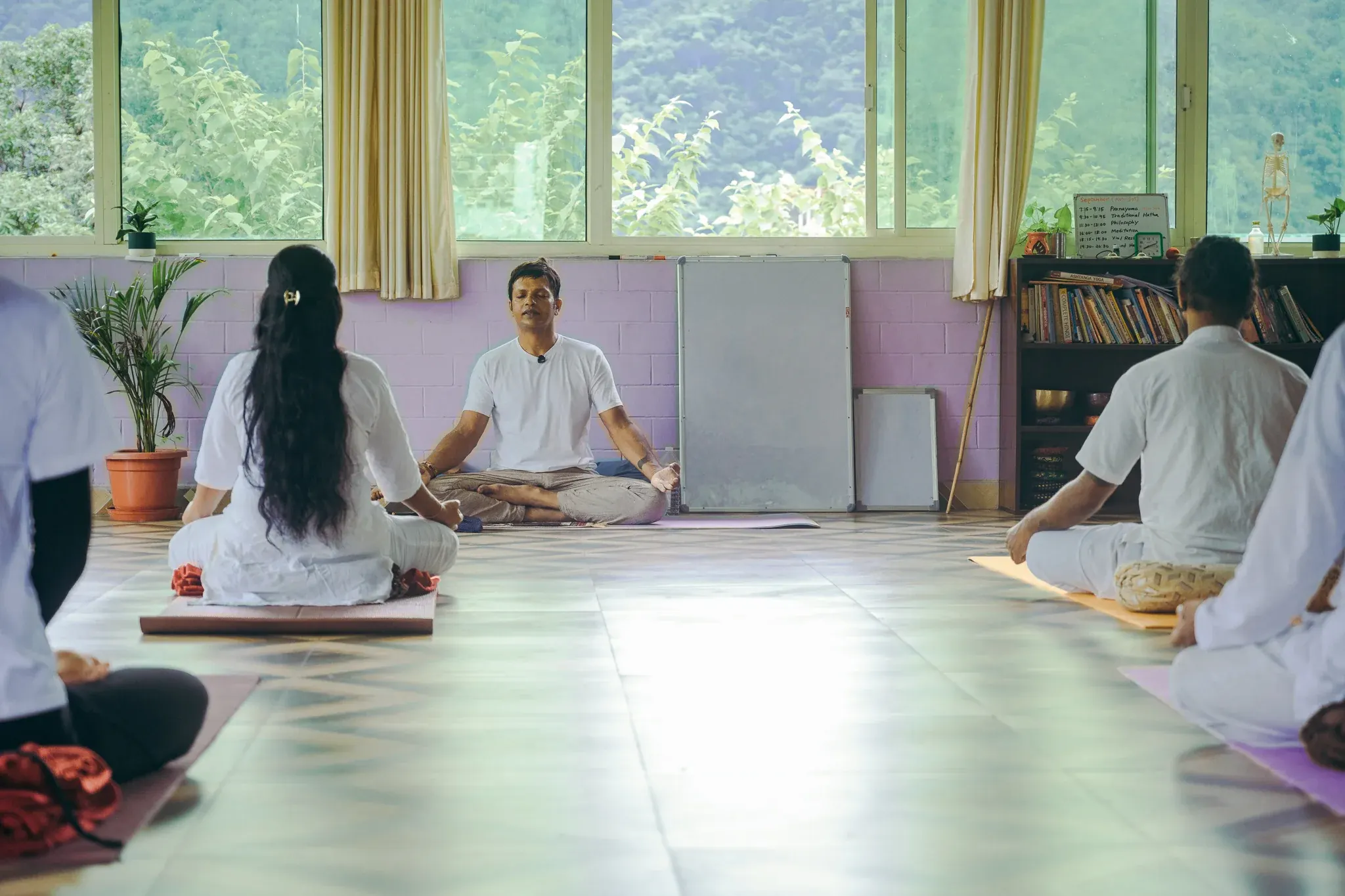
Each day follows a structured discipline from morning to evening. It combines morning rituals, yogic kriyas, intensive pranayama, theoretical study, practical corrections, mantra chanting and meditation, and it closes with evening puja, kirtan and sound healing. Fifty hours in seven days means full days, so arrive rested and plan nothing else for the week.
Because accommodation and meals are included, you don't need to find a room or organise food. That leaves your attention free for the practice, which is the point of an intensive week.
What should you take home from the week?
The aim of the training is to cultivate informed practitioners and capable teachers by bringing together pranayama, meditation, scientific inquiry, traditional yogic knowledge and Bhakti. Its motto sums up the week: "Practise with discipline. Understand through observation. Teach with awareness. Progress through devotion."
In practical terms, that means leaving with a clearer personal practice, a way of observing how each technique affects your body, breath and mind, and the basic tools to sequence, demonstrate and correct a pranayama session for others. A week is a beginning, not a finish line: the practice keeps maturing long after you leave Rishikesh.
Who is the 50-hour training for?
It is for practitioners who are ready to deepen their practice and learn to teach. It suits yoga teachers who want to teach pranayama with more confidence, students who have already done some pranayama and want to go further, and anyone drawn to the devotional side of yoga as well as the breath. Some regular practice before you arrive will help you keep up with a full week.
Intensive breathing and breath retention are not suitable for everyone. If you are pregnant, or have high blood pressure, a heart condition, recent surgery, glaucoma or raised eye pressure, epilepsy, or a serious psychiatric condition, consult your doctor before booking and tell us when you enquire. The training is not medical treatment.
How is it different from the monthly pranayama course?
The monthly course is a tuition-only practitioner course; the 50-hour training is a single all-inclusive week that adds teaching methodology and Bhakti Yoga. The Advanced Pranayama & Yoga Philosophy Course runs for 7, 15 or 30 days, starting on the 1st of the month (Monday the 2nd when the 1st is a Sunday), at US$149, US$229 or US$349 in tuition. It has about three guided hours per teaching day and is not a teacher training. If your aim is your own practice, or you can't come in early November, the monthly course is the better fit. Our comparison of a pranayama course and a 50-hour training sets the two side by side.
How does the price compare?
US$600 covers the whole week: tuition, accommodation and meals. Other 50-hour pranayama and breathwork trainings in India that we found in 2026 listed at approx. €400 without accommodation up to approx. €600 or US$600 with a room and meals, so check what each price includes before you compare. If you see a "7-day pranayama" listing at around US$600 elsewhere, it may be a retreat package rather than a training; ask whether it includes teaching methodology.
How do you plan the trip?
Plan to arrive on 1 November, so you're settled before the first morning. The nearest airport is Jolly Grant, Dehradun, about 22 km from Rishikesh. The shala is near Moktan Coffee Shop in Lower Tapovan, a short walk from Laxman Jhula and the Ganga. Early November is one of the most comfortable times of year in Rishikesh; our guide to the best time to visit and the Tapovan guide cover the area and the weather. Most visitors need a visa for India; check the official requirements for your nationality well ahead.
How do you reserve a place?
Write to us first: tell us a little about your practice and anything you'd like to know, and a teacher will reply personally, usually within 24 hours. You can also message us on WhatsApp. If you'd like to secure your place straight away, it can be reserved online with a 20% deposit.
The full programme, the teacher biography and the Enquire Now form are on the 50-Hour Advanced Pranayama & Bhakti Yoga Meditation Teacher Training page. It is one batch, so if early November suits you, enquire soon.
Frequently asked questions
When is the 50-hour pranayama teacher training in Rishikesh?
Anantadrishti Yoga's 50-Hour Advanced Pranayama & Bhakti Yoga Meditation Teacher Training runs once, on 2–8 November 2026, at the school in Lower Tapovan, Rishikesh. It is seven days and 50 hours.
How much does the 50-hour training cost, and what is included?
US$600, all-inclusive: tuition, accommodation and meals for the training.
What does the 50-hour training cover?
Advanced pranayama (kapalabhati, bhastrika, ujjayi, the nadi pranayamas, bandhas, kumbhakas and chakra-oriented practices), bija mantras and mudras, meditation, the science of breathing and the nervous system, teaching methodology, and Bhakti Yoga: daily puja, Rudrabhisheka, Vedic mantra chanting, kirtan and sound healing.
How do I book a place?
Use the Enquire Now form on the training page or message the school on WhatsApp, and you will get a personal reply, usually within 24 hours. A place can also be reserved online with a 20% deposit.
Is the 50-hour training the same as the 7-day pranayama course?
No. The 7-day Advanced Pranayama & Yoga Philosophy Course is a tuition-only practitioner course (US$149) with about 18 guided hours, starting every month. The 50-hour training is a single all-inclusive batch with about 50 hours, and it adds teaching methodology and Bhakti Yoga.
CategoryPranayama
Cours de pranayama avancé
Aller plus loin : le cours de pranayama avancé, 7, 15 ou 30 jours
- 7, 15 ou 30 jours
- Un nouveau départ chaque mois
- Enseigné en anglais
Frais de cours dès149 $US13 000 ₹