Combining Ujjayi Pranayama with Maha Bandha (the Great Lock) is one of the most powerful and subtle practices in classical Hatha Yoga. Where Ujjayi alone calms the nervous system through its gentle throat constriction and oceanic sound, adding the three bandhas transforms the practice into a deeply meditative and energetically potent technique.
This guide provides complete step-by-step instructions drawn from the Hatha Yoga Pradipika tradition, as taught at Anantadrishti Yoga in Rishikesh. For foundational breathwork techniques, start there if you are new to pranayama.
Preparation
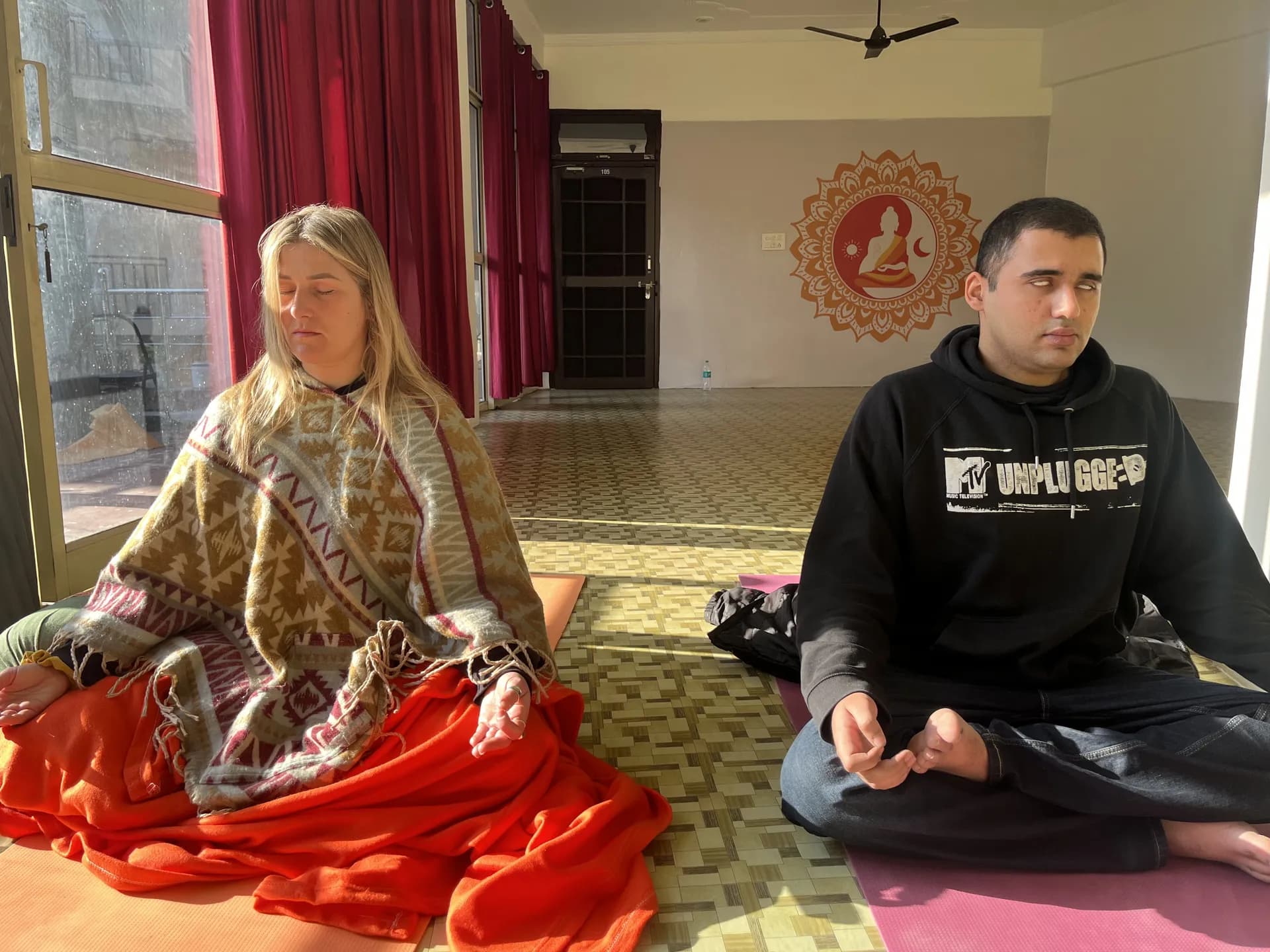
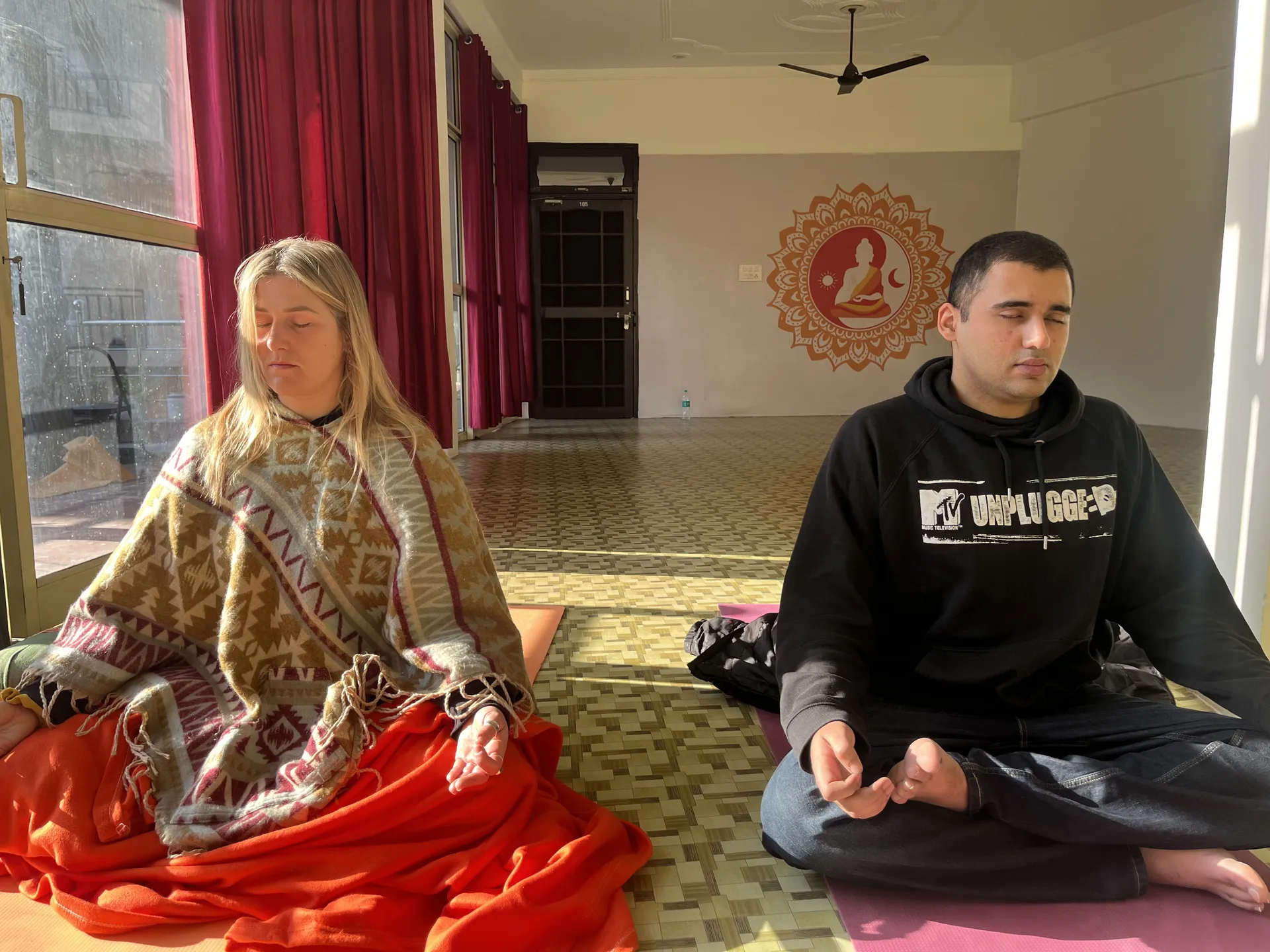
- Sit in Siddhasana, Padmasana, or Vajrasana.
- Keep the spine erect and chin slightly tucked.
- Place hands in Jnana Mudra or Chin Mudra on the knees.
- Close your eyes and draw awareness inward.
- First, establish a soft Ujjayi sound with a gentle throat contraction. Breathe naturally for 1–2 minutes until the rhythm feels steady.
Step 1: Ujjayi Inhalation
- Inhale slowly through both nostrils, maintaining the soft whisper-like sound in the throat.
- Expand the breath in three stages: abdomen → ribs → chest (the full yogic breath).
- Duration: 4–6 seconds for beginners, 8–10 seconds for advanced practitioners.
The sound should be gentle and continuous — like a distant ocean. If you hear a harsh or strained sound, soften the throat contraction.
Step 2: Apply Maha Bandha
After the inhalation is complete, apply the three locks in precise sequence:
- Jalandhara Bandha (Throat Lock): Gently press the chin toward the chest, lengthening the back of the neck. This seals the upper end of the torso and influences the brainstem and vagal pathways.
- Mula Bandha (Root Lock): Contract the perineum and pelvic floor muscles. This activates the pelvic nerves and the base of the spine, creating an upward energetic pull.
- Uddiyana Bandha (Abdominal Lock — subtle): Apply a light inward lift of the abdomen. Do NOT strongly pull in — the lungs are full, so only a gentle upward intention is appropriate here.
The three bandhas together form Maha Bandha — the "Great Lock" — which seals prana within the torso and directs it upward through the Sushumna (central energy channel).
Step 3: Antar Kumbhaka (Internal Retention)
- Hold the breath comfortably with all three locks engaged.
- Keep the face relaxed — no strain in the jaw, eyes, or forehead.
- Focus awareness on the Vishuddhi chakra (throat) or Ajna (the point between the eyebrows).
Duration guidelines:
- Beginners: 5–10 seconds
- Intermediate: 15–25 seconds
- Advanced: 30+ seconds
The golden rule: comfort over duration. If you feel strain, lightheadedness, or the urge to gasp, the retention is too long.
Step 4: Release the Bandhas
Release the locks in the correct reverse order:
- Release Uddiyana Bandha (relax the abdomen).
- Release Mula Bandha (release the pelvic floor).
- Release Jalandhara Bandha (lift the head last).
The order matters because it ensures a smooth, controlled release of pressure rather than a sudden escape of prana.
Step 5: Ujjayi Exhalation
- Exhale slowly with the Ujjayi sound, letting the breath flow smoothly and completely.
- The exhale should be longer than the inhale — this activates the parasympathetic nervous system and deepens the calming effect.
Step 6: Bahir Kumbhaka (Rest and Observe)
After exhalation, take 1–2 normal breaths and observe:
- The stillness in the mind
- Any sensation in the throat or head
- The quality of calm awareness that arises
This pause between rounds is not idle time — it is where the deeper effects of the practice integrate.
Rounds
- Beginners: 3 rounds
- Intermediate: 5 rounds
- Advanced: 7–10 rounds
Quality always takes precedence over quantity. Three attentive rounds surpass ten rushed ones.
Internal Awareness: What You May Experience
During practice, you may notice:
- Gentle pressure or expansion in the head
- Subtle inner sound (nada)
- Deep calm after retention
- Increased mental clarity
These experiences arise from the combined effects of breath control, nervous system balancing, and the pressure dynamics created by the bandhas.
Safety and Precautions
Avoid this practice or seek direct guidance from a qualified teacher if you have:
- High blood pressure
- Heart conditions
- Anxiety or panic disorders
- Dizziness during breath retention
Common mistakes to avoid:
- Forcing the throat — the sound should always be gentle
- Over-holding the breath beyond comfort
- Tightening the face or shoulders
- Strong Uddiyana Bandha with full lungs (this creates excessive pressure)
Traditional Insight: From the Hatha Yoga Pradipika — Ujjayi controls prana through the throat; bandhas direct and stabilize prana. Together, they create a steady upward flow and mental stillness.
Bhastrika + Maha Bandha is powerful and activating. Ujjayi + Maha Bandha is subtle, stabilizing, and meditative. This practice leads toward Nada (inner sound) → Laya (dissolution) → Deep meditation.
Practices of this depth are best learned in person under experienced guidance. Our advanced pranayama immersion in Rishikesh dedicates focused time to Ujjayi, bandhas, and kumbhaka, while the 7-day pranayama retreat is an ideal starting point for newer practitioners.
Continue your journey: Philosophy of Ujjayi | Ujjayi Pranayama | Breathwork Techniques
Share this guide
Category
Practice GuideWritten by
Somesh
RYT 500 · Yoga Philosophy & Pranayama
An experienced yoga teacher and Registered Yoga Teacher (RYT 500) specializing in yoga philosophy and pranayama at Anantadrishti Yoga in Rishikesh, India.
More articles by Somesh