Skip to content

Rishikesh · 7, 15 or 30 days

Advanced Pranayama & Yoga Philosophy Course in Rishikesh

The most advanced pranayama and philosophy training in Rishikesh

  • Kumbhaka with the bandhas from the first week
  • Nadi pranayamas in the second week, chakra pranayamas in the second half of the month
  • Mudras and bija mantras coordinated with the practices
  • A session for corrections every teaching day

Pranayama, its science and its philosophy, taught in two sessions a day, Monday to Saturday. Choose 7, 15 or 30 days; all three begin together at the start of the month. Tuition from $149.
Reserve your seat (20% deposit)

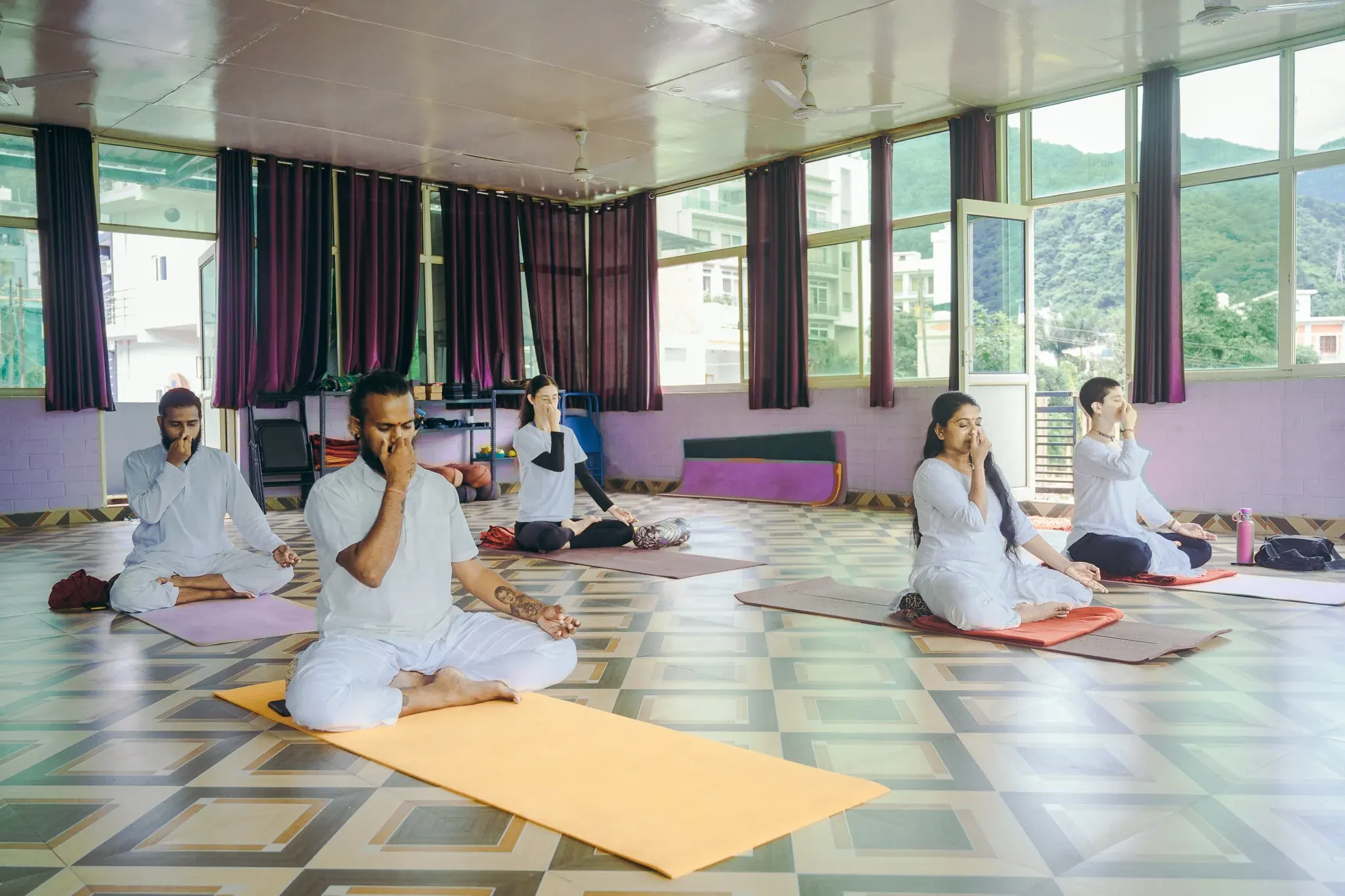
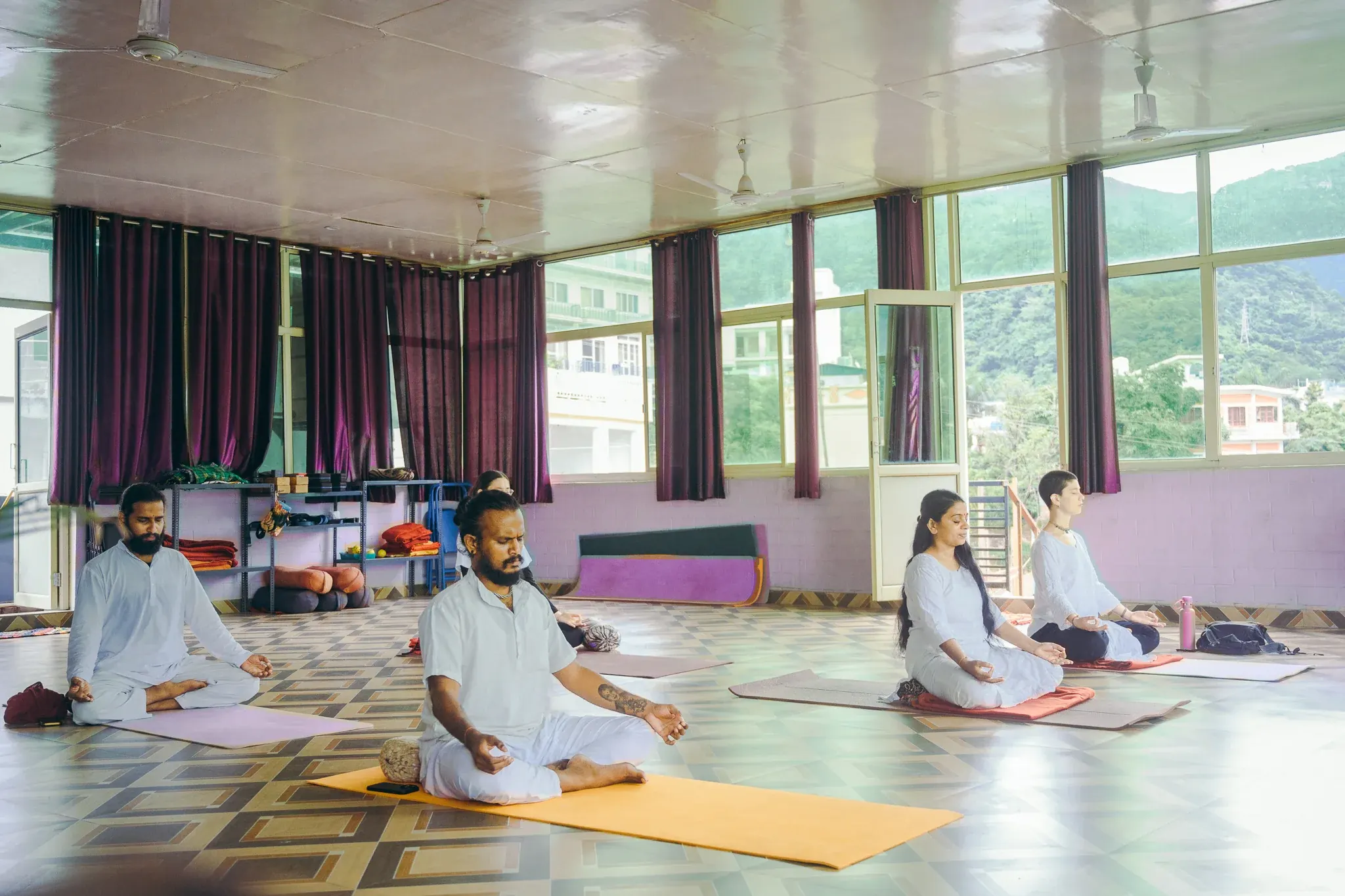
Five students practice Nadi Shodhana alternate nostril breathing in a Rishikesh pranayama class
Next start

The 1st is a Sunday, so this cycle begins on Monday the 2nd.

5.0 on Google, from 119 reviews

At a glance

In short

The Advanced Pranayama & Yoga Philosophy Course at Anantadrishti Yoga, Rishikesh, runs 7, 15 or 30 days. All three start on the 1st of the month (Monday the 2nd if the 1st is a Sunday); the next start is 2 November 2026. Tuition only: $149, $229 or $349. Classes run 07:30–09:00 and 11:30–13:00, Monday to Saturday.

Starts
The 1st of every month (Monday the 2nd when the 1st is a Sunday)
Course days
  • 7 daysThe first 7 days of the monthly cycle
  • 15 daysThe first 15 days of the monthly cycle
  • 30 days30 days: the whole cycle
Tuition
  • 7 days$149₹13,000
  • 15 days$229₹20,000
  • 30 days$349₹30,000
Daily sessions
07:30–09:00 and 11:30–13:00, Monday to Saturday
Teaching days
  • 7 days6 days
  • 15 days13 days
  • 30 days26 days
Guided hours
  • 7 days18 hours
  • 15 days39 hours
  • 30 days78 hours
Location
Lower Tapovan, Rishikesh, Uttarakhand, India
Language
English
Accommodation
Not included. We help you find a room nearby.
Deposit
Optional: 20% online, charged in rupees, to hold a seat

Teaching days and hours are counted for the next start, 2 November 2026. Sunday is a rest day.

7 days

7-Day Pranayama Course: Kumbhaka & Bandha Foundations ($149)

The foundations, with kumbhaka and the bandhas from the first week.

Seven days of the core practices: Kapalabhati, Bhastrika, yogic breath, Agnisara and Ujjayi, the three bandhas, Nadi Shodhana with Chandra and Surya nadi bhedana, and breath retention with the bandhas. It suits a first serious course, or a short stay in Rishikesh.

$149₹13,000Tuition only
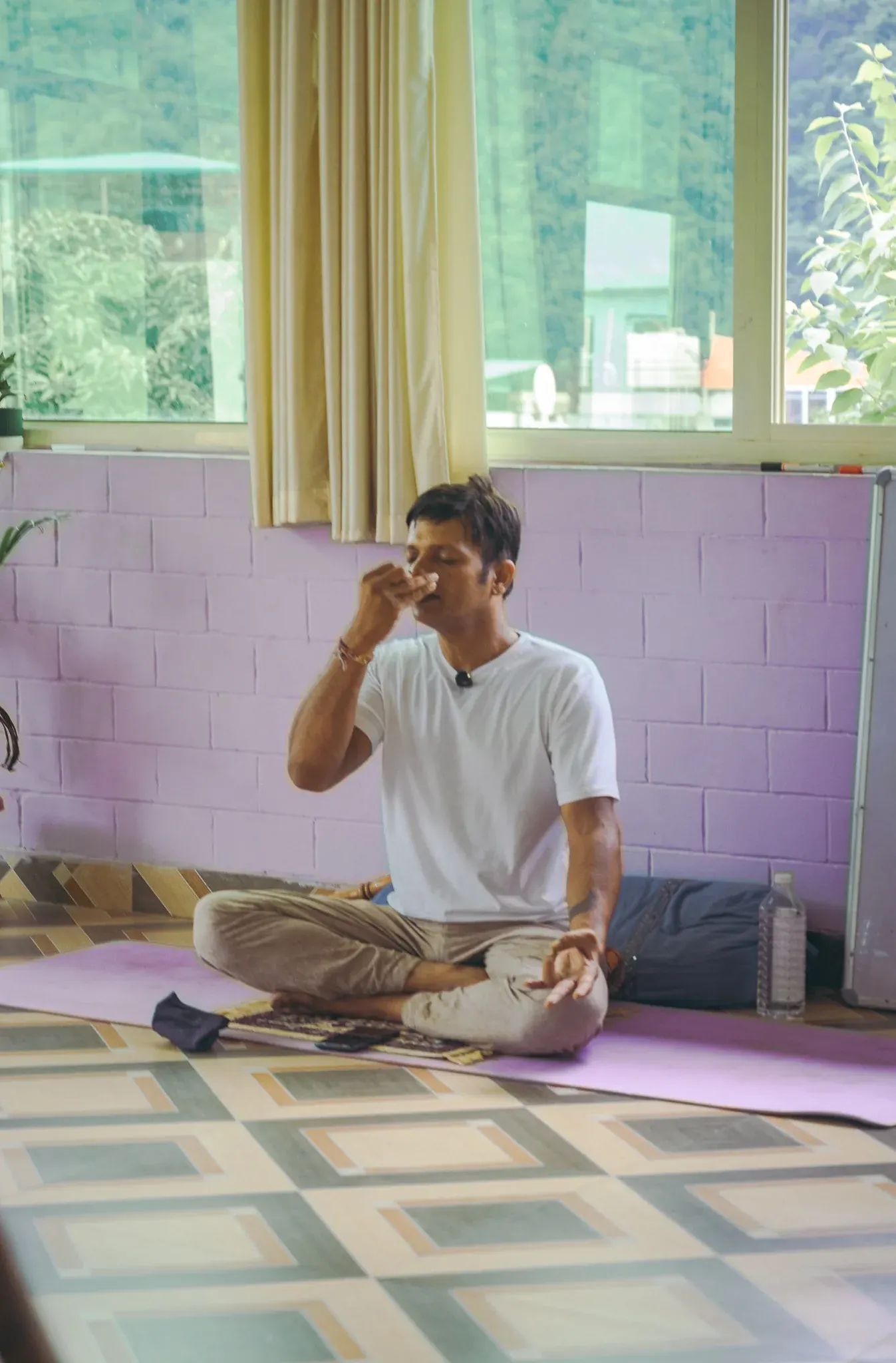
Teacher demonstrates Nadi Shodhana alternate nostril breathing with his right hand at the nose in a Rishikesh shala

What you practise

Every course begins with these practices:

  1. Kapalabhatiskull-shining breathShort, active exhalations from the abdomen, each followed by a passive inhalation. The Hatha Yoga Pradipika counts it among the six cleansing practices; you build an even, steady rhythm first.Read the guide
  2. Bhastrikabellows breathStrong, equal inhalations and exhalations through the nose, worked like a blacksmith's bellows. It is practised in rounds, with rest and observation between them.Read the guide
  3. Yogic breathfull three-part breathSlow, complete breathing that fills the abdomen, the ribs and the upper chest in turn, and empties in reverse. Every other practice in the course rests on it.
  4. Agnisarafire cleansingWith the breath held out, the abdominal wall is drawn in and released in a steady rhythm. It is practised on an empty stomach and prepares the abdomen for Uddiyana bandha.
  5. Ujjayi pranayamavictorious breathBreathing through a slight narrowing of the throat, which gives the breath a soft, even sound. The sound lets you hear the length and steadiness of every breath.Read the guide
  6. Bandhas: Mula, Uddiyana and Jalandhara bandhathe three locksMula bandha, the root lock at the pelvic floor; Uddiyana bandha, the upward abdominal lock; and Jalandhara bandha, the chin lock at the throat. You learn where each one is held and how it is released.Read the guide
  7. Nadi Shodhana with Chandra nadi and Surya nadi bhedanachannel-cleansing breath, with the moon and sun channel breathsAlternate-nostril breathing, with the single-nostril practices Chandra nadi bhedana (breathing in through the left nostril) and Surya nadi bhedana (breathing in through the right). You compare how each pattern changes the breath and the mind.Read the guide
  8. Kumbhaka with bandhas: Antar kumbhaka and Bahya kumbhakabreath retention, inside and outsideAntar kumbhaka holds the breath in after inhaling; Bahya kumbhaka holds it out after exhaling. Both are practised with the bandhas, starting with short, comfortable holds.Read the guide

What every course includes

15 days

15-Day Pranayama Course: Maha Bandha & Nadi Pranayamas ($229)

The foundations, then pranayama joined to the bandhas.

Fifteen days: the full 7-day foundation, then a second week in which the practices are joined to Mula, Uddiyana and Maha bandha, and pranayamas for the nadis are added. It suits students with some practice who want more than an introduction.

$229₹20,000Tuition only
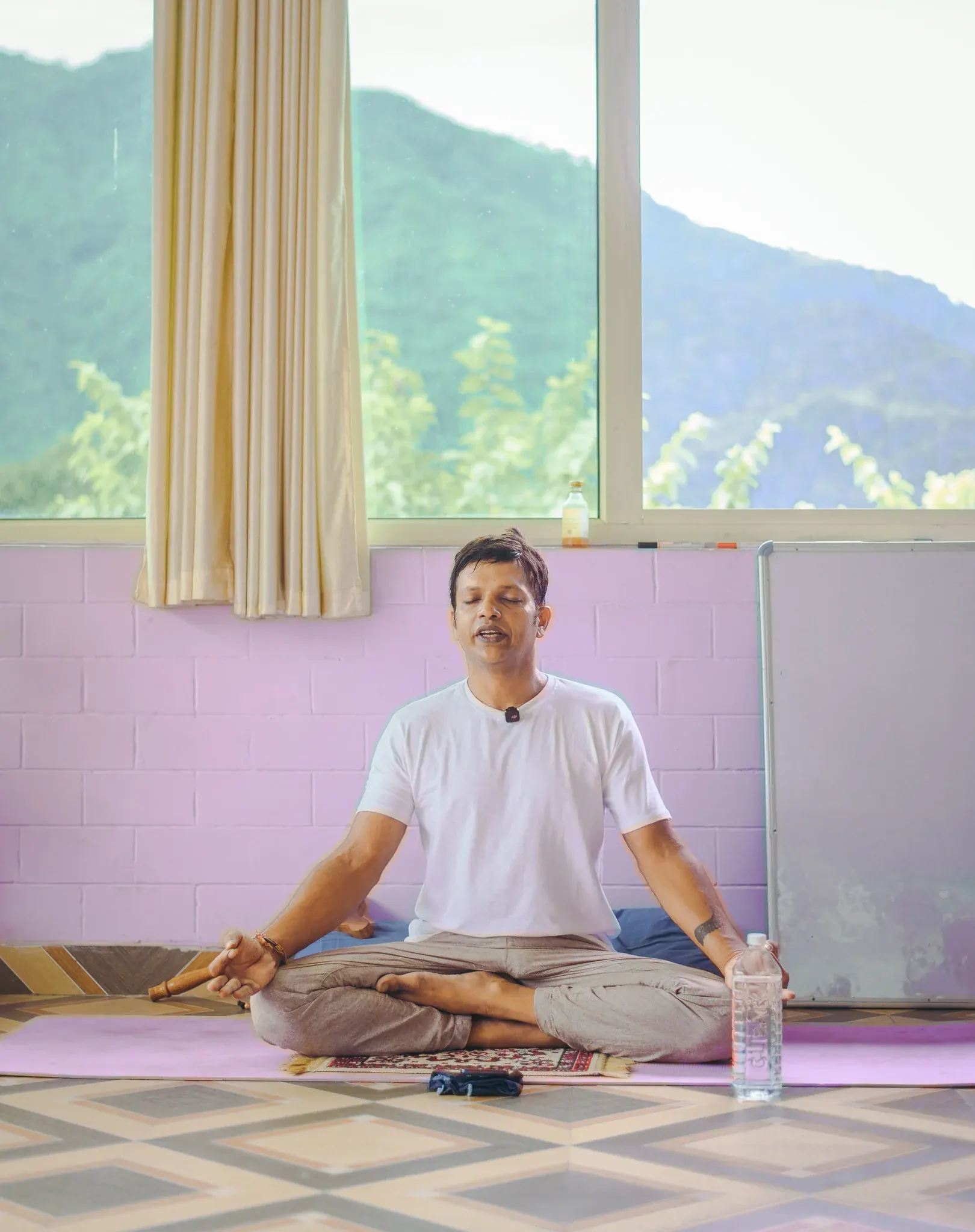
Pranayama teacher seated cross-legged with eyes closed before a window overlooking forested hills in Rishikesh

What you practise

Everything in the 7-day course, plus:

  1. Kapalabhati with Mula bandha and Uddiyana bandhaskull-shining breath with the root and abdominal locksKapalabhati joined to Mula bandha and Uddiyana bandha, building on the separate practice of each in the first week.
  2. Bhastrika with Maha bandhabellows breath with the great lockBhastrika joined to Maha bandha, in which the three locks are held together.Read the guide
  3. Deep breaths with Maha bandhadeep breathing with the great lockSlow, deep breaths with Maha bandha: the same three locks, held with a quiet breath instead of a forceful one.
  4. Ujjayi pranayama with Mula bandha and Uddiyana bandhavictorious breath with the root and abdominal locksUjjayi joined to Mula bandha and Uddiyana bandha, so that the sound of the breath and the hold of the locks are practised together.
  5. Nadi Shodhana with Muladhara and Ida & Pingala nadi stimulationchannel cleansing with the root centre and the left and right channelsNadi Shodhana with attention on Muladhara, the root centre, and on stimulating Ida and Pingala, the left and right channels of yoga's subtle anatomy.Read the guide
  6. Nadi (energy-channel) pranayamasbreath practices for the energy channelsPranayamas that work with the nadis, the channels through which prana is said to move. You observe what changes in the mind, the body and your energy as you practise them.
  7. Kumbhakasbreath retentionsBreath retention continues through the second week, now within the combined bandha practices.

What every course includes

30 days

30-Day Pranayama Course: A Full Month, with Chakra Pranayamas ($349)

The whole month: every practice, through to the chakra pranayamas.

The full month: everything in the 7 and 15-day courses, then the advanced practices and the chakra pranayamas in the second half. It suits students who want the whole progression, with time for each stage to settle.

$349₹30,000Tuition only
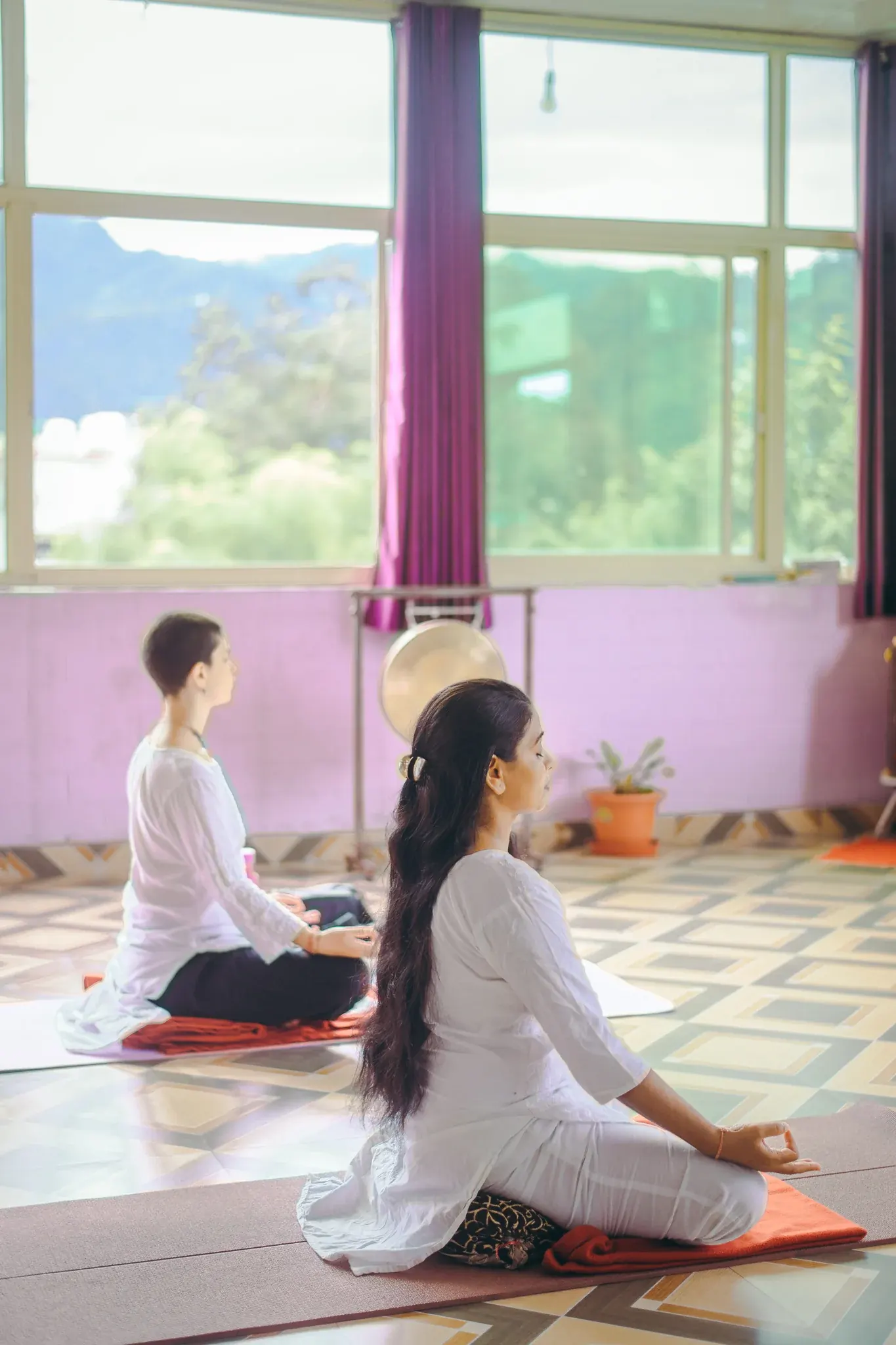
Woman in white meditating in chin mudra in profile beside a brass gong in a Rishikesh yoga shala

What you practise

Everything in the 15-day course, plus:
  1. Advanced pranayama practicesthe more demanding practicesThe more demanding practices of the course, taught in the second half of the month on the ground laid in the first two weeks.
  2. Chakra pranayamasbreath practices for the energy centresPranayamas practised with attention on the chakras, the energy centres described in yoga, together with mudras and bija mantras.

What every course includes

Daily schedule

Classes run Monday to Saturday in two sessions: pranayama practice, 07:30–09:00; then corrections, further practice and the science and philosophy of pranayama, 11:30–13:00. Sunday is a rest day. Each teaching day at the Anantadrishti Yoga shala in Rishikesh gives three hours of guided teaching.
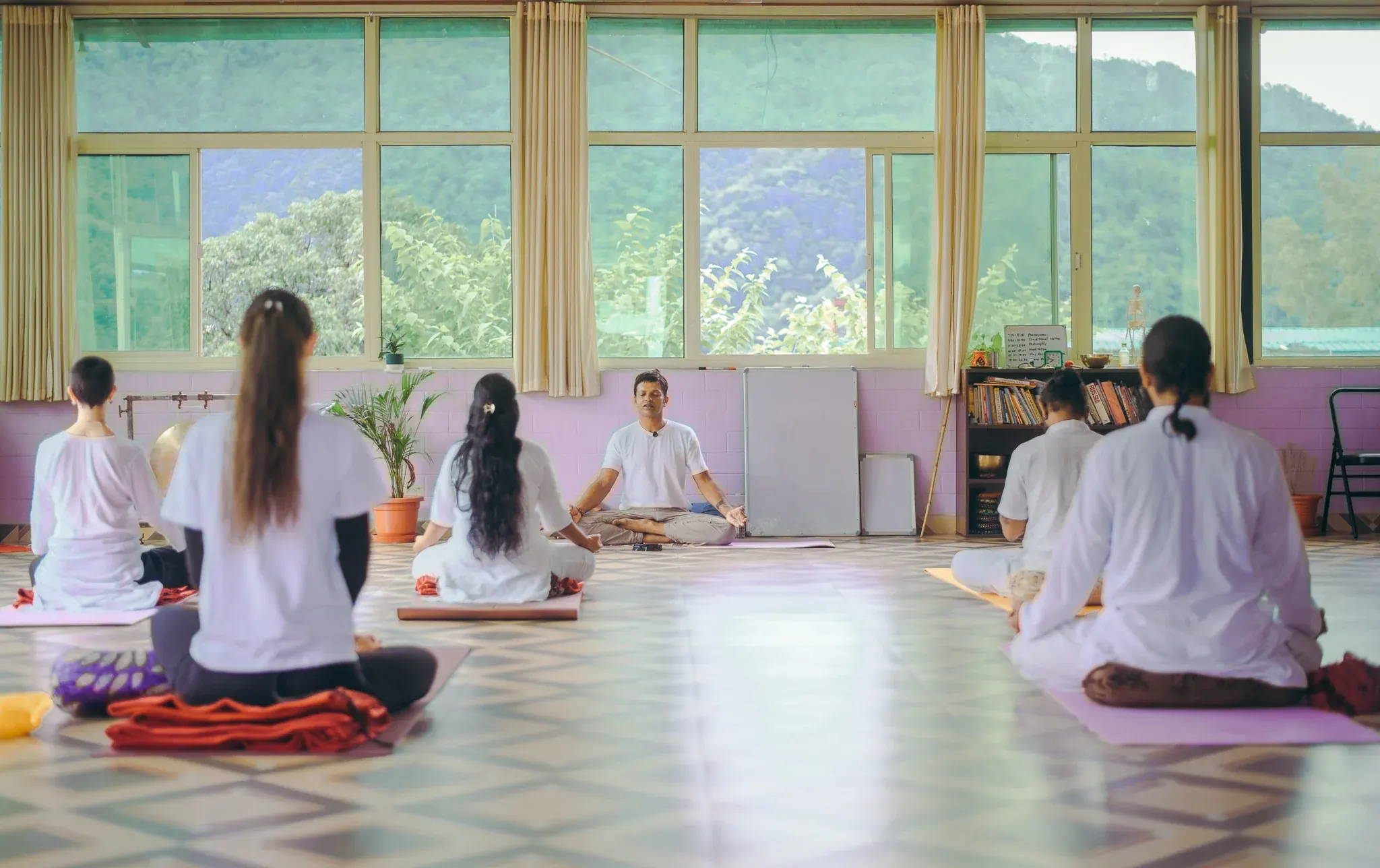
Teacher leading five seated students in a window-lined yoga shala facing green forested hills in Rishikesh

Pranayama practice

The day's practice, guided as a group: the techniques of your course in sequence, with the bandhas, mudras and bija mantras.
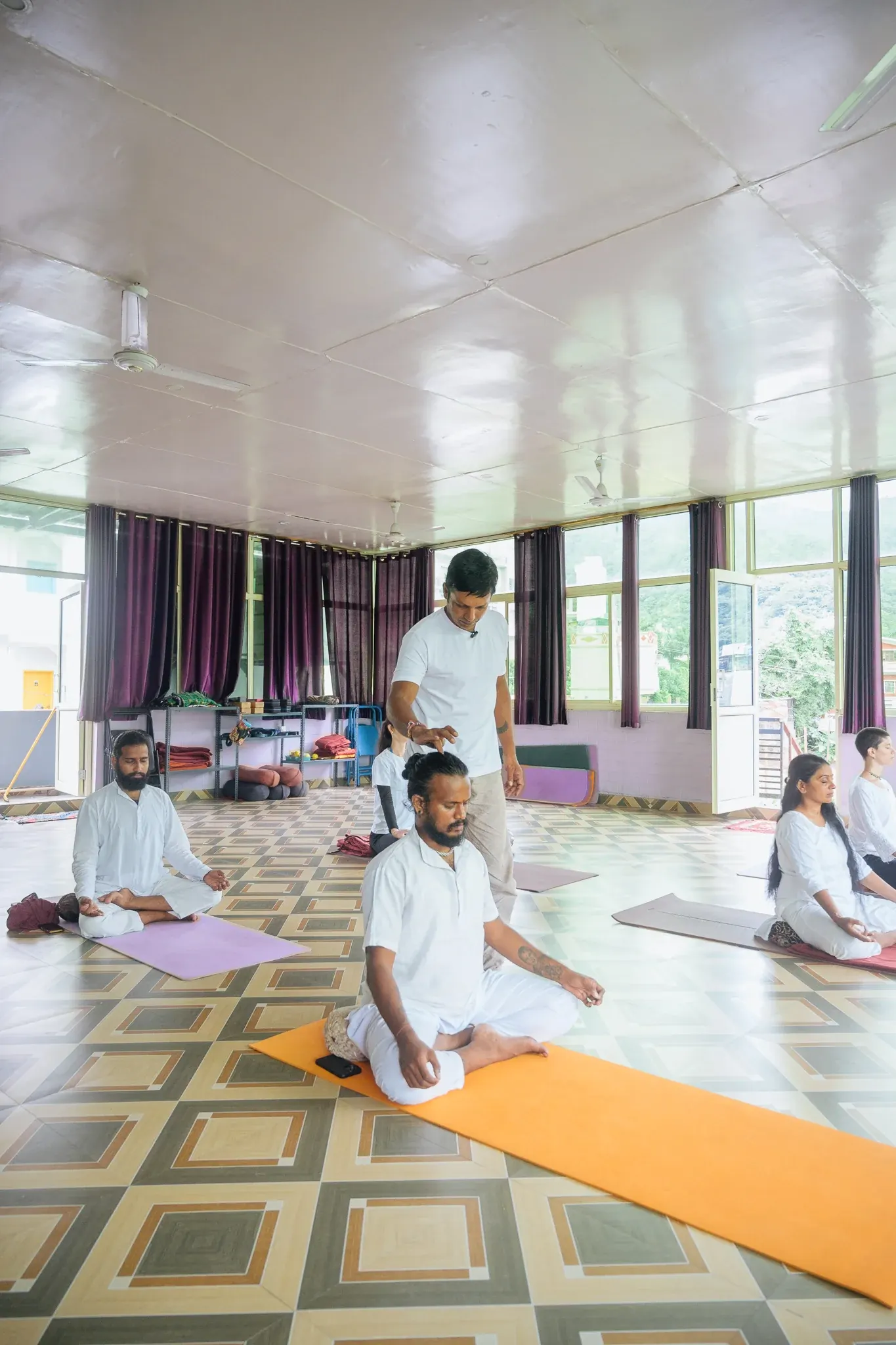
Teacher stands over a seated student, guiding his posture during a class in a Rishikesh yoga hall

Corrections, science & philosophy

Corrections and further practice, then the science and philosophy of pranayama: how the practices work, and how classical yoga texts describe the breath and the mind.

Sunday is a rest day, with no classes. Afternoons are free for rest, reading and quiet practice of your own.

One monthly cycle, three depths

All three courses begin on the same day and share the same first week. The 7-day course ends after seven days, the 15-day course at mid-month, and the 30-day course runs the whole cycle.
  1. 7-day course: the first 7 days ·  · 6 teaching days
  2. 15-day course: the first 15 days ·  · 13 teaching days
  3. 30-day course: the whole cycle ·  · 26 teaching days
  4. Sunday: rest day
Starts on the 1st of every month (Monday the 2nd when the 1st is a Sunday).

What every course includes

Whichever course you choose, the practice is also a study. In all three courses, students observe how each practice influences four areas, and learn to read those changes over the days.
Students in white meditating in chin mudra in a Rishikesh yoga shala with windows overlooking green hills
  1. I

    Mind

    Attention, mood and the movement of thought: the psychology of each practice.Is attention steadier, or more scattered?
  2. II

    Nervous system

    Signs of activation and of settling: heartbeat, warmth, alertness, calm.Do you feel more alert, or more at rest?
  3. III

    Body

    Posture, the diaphragm and abdomen, and the felt effect of each bandha.Where does the breath move, and where is it held?
  4. IV

    Energy

    Prana as yoga describes it: sensations of flow, heat, lightness or stillness.What moves, and where, while the breath is held?

Mudras & bija mantras

Mudras (hand gestures) and bija mantras (seed syllables) are coordinated with the practices, and you observe their influence in the same four areas.
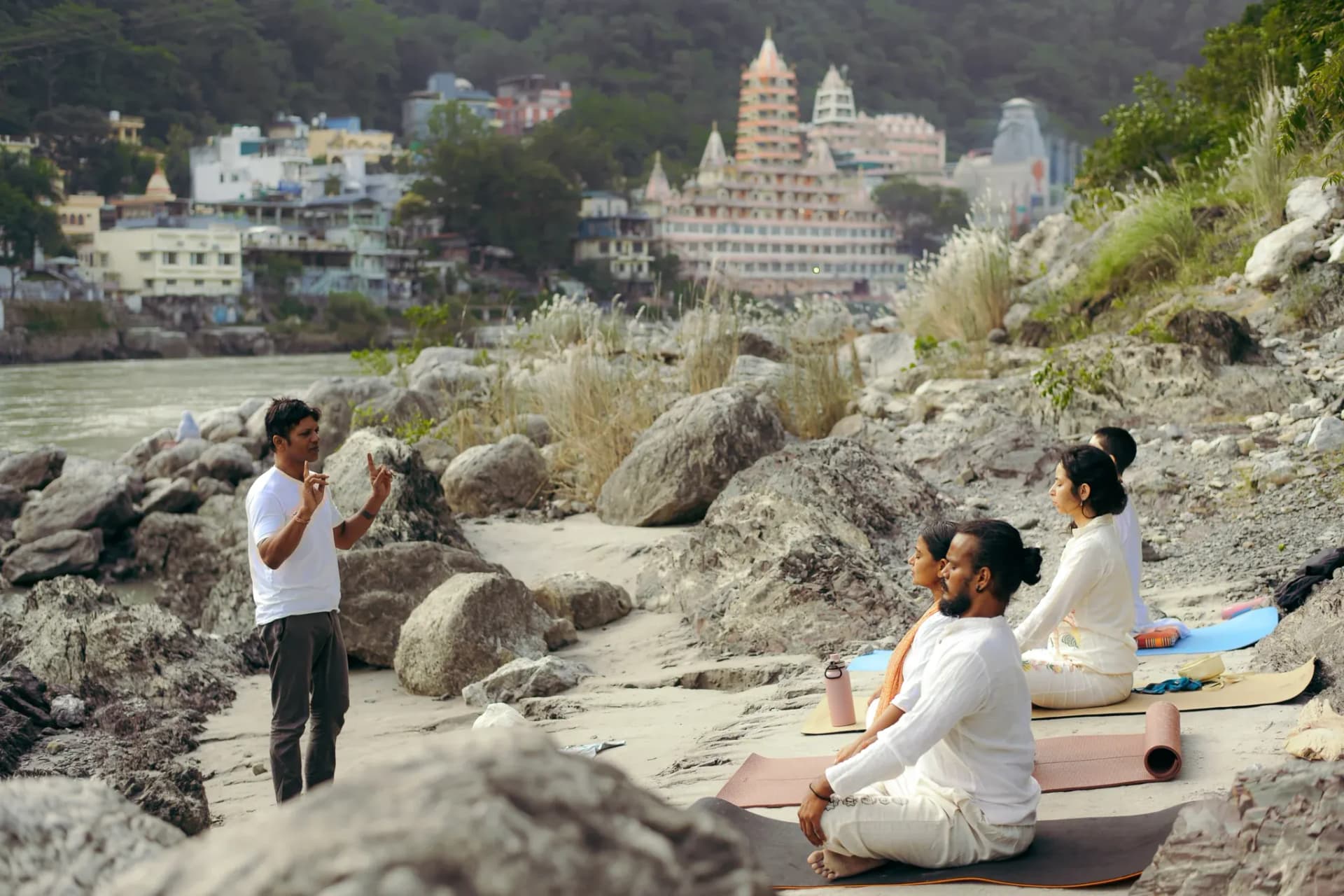
Yoga teacher instructs four seated students on the Ganga riverbank in Rishikesh, Trimbakeshwar temple behind

Pranayama & yoga philosophy, taught together

Philosophy is not a separate course here, and not a lecture series. It belongs to the daily late-morning session, next to the corrections, and it stays close to the practice.

Pranayama on the banks of the Ganga, Rishikesh

You study how classical yoga texts, such as Patanjali's Yoga Sutras and the Hatha Yoga Pradipika, describe prana, the breath and the mind, and you test those descriptions against what you observe in your own practice.

The science of breathing is approached the same way: set beside direct experience, never in place of it.

The philosophy of breath

चले वाते चलं चित्तं निश्चले निश्चलं भवेत् । योगी स्थाणुत्वमाप्नोति ततो वायुं निरोधयेत् ॥

cale vāte calaṃ cittaṃ niścale niścalaṃ bhavet | yogī sthāṇutvam āpnoti tato vāyuṃ nirodhayet ||

When the breath moves, the mind moves. When the breath is still, the mind becomes still, and the yogi attains steadiness. Therefore one should restrain the breath.
Haṭha Yoga Pradīpikā 2.2 (Svātmārāma)

Fees & what's included

Fees at Anantadrishti Yoga cover tuition only: $149 (₹13,000) for 7 days, $229 (₹20,000) for 15 days and $349 (₹30,000) for 30 days. Accommodation and meals are not included, but we help you find a room nearby in Tapovan.

Included

  • Both daily sessions, Monday to Saturday, for the length of your course
  • Corrections every teaching day
  • The science and philosophy of pranayama
  • Mudras and bija mantras with the practices

Not included

  • Accommodation
  • Meals
  • Travel to Rishikesh

Accommodation can be arranged nearby in Tapovan. Tell us your dates and budget when you enquire, and we will help you find a room.

To hold a seat, you can pay a 20% deposit online: ₹2,600 for 7 days, ₹4,000 for 15 days or ₹6,000 for 30 days. The balance is paid on arrival. Enquiring costs nothing.

Fees are shown in US dollars and Indian rupees. Online payments are charged in rupees; your bank converts the amount.

Which course is right for you?

The three courses share one beginning. What changes is how far you go.
  1. 7-Day Pranayama Course

    Course days
    The first 7 days of the monthly cycle
    Tuition
    $149₹13,000
    Teaching days (next start)
    6 days
    Guided hours (next start)
    18 hours
    Practices added
    Every course begins with these practices:
    • Kapalabhati
    • Bhastrika
    • Yogic breath
    • Agnisara
    • Ujjayi pranayama
    • Bandhas: Mula, Uddiyana and Jalandhara bandha
    • Nadi Shodhana with Chandra nadi and Surya nadi bhedana
    • Kumbhaka with bandhas: Antar kumbhaka and Bahya kumbhaka
    Best for
    A first serious pranayama course, or one week in Rishikesh.
  2. 15-Day Pranayama Course

    Course days
    The first 15 days of the monthly cycle
    Tuition
    $229₹20,000
    Teaching days (next start)
    13 days
    Guided hours (next start)
    39 hours
    Practices added
    Everything in the 7-day course, plus:
    • Kapalabhati with Mula bandha and Uddiyana bandha
    • Bhastrika with Maha bandha
    • Deep breaths with Maha bandha
    • Ujjayi pranayama with Mula bandha and Uddiyana bandha
    • Nadi Shodhana with Muladhara and Ida & Pingala nadi stimulation
    • Nadi (energy-channel) pranayamas
    • Kumbhakas
    Best for
    Students with some yoga or breathing practice who want to work with the bandhas in depth.
  3. 30-Day Pranayama Course

    Course days
    30 days: the whole cycle
    Tuition
    $349₹30,000
    Teaching days (next start)
    26 days
    Guided hours (next start)
    78 hours
    Practices added
    Everything in the 15-day course, plus:
    • Advanced pranayama practices
    • Chakra pranayamas
    Best for
    Students who want the full progression, with time for each stage to settle.

How to choose

  1. 7 days

    Choose 7 days if this is your first serious pranayama course, or if you have one week in Rishikesh. You learn the full foundation, including kumbhaka with the bandhas.

    Enquire

  2. 15 days

    Choose 15 days if you already practise yoga or breathing and want to work with the bandhas in depth. The second week joins the practices to the locks.

    Enquire

  3. 30 days

    Choose 30 days if you want the whole progression, through to the chakra pranayamas, with time for each stage to settle.

    Enquire

Not sure? Tell us about your practice when you enquire, and we will suggest a course.

Upcoming start dates

Every month has a start. Choose the month you will be in Rishikesh.
  1. November 2026

    Starts
    Starts Monday the 2nd (the 1st is a Sunday)
    7-day ends
    Sunday: rest day
    15-day ends
    30-day ends
  2. December 2026

    Starts
    7-day ends
    15-day ends
    30-day ends
  3. January 2027

    Starts
    7-day ends
    15-day ends
    30-day ends
  4. February 2027

    Starts
    7-day ends
    Sunday: rest day
    15-day ends
    30-day ends
  5. March 2027

    Starts
    7-day ends
    Sunday: rest day
    15-day ends
    30-day ends
  6. April 2027

    Starts
    7-day ends
    15-day ends
    30-day ends
  7. May 2027

    Starts
    7-day ends
    15-day ends
    30-day ends
    Sunday: rest day
  8. June 2027

    Starts
    7-day ends
    15-day ends
    30-day ends
  9. July 2027

    Starts
    7-day ends
    15-day ends
    30-day ends
  10. August 2027

    Starts
    Starts Monday the 2nd (the 1st is a Sunday)
    7-day ends
    Sunday: rest day
    15-day ends
    30-day ends
  11. September 2027

    Starts
    7-day ends
    15-day ends
    30-day ends
  12. October 2027

    Starts
    7-day ends
    15-day ends
    30-day ends
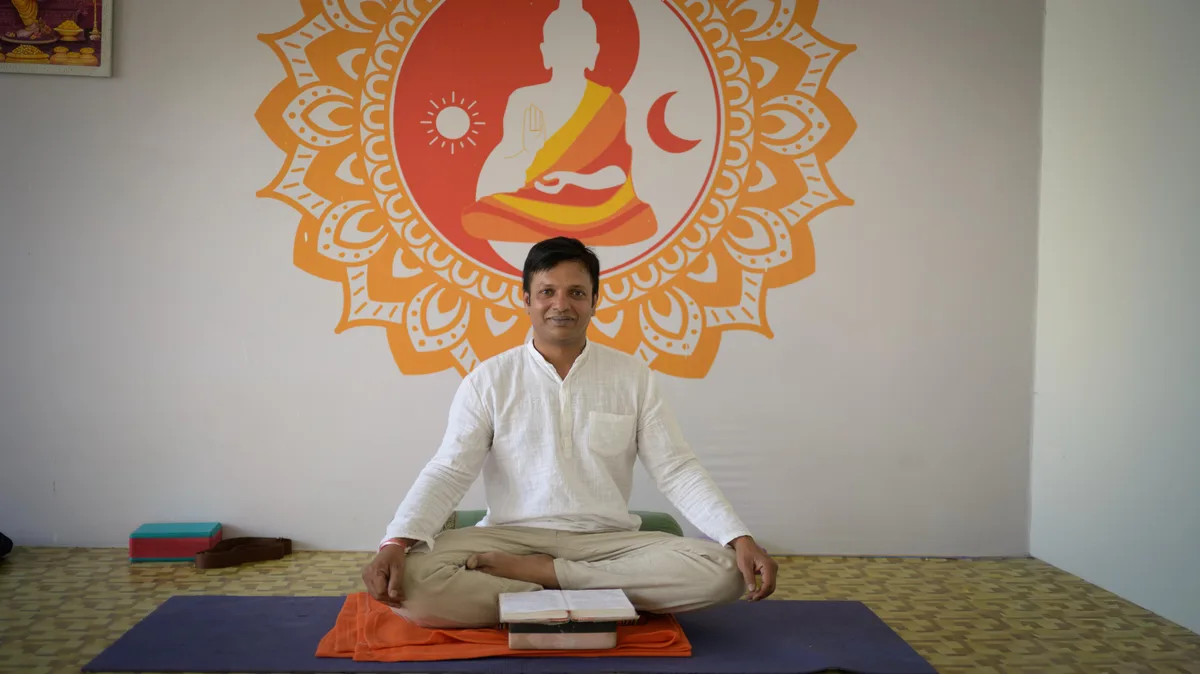
Somashekar, head teacher at Anantadrishti Yoga, seated cross-legged with an open book in front of a mandala mural in Rishikesh

Your teacher

Meet your teacher

Somashekar

Head Teacher · Yoga, Philosophy & Vedic Chanting

Somashekar has devoted more than fifteen years to the study of yoga, its philosophy and the foundations of dharma.

A scholar of the Vedas, he is known for his Vedic chanting, and for teaching that is precise, disciplined and rooted in traditional practice.

About the school

What students say

5.0 on Google, from 119 reviews

Read all reviews on Google

Advanced pranayama course: questions and answers

What makes this an advanced pranayama course?

From the first week you practise kumbhaka, breath retention, with the bandhas, alongside Nadi Shodhana with Chandra and Surya nadi bhedana. The 15-day course pairs Kapalabhati and Ujjayi with Mula and Uddiyana bandha, and Bhastrika and deep breathing with Maha bandha, the three locks held together, and adds the nadi pranayamas. The 30-day course adds the advanced practices and the chakra pranayamas. Mudras and bija mantras are coordinated with the practices throughout, and every teaching day has a session for corrections.

How much does the course cost, and is accommodation included?

Tuition is $149 (₹13,000) for 7 days, $229 (₹20,000) for 15 days and $349 (₹30,000) for 30 days. Fees cover tuition only. Accommodation and meals are not included, but accommodation can be arranged nearby in Tapovan, and we help you find a room when you enquire.

Do I need experience? Can beginners join?

Some prior yoga or breathing practice helps. Healthy, sincere beginners can join the 7-day course. Tell us about your experience when you enquire, and we will help you choose.

Is kumbhaka (breath retention) safe? Who should be careful?

Kumbhaka is taught with the bandhas, starting with short, comfortable holds, and is never forced. It is not suitable for everyone. If you are pregnant, or have high blood pressure, a heart condition, recent surgery, glaucoma or raised eye pressure, epilepsy, or a serious psychiatric condition, consult your doctor before booking and tell the teacher. The course is not medical treatment.

Is this a pranayama teacher training?

No. It is an in-depth practitioner course: it teaches pranayama, the bandhas, mudras, bija mantras and the philosophy behind them for your own practice. It is not a yoga teacher training and does not lead to a teaching qualification.

What language is the course taught in?

English. The practices keep their Sanskrit names, and each one is explained.

Can I join a course midway through the month?

No. All three courses start together on the 1st of the month (Monday the 2nd when the 1st is a Sunday), and the curriculum is cumulative: each stage builds on the one before. Joining a 15-day or 30-day course midway is not offered.

How do I reserve a place?

Send the enquiry form on this page, or message us on WhatsApp, with your course and start month. We reply with the dates and next steps. If you want to hold a seat straight away, you can pay a 20% deposit online, charged in rupees: ₹2,600, ₹4,000 or ₹6,000 for the 7, 15 or 30-day course. The balance is paid on arrival.

Is yoga philosophy taught? Which texts?

Yes, as the philosophy of pranayama, in the daily late-morning session. It draws on how classical yoga texts, such as Patanjali's Yoga Sutras and the Hatha Yoga Pradipika, describe prana, the breath and the mind, and sets those ideas beside what you observe in practice. It is not a separate philosophy course, nor a chapter-by-chapter study of one text.

Yoga philosophy in Rishikesh

How does pranayama affect the nervous system?

Research on yogic breathing is still developing. A 2020 review in the International Journal of Yoga, “Pranayamas and Their Neurophysiological Effects” (Campanelli, Tort and Lobão-Soares), summarises studies suggesting that regulated breathing may increase parasympathetic, rest-and-digest activity. The course makes no medical claims. Instead, you observe your own responses: in the mind, the nervous system, the body and energy.

Read the review (PubMed Central)

What is the difference between pranayama and breathwork?

Breathwork is a broad modern term for any deliberate breathing practice. Pranayama is yoga's own discipline of the breath: precise techniques, nostril patterns, retentions and bandhas, practised within yoga's understanding of prana and the mind. This course teaches pranayama.

Breathwork and pranayama compared

When is the best time to come to Rishikesh?

The course starts every month, so come when it suits you. Many students find October to November and February to April the most comfortable: dry and mild. The monsoon, roughly July to September, brings heavy rain; May and June are hot; and winter mornings are cold enough for warm layers.

The best time to visit Rishikesh

Enquire about the course

Tell us which course and month you have in mind. We reply by email with dates, practical details and help finding a room. Enquiring is free and commits you to nothing.

With country code, e.g. +44

Starts on the 1st of every month (Monday the 2nd when the 1st is a Sunday).

Course

Tuition only

We use your details only to reply to your enquiry.

Prefer to talk? Message us on WhatsApp.

Message us on WhatsApp

Already decided? Hold your place online with a 20% deposit, charged in rupees.

Reserve your seat (20% deposit)