If you have searched for “breathwork” recently, you have probably noticed two worlds coexisting: the modern breathwork movement and the ancient science of Pranayama. They share the same foundation — conscious control of breathing — but differ significantly in origin, methodology, and scope. Understanding the relationship between them helps you make informed choices about your practice.
Origins: Ancient vs Modern
Pranayama is one of the eight limbs of Patanjali’s Yoga Sutras, systematized over 3,000 years ago. The word itself — Prana (life force) + Ayama (extension) — reveals its ambition: not merely to control breathing, but to expand the vital energy that sustains all life. Pranayama techniques are documented in texts including the Hatha Yoga Pradipika (15th century), Gheranda Samhita, and Shiva Samhita.
Modern breathwork emerged in the 1970s with practices like Holotropic Breathwork (Stanislav Grof) and Rebirthing (Leonard Orr). Since then, numerous approaches have appeared: Wim Hof Method, Transformational Breathwork, Clarity Breathwork, and others. Each draws — directly or indirectly — on principles that pranayama established millennia earlier.
Comparison: Breathwork vs Pranayama
| Aspect | Pranayama | Modern Breathwork |
|---|---|---|
| Origin | Vedic India, 3,000+ years old | Western world, 1970s onward |
| Primary Goal | Prana regulation, spiritual evolution, samadhi | Stress relief, emotional release, wellness |
| Approach | Systematic, progressive, part of an 8-limb path | Standalone sessions, often therapeutic |
| Techniques | 12+ classical techniques with precise ratios and bandhas | Usually 3–5 core patterns (circular, connected, etc.) |
| Breath Retention | Central element (kumbhaka) with detailed progression | Sometimes included, rarely systematic |
| Energy Locks (Bandhas) | Integral — Jalandhara, Mula, Uddiyana | Rarely taught |
| Training Tradition | Guru-student lineage, years of practice | Certification courses (weeks to months) |
| Philosophical Framework | Vedanta, Samkhya, Tantra, Yoga Sutras | Psychology, somatic therapy, neuroscience |
| Scientific Validation | Extensive research (PubMed: 2,000+ studies on pranayama) | Growing body of research |
Key Similarities
Despite their differences, pranayama and modern breathwork share important common ground:
- Conscious breathing as a tool for change: Both recognize that deliberate breathing patterns alter physiology and mental state.
- Vagus nerve activation: Both use slow, deep, or rhythmic breathing to stimulate the parasympathetic nervous system.
- Accessibility: Both can be practiced by anyone, anywhere, without equipment.
- Measurable results: Both produce changes visible on EEG, HRV monitors, and blood markers.
- Mind-body integration: Both view the breath as a bridge between the physical body and the mental-emotional landscape.
Key Differences
The most significant difference lies in depth and scope:
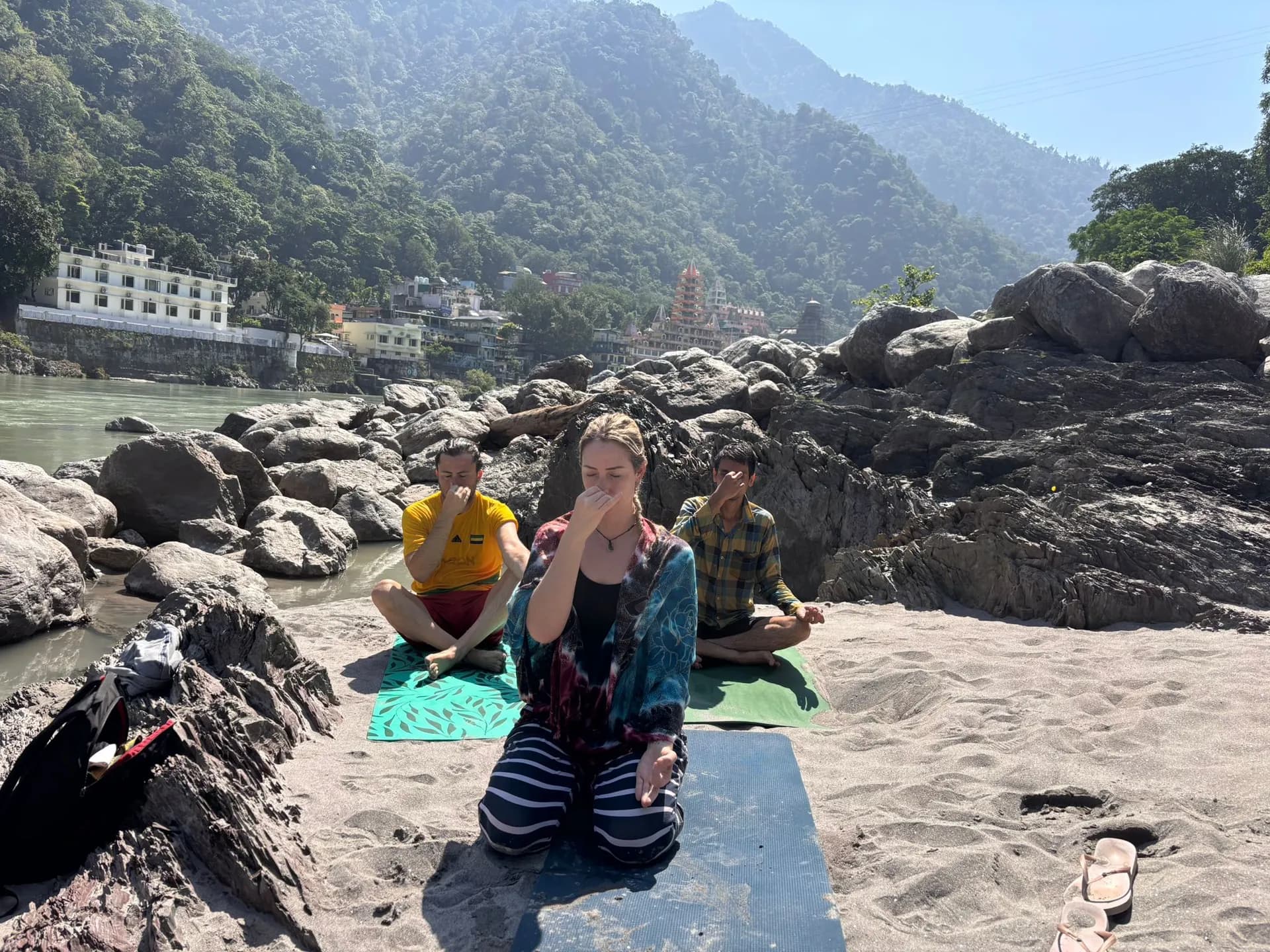
- Pranayama is a complete system. It includes beginner practices (Nadi Shodhana, Bhramari), intermediate techniques (Kapalbhati, Ujjayi), and advanced integrations (Bhastrika with Maha Bandha, kumbhaka ratios). Each level builds on the previous one in a structured progression.
- Modern breathwork is usually technique-specific. Most approaches focus on one or two core patterns and apply them for specific outcomes (stress relief, emotional release, altered states).
- Pranayama includes energy locks (bandhas) and mudras that are rarely part of modern breathwork — yet these are precisely the elements that deepen the practice beyond surface-level relaxation.
- Pranayama exists within a larger spiritual framework — it is the fourth of eight limbs of yoga, preceded by ethical conduct (Yama, Niyama) and physical practice (Asana), and leading toward meditation (Dhyana) and liberation (Samadhi).
Why Pranayama IS the Original Breathwork
At Anantadrishti Yoga, we honor both traditions while recognizing a fundamental truth: pranayama is the source from which all breathwork flows. Every modern breathwork technique — extended exhale breathing, rhythmic breathing, breath retention, connected breathing — has a direct counterpart in the classical pranayama system, often with greater precision and depth.
This is not a criticism of modern breathwork. Many people find their way to conscious breathing through Wim Hof, box breathing, or Holotropic sessions — and that is valuable. But if you want to go deeper, if you want to understand not just what the breath does but why, the classical tradition offers a map that has been refined over 3,000 years.
Which Is Right for You?
The honest answer: both. Here is a practical framework:
- Start with modern breathwork if you want immediate stress relief, a low barrier to entry, and a therapeutic focus. Our breathwork guides are designed for exactly this.
- Progress to pranayama when you are ready for a structured, progressive practice with deeper physiological and energetic effects. Our pranayama hub provides comprehensive guidance.
- Combine both in your daily life: use box breathing or the 4-7-8 technique for acute stress, and dedicate morning or evening sessions to classical pranayama techniques like Nadi Shodhana or Ujjayi.
The breath does not care what you call the practice. What matters is that you practice — consistently, consciously, and with respect for the tradition that made it possible.
Explore both paths: Breathwork Hub | Pranayama Hub | What Is Breathwork?
Share this guide
Category
FundamentalsWritten by
Somesh
RYT 500 · Yoga Philosophy & Pranayama
An experienced yoga teacher and Registered Yoga Teacher (RYT 500) specializing in yoga philosophy and pranayama at Anantadrishti Yoga in Rishikesh, India.
More articles by Somesh