Pranayama guide
Anulom Vilom Pranayama: Complete Guide to Alternate Nostril Breathing
Master the ancient art of alternate nostril breathing to balance your nervous system, calm your mind, and harmonize the flow of prana through the energy channels.
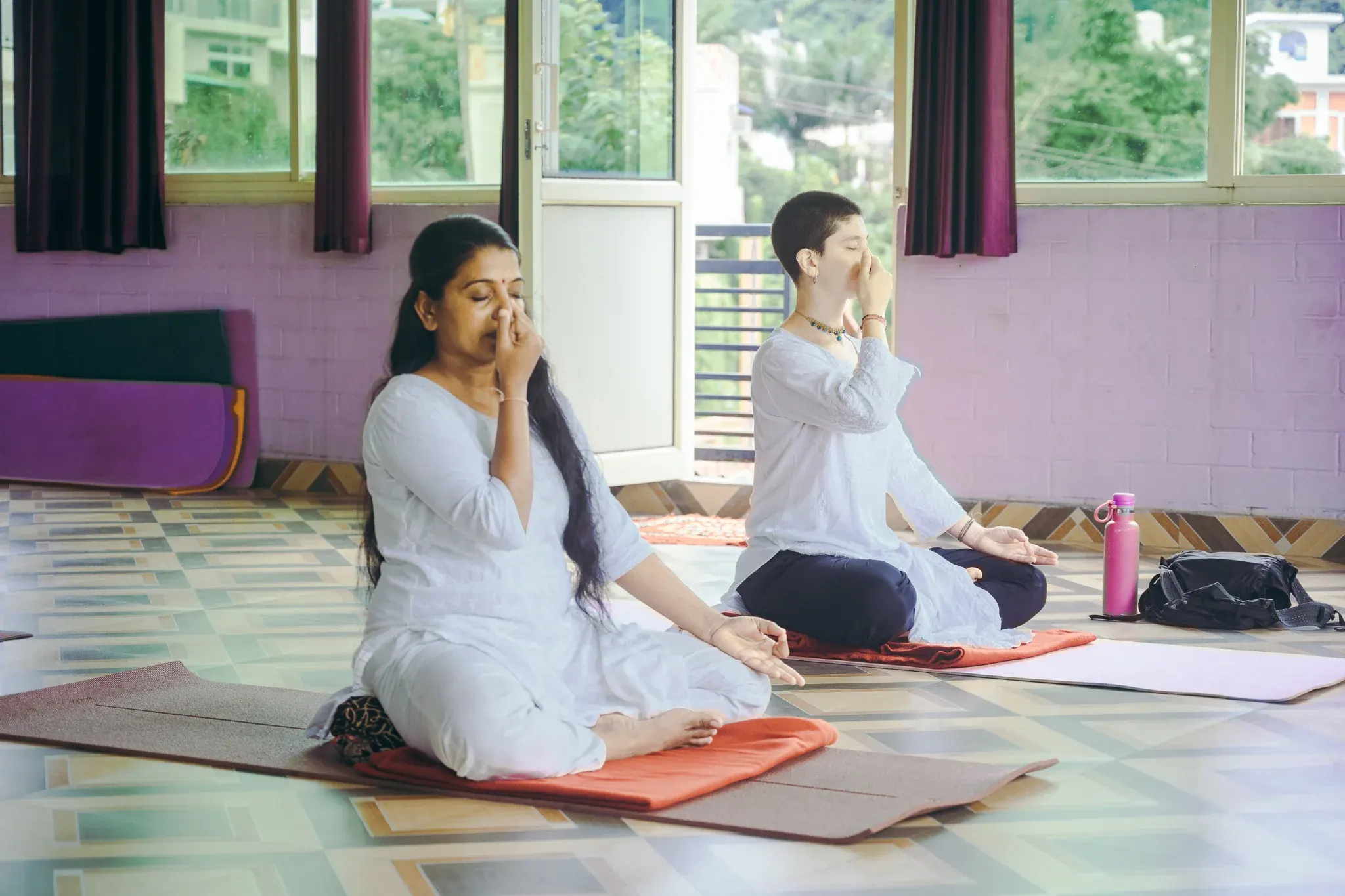
Quick Answer
Anulom vilom is alternate nostril breathing: using Vishnu Mudra, you close the right nostril and inhale through the left, then close the left and exhale through the right, alternating for 5–15 minutes. Beginners use an equal 4:4 count with no breath retention. Practised daily on an empty stomach, it is a calming practice for many students, and some studies report modest reductions in anxiety scores and blood pressure. It is not medical treatment.
Learn it in RishikeshTake it further: Nadi Shodhana with kumbhaka in our 7-day pranayama course
What is Anulom Vilom Pranayama?
Anulom vilom pranayama is one of the most widely practiced and deeply respected yogic breathing techniques. The name comes from Sanskrit: "anulom" means "with the natural order" or "along the grain," and "vilom" means "against the natural order" or "against the grain." Together, the term describes the practice of breathing alternately through the left and right nostrils in a rhythmic, balanced pattern.
In the yogic understanding of the body, the left nostril is connected to Ida nadi (the lunar energy channel associated with cooling, calming, and the right hemisphere of the brain), while the right nostril is connected to Pingala nadi (the solar energy channel associated with heating, activating, and the left hemisphere of the brain). When the breath flows evenly through both nostrils, the central energy channel — Sushumna nadi — becomes active, creating the optimal conditions for meditation and spiritual practice.
Anulom vilom is often described as the foundational nadi purification practice. In the Hatha Yoga Pradipika, Swatmarama teaches that the nadis (energy channels) of most people are blocked by impurities, preventing the smooth flow of prana. Through systematic practice of alternate nostril breathing, these blockages are gradually cleared, and the flow of prana becomes balanced and harmonious. The text states: "When the nadis are purified, there are external signs: the body becomes lean, the face glows, the inner sounds become audible, and diseases are eliminated."
Anulom Vilom vs. Nadi Shodhana: Understanding the Difference
Many practitioners and even some yoga teachers use the terms "anulom vilom" and "nadi shodhana" interchangeably, but they refer to related yet distinct practices. Understanding the difference is important for safe and effective practice.
Anulom Vilom
- Alternate nostril breathing without breath retention
- Continuous flow: inhale left, exhale right, inhale right, exhale left
- Suitable for all levels including complete beginners
- Emphasis on balancing the breath and purifying the nadis
- Can be practiced independently without a teacher
Nadi Shodhana
- Alternate nostril breathing with breath retention (kumbhaka)
- Includes antara kumbhaka (internal hold) and sometimes bahya kumbhaka (external hold)
- Intermediate to advanced practice
- Emphasis on deepening the energetic effects and awakening kundalini
- Should be learned under the guidance of an experienced teacher
In practice, anulom vilom serves as the preparatory stage for the more advanced nadi shodhana. Most teachers recommend mastering anulom vilom for several months before introducing breath retention. At Anantadrishti Yoga, we teach both practices as part of a progressive pranayama curriculum, ensuring each student advances safely and at the appropriate pace.
How to Practice Anulom Vilom: Step-by-Step Instructions
Sit in a comfortable, stable posture
Choose a seated posture such as Sukhasana (easy pose), Padmasana (lotus pose), or Siddhasana (adept pose). You may also sit on a chair with your feet flat on the floor. Keep your spine erect, shoulders relaxed, and the crown of the head reaching upward. Rest your left hand on your left knee in Jnana Mudra (tip of index finger touching the tip of the thumb, other fingers extended).
Form Vishnu Mudra with your right hand
Bring your right hand up to your face. Fold the index and middle fingers toward the palm, keeping the thumb, ring finger, and little finger extended. This is Vishnu Mudra (also called Nasagra Mudra), the traditional hand position for alternate nostril breathing. Your right thumb will control the right nostril, and your right ring finger will control the left nostril.
Close the right nostril and inhale through the left
Gently press your right thumb against the right nostril to close it. Inhale slowly, smoothly, and deeply through the left nostril. The inhalation should be silent, steady, and controlled. Fill your lungs completely without strain. If you are a beginner, count to 4 during the inhalation. Maintain awareness of the breath flowing through the left nostril.
Close the left nostril and exhale through the right
At the top of the inhalation, close the left nostril with your ring finger. Release the right nostril by lifting the thumb. Exhale slowly, smoothly, and completely through the right nostril. The exhalation should be slightly longer than the inhalation if possible. For beginners, count to 4 (or up to 6) during the exhalation. Empty the lungs fully without forcing.
Inhale through the right nostril
Keeping the left nostril closed with the ring finger, inhale slowly and deeply through the right nostril. Match the length and quality of this inhalation to the previous one. The breath should be smooth and continuous, without any jerks or pauses. Maintain the same count you used for the left nostril inhalation.
Close the right nostril and exhale through the left
Close the right nostril with the thumb. Release the left nostril by lifting the ring finger. Exhale slowly and completely through the left nostril. This completes one full round of anulom vilom. The exhalation should be smooth, controlled, and slightly longer than the inhalation.
Continue for 5 to 15 minutes
Repeat the cycle: inhale left, exhale right, inhale right, exhale left. Begin with 5 minutes (approximately 8 to 10 rounds) and gradually increase to 15 to 20 minutes as your capacity develops. After completing your practice, lower the right hand, rest both hands on the knees, and sit quietly for 1 to 2 minutes with natural breathing. Observe the effects of the practice on your mind and body.
Benefits of Anulom Vilom Pranayama
Calm, Alert Attention
Some studies of alternate-nostril breathing report effects on attention and reaction time. Students often describe the result as calm alertness: settled, but not drowsy.Eases Everyday Stress
The slow, even rhythm favours the parasympathetic, rest-and-digest side of the nervous system. Research suggests slow breathing may lower heart rate and perceived stress, and most students feel calmer within a few minutes. It is not a treatment for anxiety.Builds Breath Control
The slow, full breaths train the diaphragm and the muscles of breathing. Over weeks of practice, students notice smoother, longer and steadier breaths.Blood Pressure: What Studies Report
Some studies of slow alternate-nostril breathing report modest reductions in blood pressure. It does not replace medical care: if you have high blood pressure, practise without breath retention, keep taking any prescribed medication and tell your teacher.Enhances Sleep Quality
Practicing anulom vilom before bedtime shifts the nervous system into rest-and-digest mode, helping to quiet racing thoughts and promote deeper, more restorative sleep.Balances the Nervous System
By alternating between the solar (sympathetic) and lunar (parasympathetic) energy channels, anulom vilom creates autonomic equilibrium — the ideal state for health and wellbeing.Fuller Breathing
The deep, controlled breaths use the whole of the lungs rather than only the upper chest. Many students feel more awake and energised after practice.Purifies the Nadis
According to yogic physiology, anulom vilom clears blockages in the 72,000 nadis (energy channels), allowing prana to flow freely and creating the foundation for advanced practices.Prepares for Meditation
By calming mental fluctuations and balancing the energetic body, anulom vilom creates the ideal conditions for dharana (concentration) and dhyana (meditation).
Duration and Breathing Ratios
The duration and breathing ratio you use for anulom vilom should be based on your experience level and comfort. Progressing too quickly can cause strain, headaches, or dizziness. Always prioritize smooth, comfortable breathing over achieving a longer count.
Beginner Level (Weeks 1-8)
- Duration
- 5 minutes per session (8-10 rounds)
- Ratio & guidance
- Ratio: 1:1 (inhale 4 counts, exhale 4 counts). Focus on smooth, even breathing without any strain. Practice once or twice daily.
Intermediate Level (Weeks 8-24)
- Duration
- 10-15 minutes per session (15-20 rounds)
- Ratio & guidance
- Ratio: 1:2 (inhale 4 counts, exhale 8 counts). The longer exhalation deepens the calming effect and strengthens the diaphragm. Practice once or twice daily.
Advanced Level (6+ months with a teacher)
- Duration
- 15-20+ minutes per session
- Ratio & guidance
- Ratio: 1:1:2 or 1:2:2 or 1:4:2 (with kumbhaka/retention — this transitions the practice into Nadi Shodhana). Only practice under direct teacher guidance. The classical ratio of 1:4:2 should not be attempted without months of preparation.
| Level | Duration | Ratio & guidance |
|---|---|---|
| Beginner Level (Weeks 1-8) | 5 minutes per session (8-10 rounds) | Ratio: 1:1 (inhale 4 counts, exhale 4 counts). Focus on smooth, even breathing without any strain. Practice once or twice daily. |
| Intermediate Level (Weeks 8-24) | 10-15 minutes per session (15-20 rounds) | Ratio: 1:2 (inhale 4 counts, exhale 8 counts). The longer exhalation deepens the calming effect and strengthens the diaphragm. Practice once or twice daily. |
| Advanced Level (6+ months with a teacher) | 15-20+ minutes per session | Ratio: 1:1:2 or 1:2:2 or 1:4:2 (with kumbhaka/retention — this transitions the practice into Nadi Shodhana). Only practice under direct teacher guidance. The classical ratio of 1:4:2 should not be attempted without months of preparation. |
Best Time to Practice Anulom Vilom
The yogic tradition recommends practicing pranayama during Brahma Muhurta, the auspicious period approximately 90 minutes before sunrise (around 4:30 to 5:30 AM). During this time, the atmosphere is saturated with prana, the mind is naturally quiet, and distractions are minimal. An early morning practice of anulom vilom sets a foundation of calm and clarity that carries through the entire day.
The second-best time is evening, approximately 30 minutes before sunset. Evening practice is especially beneficial for releasing the accumulated stress and tension of the day and preparing the mind and body for restful sleep.
Before meditation: Anulom vilom is one of the best pranayama techniques to practice immediately before seated meditation. The balanced, calm state it creates in the nervous system makes it significantly easier to settle into stillness and concentration. Many experienced meditators consider 5 to 10 minutes of anulom vilom an essential preparatory step for their meditation sessions.
Always practice on an empty stomach — wait at least 2 to 3 hours after a heavy meal and 1 hour after a light snack. Find a clean, quiet, well-ventilated space. Avoid practicing in direct sunlight, strong wind, or near pollution.
Frequently Asked Questions About Anulom Vilom
What is the difference between anulom vilom and nadi shodhana?
How long should I practice anulom vilom each day?
Can anulom vilom help with anxiety and high blood pressure?
What is the best breathing ratio for anulom vilom?
When is the best time to practice anulom vilom?
Is anulom vilom good for weight loss?
Can beginners practice anulom vilom safely?
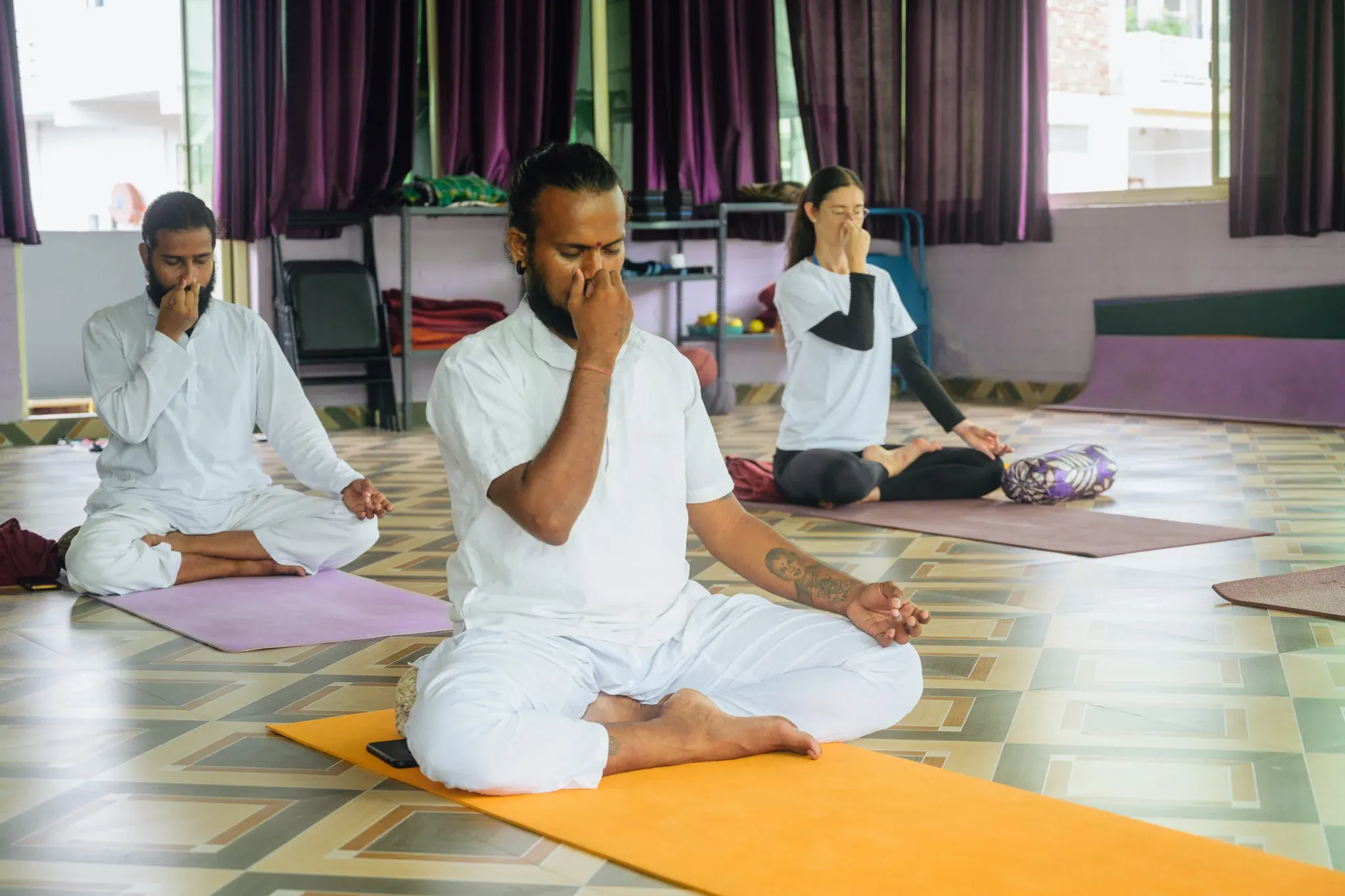
Advanced Pranayama Course
Go deeper: from Anulom Vilom to Nadi Shodhana with kumbhaka
- 7, 15 or 30 days
- A new start every month
- Taught in English
Tuition$149₹13,000
Explore More Pranayama Techniques
- Pranayama: Complete GuideOverview of yogic breathing, the five pranas, and all our programs.
- Bhramari PranayamaThe humming bee breath for stress relief, better sleep, and mental clarity.
- Kapalbhati PranayamaThe skull-shining breath: a classical cleansing practice that leaves most practitioners alert.
- Pranayama BenefitsWhat research and the yogic tradition say about regular practice.
- Kumbhaka: Breath retentionAntar and bahya kumbhaka: holding the breath in and out, with the bandhas, and how to begin safely.
From the breathwork library