Pranayama
One-Month Pranayama Course in India: What 30 Days Actually Covers
What a 30-day pranayama course in India really involves: the daily timetable, guided hours, the week-by-week progression from kapalabhati to kumbhaka and chakra pranayamas, cost, and who a month suits.
Somashekar
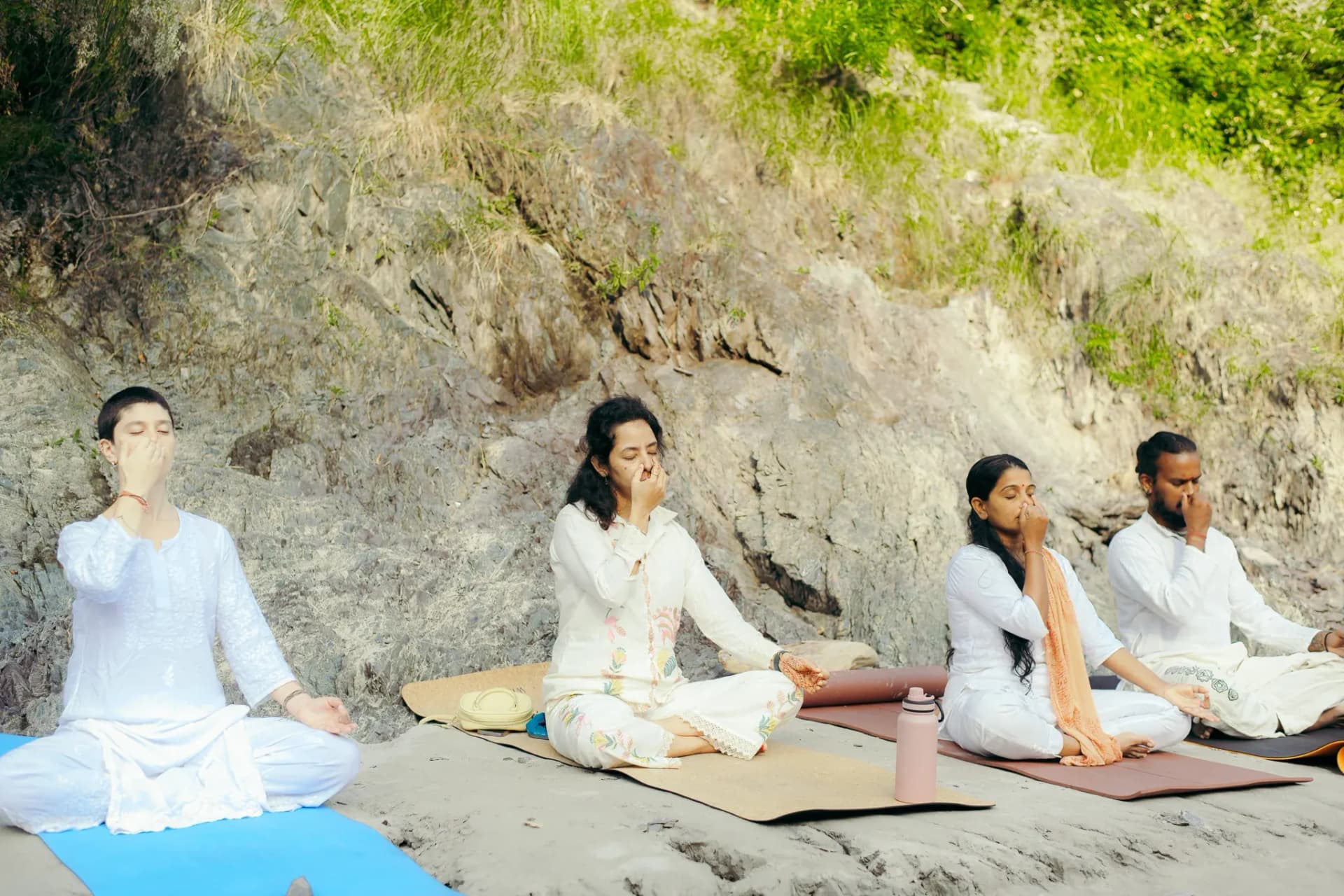
Written by Somashekar, founder and head teacher of Anantadrishti Yoga. Disclosure: the course described here is our own, and we've tried to be clear about what it is and what it isn't.
"Is there a one-month pranayama course in India?" is one of the questions we hear most. Many breathwork offerings are a weekend or a week. Others are long academic programmes. In between sits something simpler: a month of daily practice with one teacher, in one place, where each technique has time to settle before the next one arrives. This article explains exactly what our 30-day course covers, day by day and week by week, so you can judge whether a month is right for you.
At a glance
| Detail | 30-day Advanced Pranayama & Yoga Philosophy Course |
|---|---|
| Where | Anantadrishti Yoga, Lower Tapovan, Rishikesh (a short walk from Laxman Jhula and the Ganga) |
| Starts | The 1st of the month; Monday the 2nd when the 1st is a Sunday |
| Schedule | Monday to Saturday, 07:30–09:00 and 11:30–13:00; Sunday is a rest day |
| Guided hours | About 3 per teaching day; about 75–78 in total (25 or 26 teaching days) |
| Tuition | US$349 (₹30,000), tuition only |
| Accommodation | Not included; we help you find a room nearby |
| Language | English |
| Teacher training? | No: a practitioner course, with no teaching qualification |
What does a 30-day pranayama course cover?
A 30-day course covers the full foundation in the first week, joins the practices to the bandhas in the second, and spends the rest of the month on advanced practices and the chakra pranayamas. The three course lengths at our school start together on the same day, so the month is really three stages, one after another. Each stage includes everything before it.
Days 1–7: the foundation
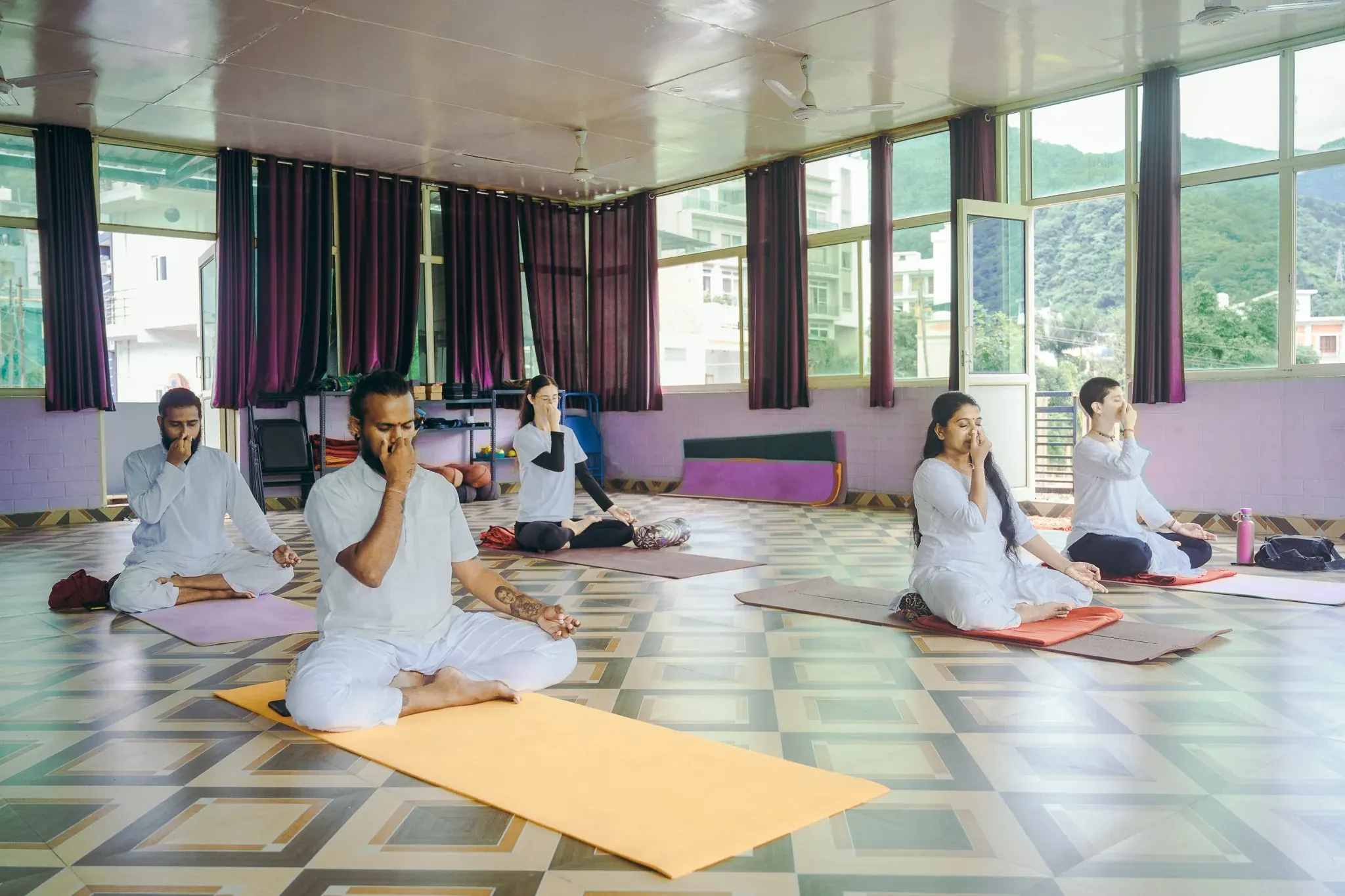
The first week teaches the practices everything else rests on: kapalabhati, bhastrika, yogic breath, agnisara and ujjayi; the three bandhas (Mula, Uddiyana and Jalandhara); Nadi Shodhana with Chandra and Surya nadi bhedana; and antar and bahya kumbhaka, holding the breath in and holding it out, practised with the bandhas. This is the same week that students on the 7-day course take.
Days 8–15: practices joined to the locks
In the second stage, the practices you know are paired with the bandhas. Kapalabhati and ujjayi are practised with Mula and Uddiyana bandha. Bhastrika and deep breathing are practised with Maha bandha, the three locks held together. Nadi Shodhana is taken further with Muladhara and Ida and Pingala nadi stimulation, and the nadi pranayamas and the kumbhakas are developed. This is where the 15-day course ends.
Days 16–30: advanced practices and chakra pranayamas
The final stage, only in the 30-day course, adds advanced pranayama practices and the chakra pranayamas, together with continued daily study of the science and philosophy of pranayama. By now the foundations are familiar, so there is room to work with subtlety rather than effort.
Throughout all three stages, mudras and bija mantras are coordinated with the practices, and you learn to observe how each practice influences the mind, the nervous system, the body and the energies.
How many hours a day do you practise?
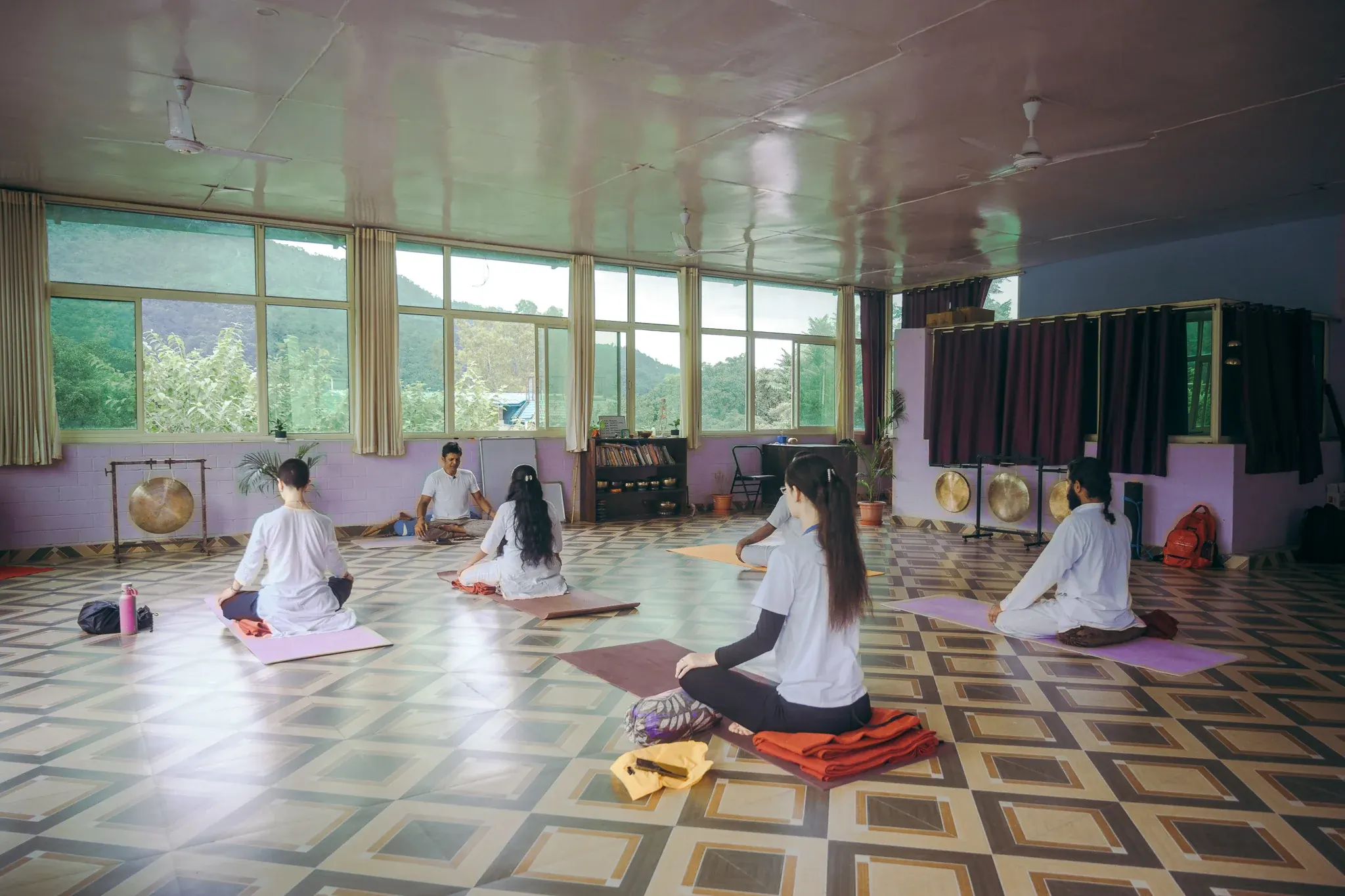
You have about three guided hours on each teaching day, in two sessions. From 07:30 to 09:00 the group practises the day's techniques in sequence. From 11:30 to 13:00 there are corrections, more practice, and the science and philosophy of pranayama. Classes run Monday to Saturday, and Sunday is a rest day. Across a month that gives 25 or 26 teaching days, about 75–78 guided hours, depending on how the Sundays fall.
Three hours may sound modest. In practice, the mornings are demanding, and the gap between sessions matters: it gives the nervous system time to absorb what you've done. The afternoons are yours: time to rest, walk by the Ganga or go over the morning's notes.
Why choose a month instead of a week?
A month gives each stage time to settle before the next is added. In a week you learn the foundation. In a month you learn it, refine it and then build on it, with daily corrections all the way through. Breath work responds to repetition. Small faults in posture or rhythm that seem harmless on day three become clear by day twelve, and a teacher who sees you every morning can catch them.
A month also changes your life outside the shala. You stop being a visitor. You find your café, your walk, your quiet hour. That steadiness supports the practice.
How is kumbhaka taught over 30 days?
Kumbhaka, breath retention, is taught gradually, with short, comfortable holds that are never forced. It is introduced with the bandhas from the first week, but nobody is asked to hold the breath for long at the start. The holds develop as your capacity does. Our kumbhaka guide explains the practice in more detail.
Kumbhaka is not suitable for everyone. If you are pregnant, or have high blood pressure, a heart condition, recent surgery, glaucoma or raised eye pressure, epilepsy, or a serious psychiatric condition, consult your doctor before booking and tell the teacher. The course is not medical treatment.
Where does yoga philosophy fit in?
Philosophy is taught every teaching day as the philosophy of pranayama, in the late-morning session. It draws on how classical texts such as Patanjali's Yoga Sutras and the Hatha Yoga Pradipika describe prana, the breath and the mind, and sets those ideas beside what you observe in your own practice. It isn't a chapter-by-chapter study of one text. If philosophy is your main interest, read our guide to the yoga philosophy course options in Rishikesh or the yoga philosophy page.
What does a month of pranayama in Rishikesh cost?
Tuition for the 30-day course is US$349 (₹30,000). For comparison, the 7-day course is US$149 (₹13,000) and the 15-day course US$229 (₹20,000). Fees cover tuition only. Accommodation and meals aren't included, but we help you find a room nearby in Tapovan; tell us your dates and budget when you enquire. If you want to hold a seat straight away, a 20% deposit can reserve your place, and the balance is paid on arrival.
Who is a one-month pranayama course right for?
A month suits people who want the whole progression and have the time to stay put. It works well if you already practise yoga or breathing and want to go much deeper, or if you have taken a shorter course before and want to continue. Some prior practice helps. Healthy, sincere beginners can join the 7-day course, and if you are new and want to stay for the month, tell us about your experience when you enquire.
It isn't the right choice if you need a teaching qualification. The 30-day course is a practitioner course, not a yoga teacher training. If teaching is your aim, look at our 50-Hour Advanced Pranayama & Bhakti Yoga Meditation Teacher Training, which runs on 2–8 November 2026 at US$600 all-inclusive.
How do you plan a month in Rishikesh?
Plan to arrive a day or two before the 1st, because there are no mid-month starts and the curriculum builds from day 1. The nearest airport is Jolly Grant, Dehradun, about 22 km away. October to November and February to April are the most comfortable months; our month-by-month weather guide covers the rest, and the Tapovan guide covers daily life near the shala. Upcoming start dates are on the dates page.
When you're ready, the Advanced Pranayama & Yoga Philosophy Course page has the full curriculum and an enquiry form. You can also read about your teacher, Somashekar, first.
Frequently asked questions
Is there a one-month pranayama course in India?
Yes. Anantadrishti Yoga in Rishikesh runs a 30-day Advanced Pranayama & Yoga Philosophy Course that starts on the 1st of the month (Monday the 2nd when the 1st is a Sunday). It has two sessions a day, Monday to Saturday, about 75–78 guided hours in total, and costs US$349 (₹30,000) for tuition.
Can I join the 30-day pranayama course midway through the month?
No. All three course lengths start together, and the curriculum is cumulative: each stage builds on the one before. Joining a 15-day or 30-day course midway is not offered, so plan to arrive before the start date.
Can a beginner do a one-month pranayama course?
Some prior yoga or breathing practice helps. Healthy, sincere beginners can join the 7-day course, and the first week of every course is the same foundation. If you are new and want a full month, describe your experience when you enquire and the teacher will help you decide.
Is accommodation included in the 30-day course?
No. The US$349 (₹30,000) fee is tuition only. Accommodation and meals are not included, but the school helps you find a room nearby in Tapovan when you enquire.
Is the 30-day pranayama course a teacher training?
No. It is an in-depth practitioner course for your own practice. It is not a yoga teacher training and does not lead to a teaching qualification. Anantadrishti Yoga's separate 50-hour teacher training runs on 2–8 November 2026.
What language is the course taught in?
English. The practices keep their Sanskrit names, and each one is explained.
CategoryPranayama
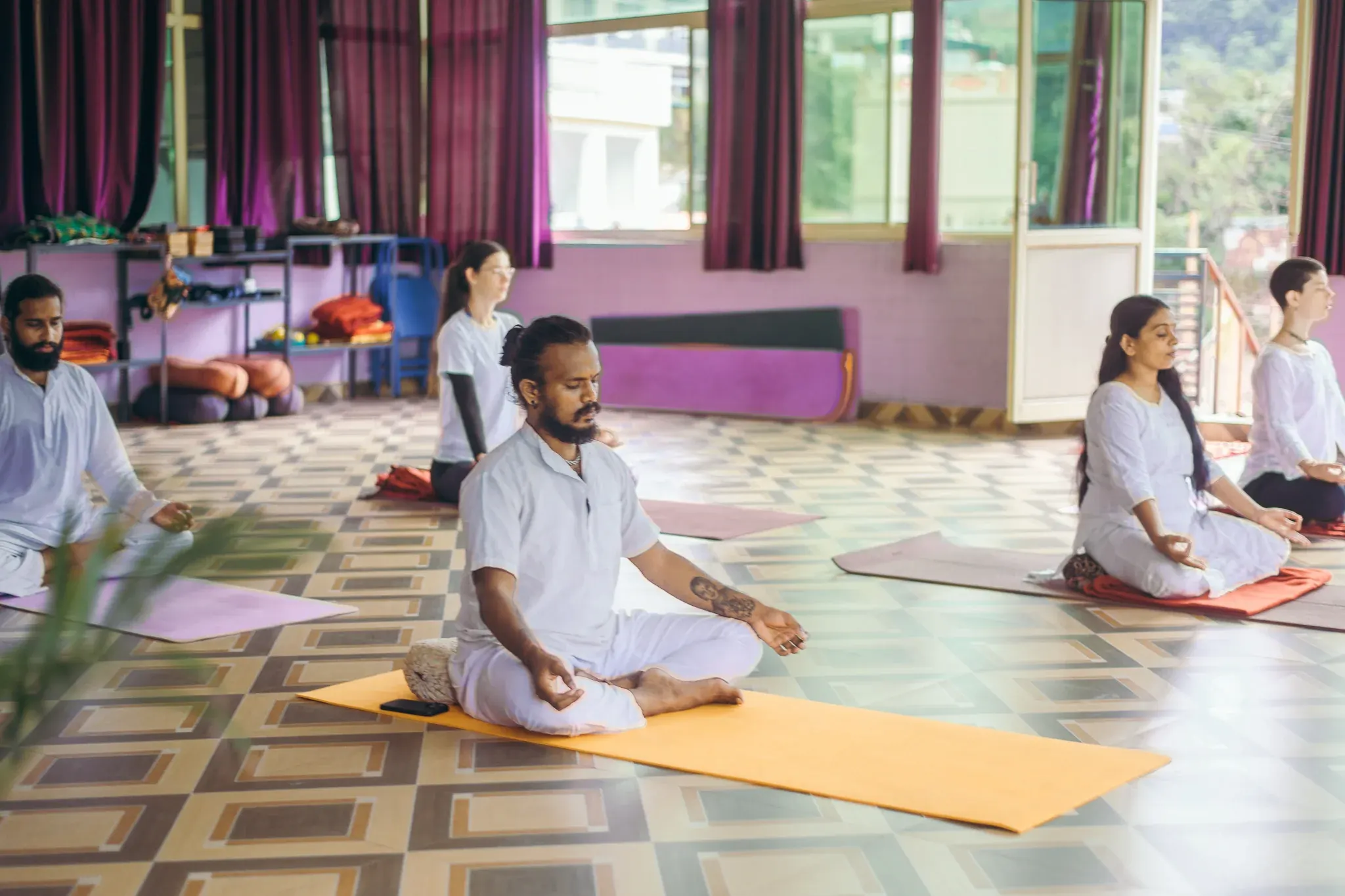
Advanced Pranayama Course
Go deeper: chakra pranayamas and bija mantras
- 7, 15 or 30 days
- A new start every month
- Taught in English
Tuition$349₹30,000