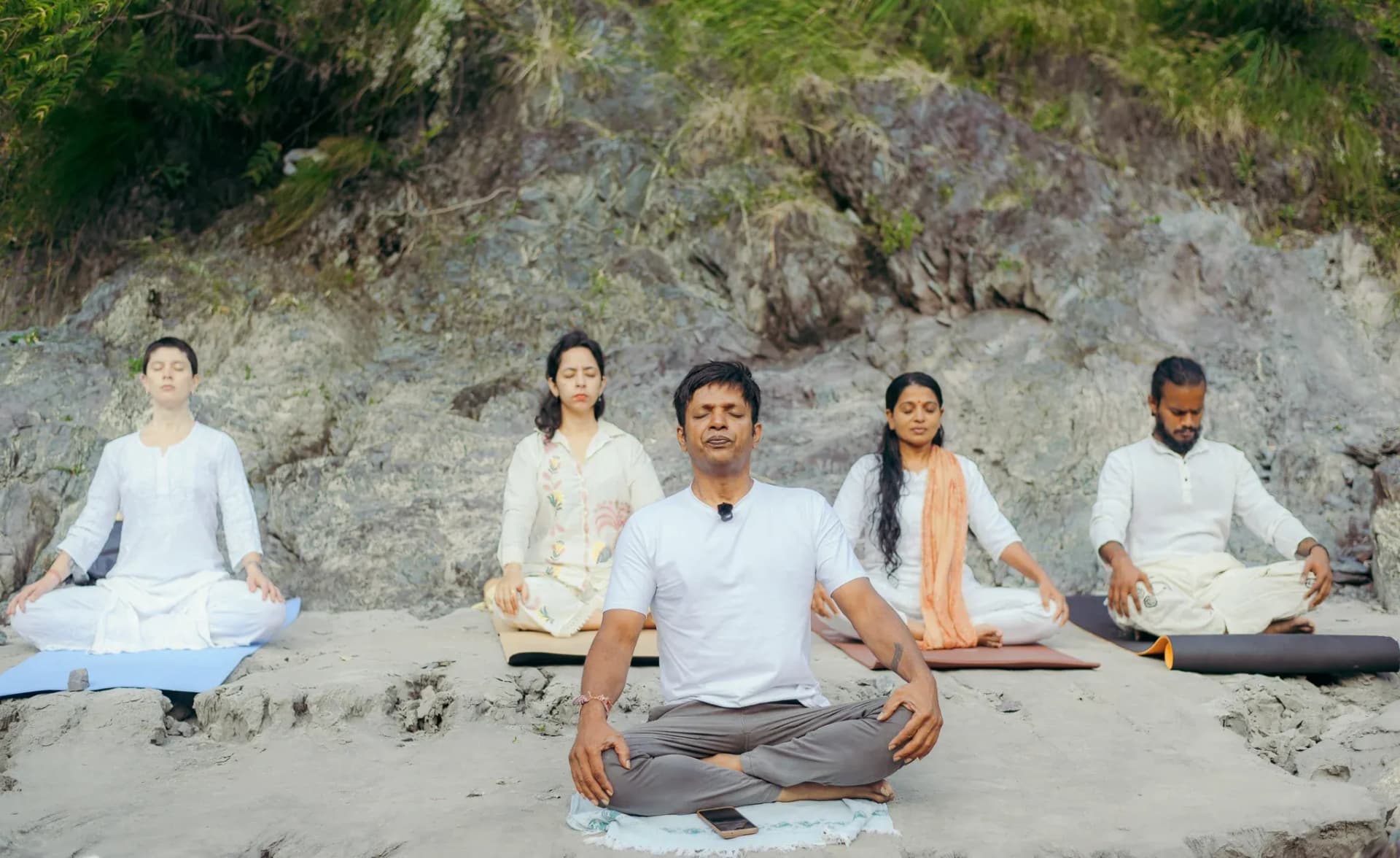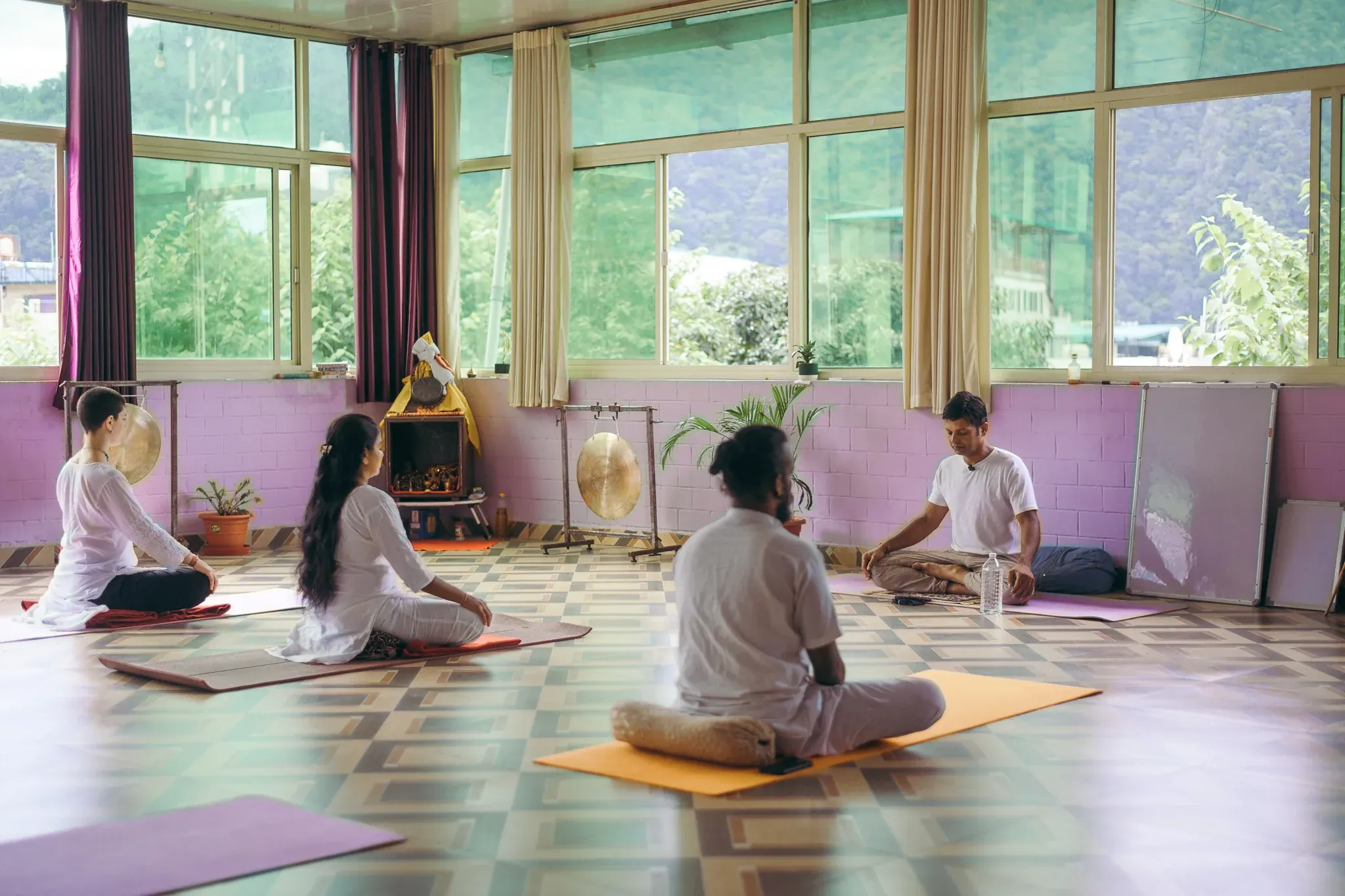
Why begin with the breath
Classical yoga describes the breath and the mind as moving together. The Hatha Yoga Pradipika, a manual of hatha yoga usually dated to the fifteenth century, says so in one of its best-known verses. Patanjali's Yoga Sutras, the older and more philosophical text, define yoga as the stilling of the movements of the mind, and name pranayama, the regulation of the breath, as one of the eight limbs of practice: after posture, and before the inward turning of the senses.
चले वाते चलं चित्तं निश्चले निश्चलं भवेत् । योगी स्थाणुत्वमाप्नोति ततो वायुं निरोधयेत् ॥
cale vāte calaṃ cittaṃ niścale niścalaṃ bhavet | yogī sthāṇutvam āpnoti tato vāyuṃ nirodhayet ||
When the breath moves, the mind moves. When the breath is still, the mind becomes still, and the yogi attains steadiness. Therefore one should restrain the breath.
That is why philosophy here starts from the breath rather than from a reading list. The breath is the one part of the mind's life you can both observe and change at will, so it is where ideas about prana, attention and stillness can be tested in your own experience.
Prana: what the breath carries
Prana is usually translated as life force: in yoga's account, the energy that animates the body and the mind. The breath is its most tangible movement. The word pranayama is often read as prana and ayama, extension: by working with the length, rhythm and retention of the breath, the practitioner works with prana itself.
Yoga texts also describe several currents of prana, the vayus, each with its own direction and function. In the course these ideas are treated as working descriptions. You meet them when a practice calls for them, and you check them against what you notice: warmth, lightness, stillness or restlessness.
Nadis: the channels of the subtle body
Yoga's subtle anatomy describes a network of nadis, channels through which prana is said to move. Three matter most for pranayama: Ida, linked with the left side and the moon; Pingala, linked with the right side and the sun; and Sushumna, the central channel. Hatha yoga texts teach that the nadis are purified through the breath, and alternate-nostril breathing is their method.
That is why every course begins with Nadi Shodhana, the channel-cleansing breath, together with its single-nostril forms, Chandra nadi and Surya nadi bhedana: breathing in through the left nostril or through the right, and comparing how each changes the breath and the mind. In the 15-day course the practice works with Ida and Pingala directly, with attention on Muladhara, the root centre, and the nadi pranayamas are added.
Bandhas and kumbhaka: holding the breath with the body
A bandha is a lock: a held contraction that contains and directs the breath. Mula bandha is the root lock at the pelvic floor, Uddiyana bandha the upward lock of the abdomen, and Jalandhara bandha the chin lock at the throat. Held together they form Maha bandha, the great lock.
Hatha yoga texts join the bandhas to kumbhaka, breath retention, and give retention a central place in pranayama: it is the pause in which the mind is said to grow still. Here, Antar kumbhaka (the breath held in) and Bahya kumbhaka (the breath held out) are practised with the bandhas from the first week, starting with short, comfortable holds and never forced. Maha bandha joins the practices in the 15-day course. The guides to the bandhas and to kumbhaka go further.
Advanced Pranayama Course
Kumbhaka with the bandhas, from the first week
Tuition149 USD13.000 ₹
Chakras, mudras and bija mantras
Chakras are the energy centres that later hatha and tantric texts describe along the central channel, from Muladhara at the base of the spine to the crown of the head. Several are traditionally paired with a bija mantra, a seed syllable. Mudras, gestures of the hands, are held with the breath.
In all three courses, mudras and bija mantras are coordinated with the practices, and you observe their influence too. The chakra pranayamas, practised with attention on these centres, come in the second half of the 30-day course, once the foundations are steady.
Observing the mind and the nervous system
The philosophy of breath is not only read; it is watched. In every course, students observe how each practice influences four areas, and learn to read those changes over the days.
I
Mind
Attention, mood and the movement of thought: the psychology of each practice.II
Nervous system
Signs of activation and of settling: heartbeat, warmth, alertness, calm.III
Body
Posture, the diaphragm and abdomen, and the felt effect of each bandha.IV
Energy
Prana as yoga describes it: sensations of flow, heat, lightness or stillness.
Mudras & bija mantras
Research on yogic breathing is still developing. A 2020 review in the International Journal of Yoga, “Pranayamas and Their Neurophysiological Effects”, summarises studies suggesting that regulated breathing may increase parasympathetic, rest-and-digest activity. The course makes no medical claims. It teaches you to notice your own responses with care, and to describe them precisely.
How philosophy is taught at Anantadrishti Yoga
Philosophy belongs to the second session of each teaching day. After the morning's pranayama practice, 07:30–09:00, the late-morning session, 11:30–13:00, brings corrections, further practice and the science and philosophy of pranayama: how the practices work, and how classical yoga texts, such as Patanjali's Yoga Sutras and the Hatha Yoga Pradipika, describe prana, the breath and the mind.
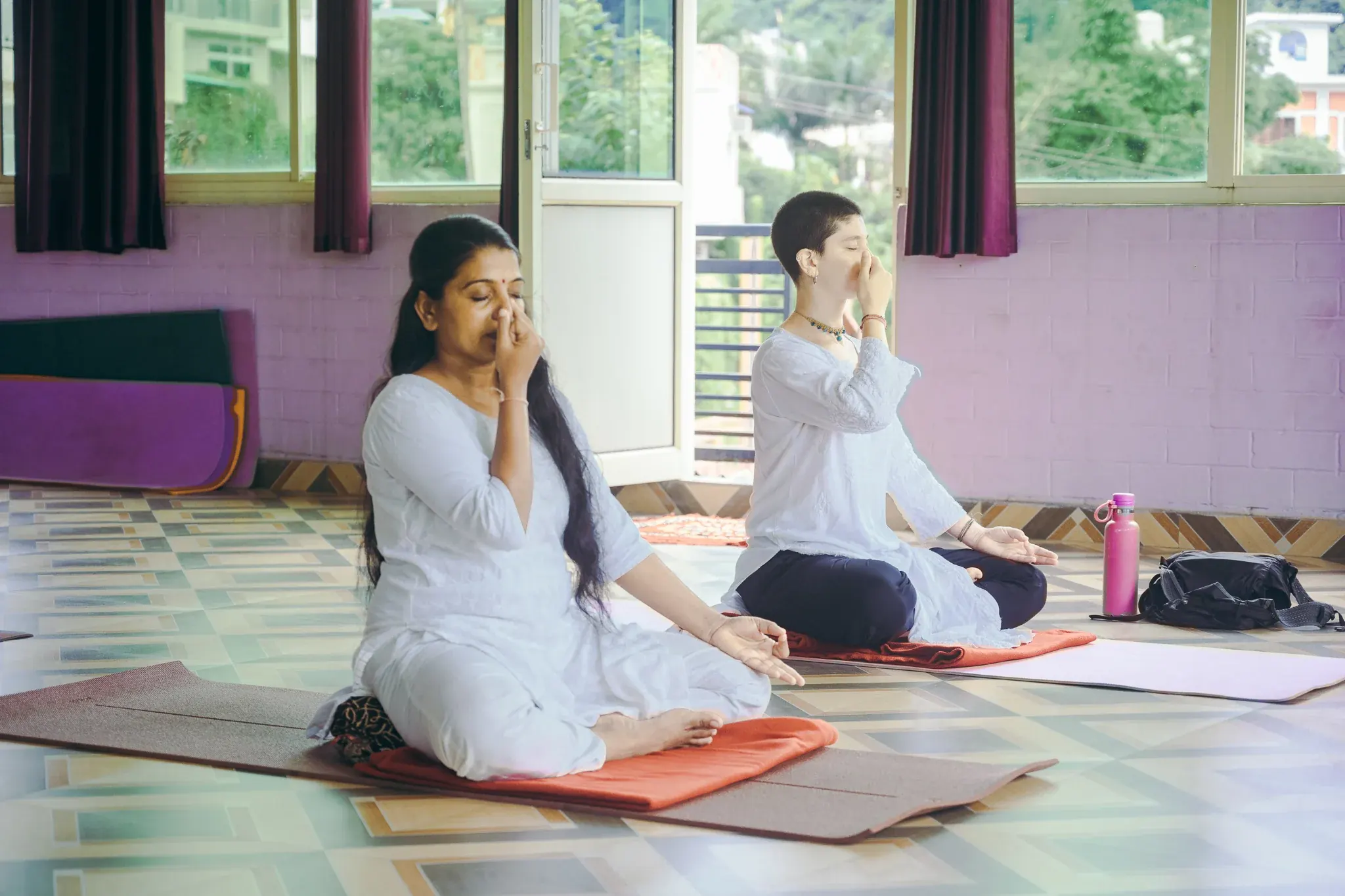
Pranayama practice
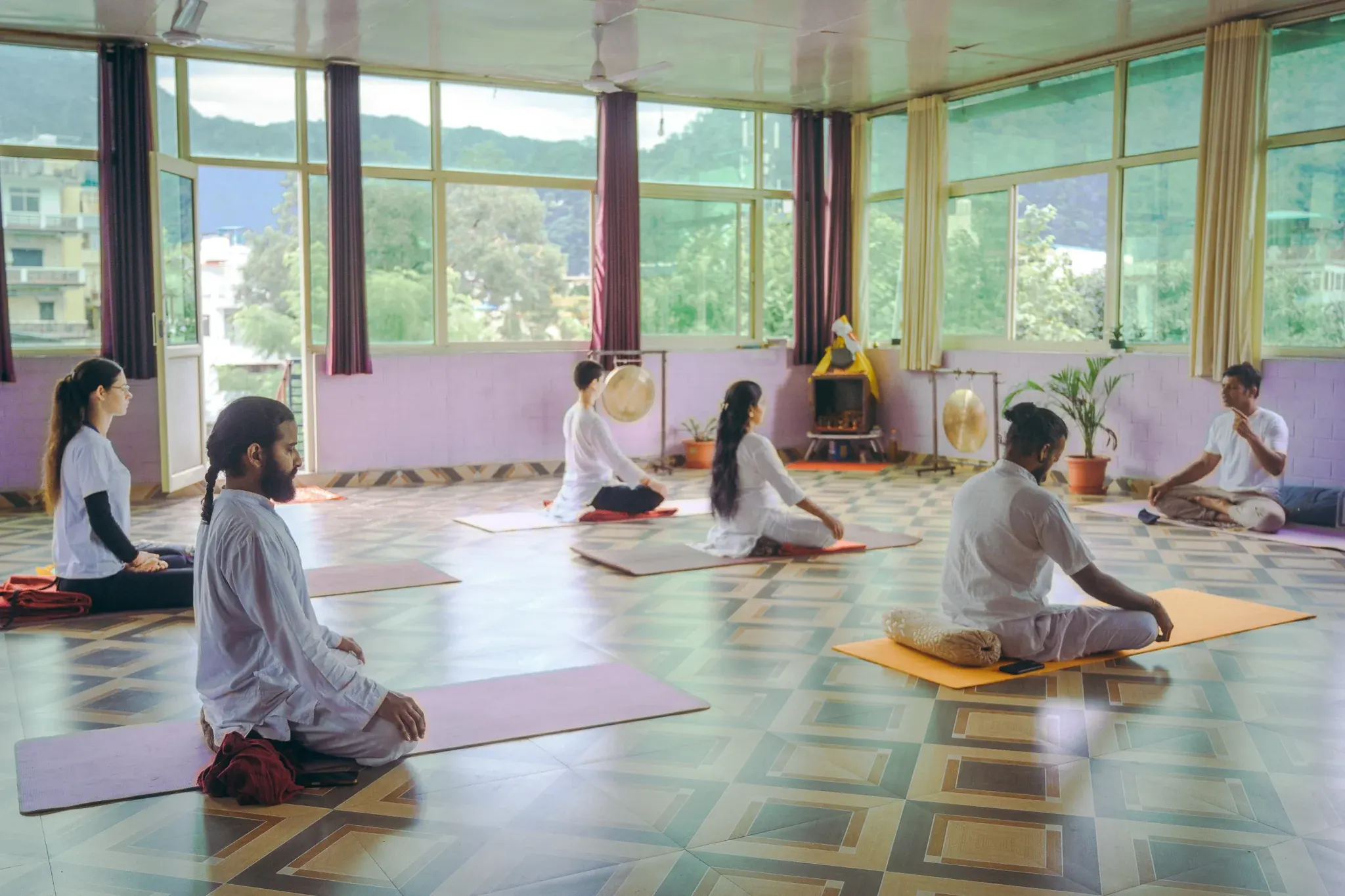
Corrections, science & philosophy
Sunday is a rest day, with no classes.
It is not a lecture series, and not a chapter-by-chapter study of one text. Ideas arrive with the practices that need them, and each description is set beside what you observe. Teaching is in English, and Sanskrit terms are explained as they come. Because philosophy is part of the daily schedule, all three courses include it, the 7-day course as well as the 30-day; there is nothing separate to book.