Pranayama guide
Nadi Shodhana Pranayama: Channel-Purification Breath with Retention
The scriptural alternate-nostril breath of the Hatha Yoga Pradipika — practised with kumbhaka (breath retention) to purify the nadis, awaken sushumna, and prepare the mind for meditation.
Quick Answer
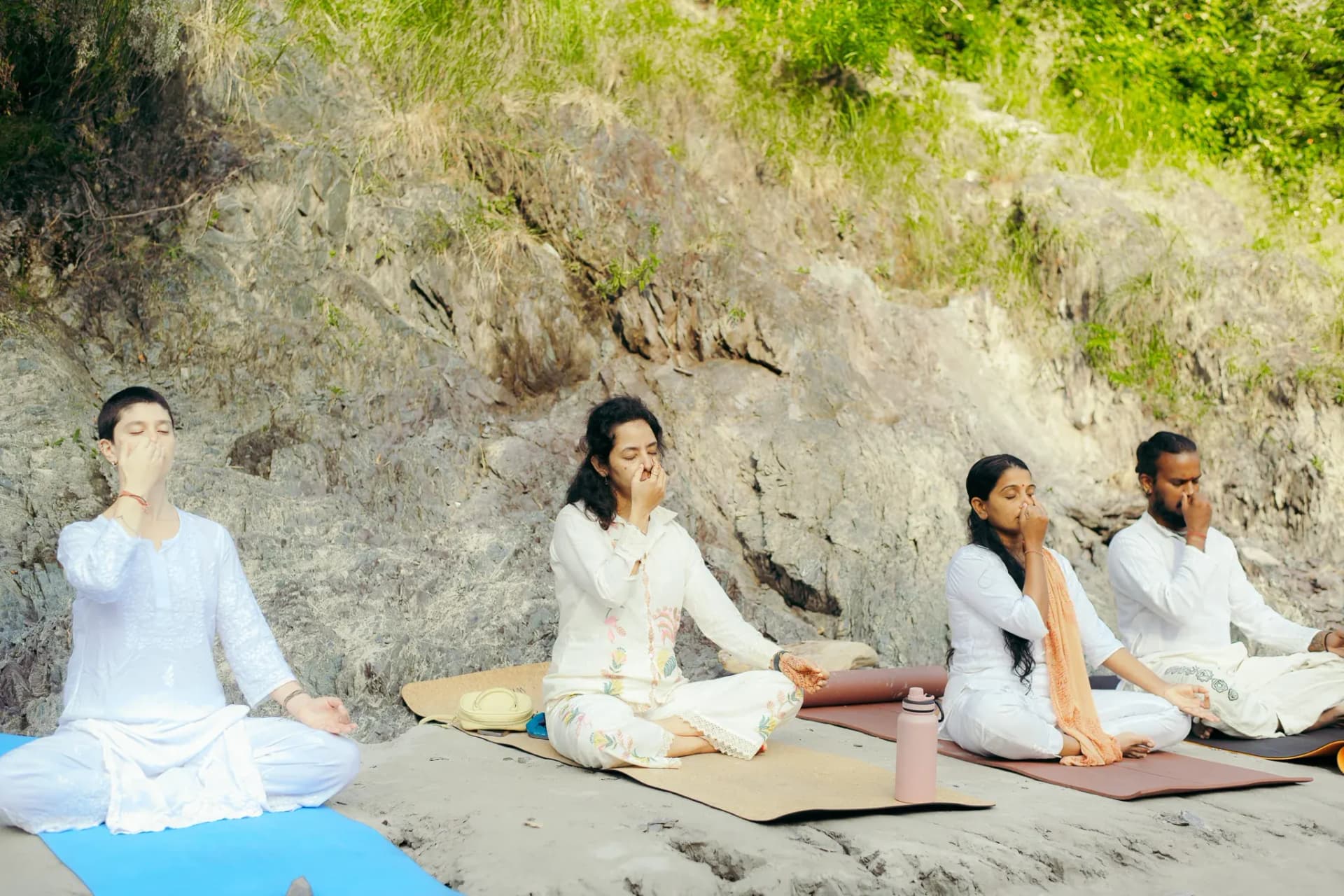
Nadi shodhana is alternate-nostril breathing performed with kumbhaka (breath retention). You inhale through one nostril, hold the breath, then exhale through the other, following a ratio such as 1:4:2. Its purpose is to purify the ida and pingala nadis so that prana can flow through the central sushumna channel.
Learn it in RishikeshNadi Shodhana with kumbhaka is taught in the first week of our 7-day pranayama course
What is Nadi Shodhana Pranayama?
Nadi shodhana takes its name from two Sanskrit words: "nadi," meaning a channel or subtle-energy conduit through which prana flows, and "shodhana," meaning purification or cleansing. Literally translated, nadi shodhana is "the breath that purifies the energy channels." Classical yoga describes 72,000 nadis in the subtle body, of which three are principal: ida (the cooling, lunar channel associated with the left nostril), pingala (the heating, solar channel associated with the right nostril), and sushumna (the central channel running along the spine through which kundalini and prana rise in deep practice).
In the Hatha Yoga Pradipika, nadi shodhana appears as the preparatory purification that must precede the more advanced pranayamas. The text instructs that the seeker should practise alternate-nostril breathing with retention until the nadis are cleansed — signs of which include lightness of body, a bright complexion, and a strong digestive fire. Only once ida and pingala are balanced and purified can prana be coaxed into the sushumna, which is regarded as the gateway to meditative absorption. This is why nadi shodhana is often called the "foundation" or "mother" of all pranayama.
The defining feature of nadi shodhana is the deliberate inclusion of kumbhaka — the retention of the breath after inhalation (antara kumbhaka) and, in advanced practice, after exhalation (bahya kumbhaka). This retention is what distinguishes it from simpler alternate-nostril breathing and gives the practice its power to still the mind. Because retention amplifies the effect of the breath, nadi shodhana with kumbhaka is considered an intermediate-to-advanced technique that should be learned progressively under guidance rather than rushed.
Nadi Shodhana vs. Anulom Vilom: Retention is the Difference
The terms nadi shodhana and anulom vilom are often used interchangeably, but in traditional teaching they are not identical. Anulom vilom is smooth alternate-nostril breathing without any breath retention — you simply inhale through one nostril and immediately exhale through the other in a steady, flowing rhythm. It is calming, safe for almost everyone, and an ideal entry point for beginners.
Nadi shodhana, by contrast, is the advanced sibling: the same alternate-nostril pattern, but with kumbhaka held between the inhale and the exhale, usually following a measured ratio such as 1:4:2 (inhale 4, retain 16, exhale 8). The retention is what makes nadi shodhana a genuine tool for nadi purification and for awakening sushumna, and it is also what makes correct guidance essential — retention should never be forced, and the ratio should be extended only gradually over months of practice.
New to alternate-nostril breathing? Begin with the gentler, retention-free version before adding kumbhaka — learn Anulom Vilom first.
How to Practise Nadi Shodhana: Step-by-Step
Sit in a stable meditative posture
Sit in Sukhasana, Padmasana, or Siddhasana with the spine erect, or use a chair with your feet flat on the floor. The head, neck, and spine should be aligned so the breath can move freely. Rest the left hand on the left knee in Jnana Mudra. Take a few natural breaths to settle.
Form Vishnu Mudra with the right hand
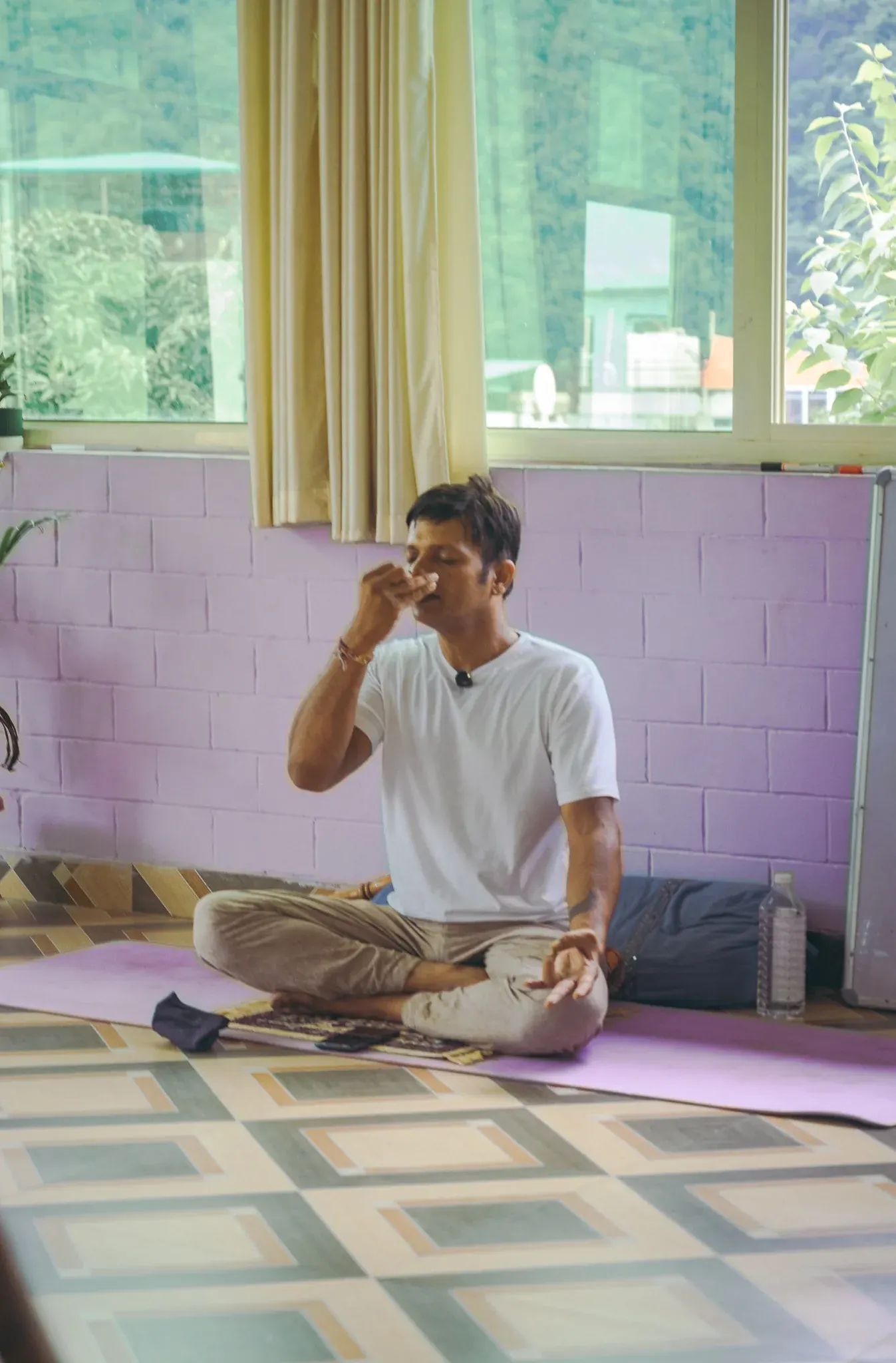
Fold the index and middle fingers of the right hand toward the palm (or rest them gently on the third-eye centre). The thumb will control the right nostril, and the ring finger (with the little finger) will control the left nostril. Keep the hand relaxed and the elbow low so the shoulder does not tense.
Close the right nostril and inhale through the left
Gently press the right nostril closed with the thumb. Inhale slowly, smoothly, and completely through the left nostril for a count of four. The inhalation should be silent and even, filling the lungs from the base upward without strain.
Retain the breath (antara kumbhaka)
Close the left nostril with the ring finger so both nostrils are gently sealed, and hold the breath in. Beginners should retain for a comfortable count of four to eight; experienced practitioners extend toward the classical 1:4:2 ratio (retaining four times the length of the inhale). Never strain — the retention must feel steady and calm. If you feel any urge to gasp, shorten the hold.
Release the right nostril and exhale
Keeping the left nostril closed, lift the thumb and exhale slowly and completely through the right nostril, aiming for an exhale roughly twice the length of the inhale (a count of eight). The exhalation should be quiet, controlled, and unhurried, emptying the lungs fully.
Reverse the cycle
Now inhale through the right nostril for a count of four, retain with both nostrils closed, then exhale through the left nostril. This completes one full round of nadi shodhana. The pattern is always: inhale one side, retain, exhale the other side, inhale that same side, retain, exhale the first side.
Continue and close the practice
Repeat for five to ten rounds initially, gradually building to fifteen or twenty over weeks. When finished, release the hand, return to natural breathing, and sit quietly for a minute or two, observing the balanced, settled quality of the mind before opening your eyes.
Benefits of Nadi Shodhana Pranayama
Purifies the Energy Channels
The alternating breath with retention is the classical method for cleansing the ida and pingala nadis, balancing the flow of prana between the left and right sides of the subtle body.Calm Alertness
Slow alternate-nostril breathing is studied for its effects on the autonomic nervous system. Students often describe the result as calm alertness, neither agitated nor drowsy.Prepares the Mind for Meditation
By steadying the breath and the mental chatter, nadi shodhana quiets the fluctuations of the mind, making it one of the most reliable preparatory practices before seated meditation.Awakens Sushumna
When ida and pingala are balanced through sustained practice, prana can begin to flow in the central sushumna channel — the state the classical texts associate with deep concentration and inner stillness.Trains Focus
The measured counting and the retention train sustained attention. Students often notice a clearer, quieter mind afterwards.Builds Breath Control
The slow inhalations, gentle retention and long exhalations train the diaphragm. Over the weeks, students notice smoother, longer and steadier breaths.A Calmer State
Research suggests that slow, regulated breathing may increase parasympathetic, rest-and-digest activity. Many students feel calmer after practice. It is not a treatment for anxiety.Promotes Emotional Equilibrium
By balancing the solar and lunar energies, nadi shodhana is traditionally said to bring the emotions into equilibrium, reducing reactivity and cultivating inner steadiness.
Precautions: Who Should Avoid Nadi Shodhana
Nadi shodhana is generally gentle, but the kumbhaka (retention) requires care. Practise retention only when the basic rhythm is comfortable, and observe these precautions:
- Uncontrolled high blood pressure: Breath retention can transiently raise blood pressure. Those with uncontrolled hypertension should practise only the retention-free version (anulom vilom) until the condition is medically managed.
- Heart disease: Anyone with a diagnosed cardiac condition or recent cardiac event should avoid kumbhaka and consult their doctor before adding retention to their breathing practice.
- Pregnancy: Pregnant women should avoid breath retention entirely. Gentle alternate-nostril breathing without kumbhaka is generally considered safe, but always work with a qualified prenatal yoga teacher.
- Respiratory illness: During asthma flare-ups, colds, or other active respiratory conditions, skip the retention and keep the breath free and unforced until you have fully recovered.
- Beginners rushing retention: The most common mistake is extending the kumbhaka too quickly. Retention should be lengthened over months, never in a single session, and always without the slightest sense of struggle.
When to Practise Nadi Shodhana
The ideal time is early morning, at or before sunrise, on an empty stomach — the traditional brahma muhurta window when the mind is naturally calm and the environment quiet. Practising before your meditation or asana session makes nadi shodhana especially effective, as it settles the breath and mind beforehand.
Evening practice, a couple of hours after eating, is also valuable for releasing the tension of the day and preparing for restful sleep. Whatever time you choose, allow at least three to four hours after a heavy meal, sit in a clean and well-ventilated space, and keep the practice consistent — daily practice, even for a few minutes, yields far more than occasional long sessions.
Frequently Asked Questions About Nadi Shodhana
What is the difference between nadi shodhana and anulom vilom?
What is the correct breathing ratio for nadi shodhana?
Is nadi shodhana safe for beginners?
How long should I practise nadi shodhana each day?
Which nostril do I start with in nadi shodhana?

Advanced Pranayama Course
Go deeper: Nadi Shodhana with kumbhaka and the bandhas
- 7, 15 or 30 days
- A new start every month
- Taught in English
Tuition149 USD13.000 ₹
Continue Exploring Pranayama
- Anulom VilomThe gentler, retention-free alternate-nostril breath — the ideal starting point before adding kumbhaka.
- Pranayama: Complete GuideOverview of yogic breathing, the five pranas, the nadis, and our programs.
- Surya & Chandra BhedanaSingle-nostril breathing: the solar (right) and lunar (left) breaths of the Hatha Yoga Pradipika.
- 7-Day Pranayama Course in RishikeshNadi shodhana with Chandra and Surya nadi bhedana and kumbhaka, taught from the first week of our 7-day course.
- Kumbhaka: Breath retentionAntar and bahya kumbhaka: holding the breath in and out, with the bandhas, and how to begin safely.
- Bandhas: Yoga's energy locksMula, Uddiyana, Jalandhara and Maha bandha: what each lock is, and how it joins pranayama and kumbhaka.