Pranayama guide
Surya Bhedana & Chandra Bhedana: Single-Nostril Breathing
The solar and lunar breaths of the Hatha Yoga Pradipika — surya bhedana warms and energizes through the right nostril (pingala nadi), while chandra bhedana cools and calms through the left (ida nadi). Unlike anulom vilom, each uses a single fixed nostril for inhalation.
Quick Answer
Surya bhedana is single-nostril breathing that always inhales through the right nostril (the solar, pingala channel) and exhales through the left — heating and energizing. Chandra bhedana reverses it: inhale left (the lunar, ida channel), exhale right — cooling and calming. Both are taught in the Hatha Yoga Pradipika.
Learn it in RishikeshSurya and Chandra nadi bhedana are taught with Nadi Shodhana in our 7-day pranayama course
What Are Surya Bhedana and Chandra Bhedana?
The names come from Sanskrit: "surya" means sun, "chandra" means moon, and "bhedana" means piercing or activating. Surya bhedana ("sun-piercing breath") and chandra bhedana ("moon-piercing breath") are a complementary pair of single-nostril pranayamas that work by deliberately activating one of the two principal energy channels of the subtle body: pingala, the heating solar nadi associated with the right nostril, and ida, the cooling lunar nadi associated with the left. In yogic physiology these two nadis spiral around the central sushumna channel, and their relative activity is reflected in which nostril is dominant at any given moment.
In surya bhedana you inhale only through the right nostril and exhale only through the left, drawing prana up the pingala (solar) channel. Because pingala governs heat, activity, digestion, and the sympathetic drive, surya bhedana is warming, stimulating, and energizing. Chandra bhedana is its mirror image: you inhale only through the left nostril and exhale only through the right, drawing prana up the ida (lunar) channel. Because ida governs coolness, rest, and the parasympathetic response, chandra bhedana is cooling, soothing, and calming.
Both breaths are described in the Hatha Yoga Pradipika, where surya bhedana appears among the principal kumbhakas — traditionally practised with breath retention (kumbhaka) and jalandhara bandha (the chin lock) to intensify its heating effect and its power to "cleanse the skull" and destroy conditions of excess wind (vata). Chandra bhedana is taught as its cooling counterpart. Because they intentionally push the practitioner toward one polarity — heat or cold, activation or sedation — they are targeted practices rather than everyday balancing ones, and are best learned progressively under guidance.
How They Differ from Anulom Vilom & Nadi Shodhana
The crucial distinction is the nostril pattern. Anulom vilom and nadi shodhana are alternating breaths — they switch the inhaling nostril every round so that, over a full cycle, both nostrils receive equal inhalation. Their purpose is balance: harmonising ida and pingala so prana can flow evenly. Surya bhedana and chandra bhedana do the opposite. Each uses a single fixed nostril for every inhalation throughout the practice, deliberately loading one channel to shift the body toward heat or cold.
In other words, if anulom vilom and nadi shodhana are about equilibrium, surya bhedana and chandra bhedana are about intentional imbalance for a specific effect. This is why they are chosen for a purpose — surya bhedana to warm a cold, sluggish, or low-energy state, and chandra bhedana to cool an overheated, agitated, or restless one — rather than practised indiscriminately every day. Understanding this difference is the key to using single-nostril breathing safely.
New to nostril-based breathing? Master the balancing, retention-free version first with Anulom Vilom and then the retention-based purification of Nadi Shodhana.
How to Practise Surya & Chandra Bhedana: Step-by-Step
Sit in a stable meditative posture
Sit in Sukhasana, Padmasana, or Siddhasana with the spine erect, or use a chair with your feet flat on the floor. Align the head, neck, and spine so the breath moves freely, rest the left hand on the left knee in Jnana Mudra, and take a few natural breaths to settle the mind and body.
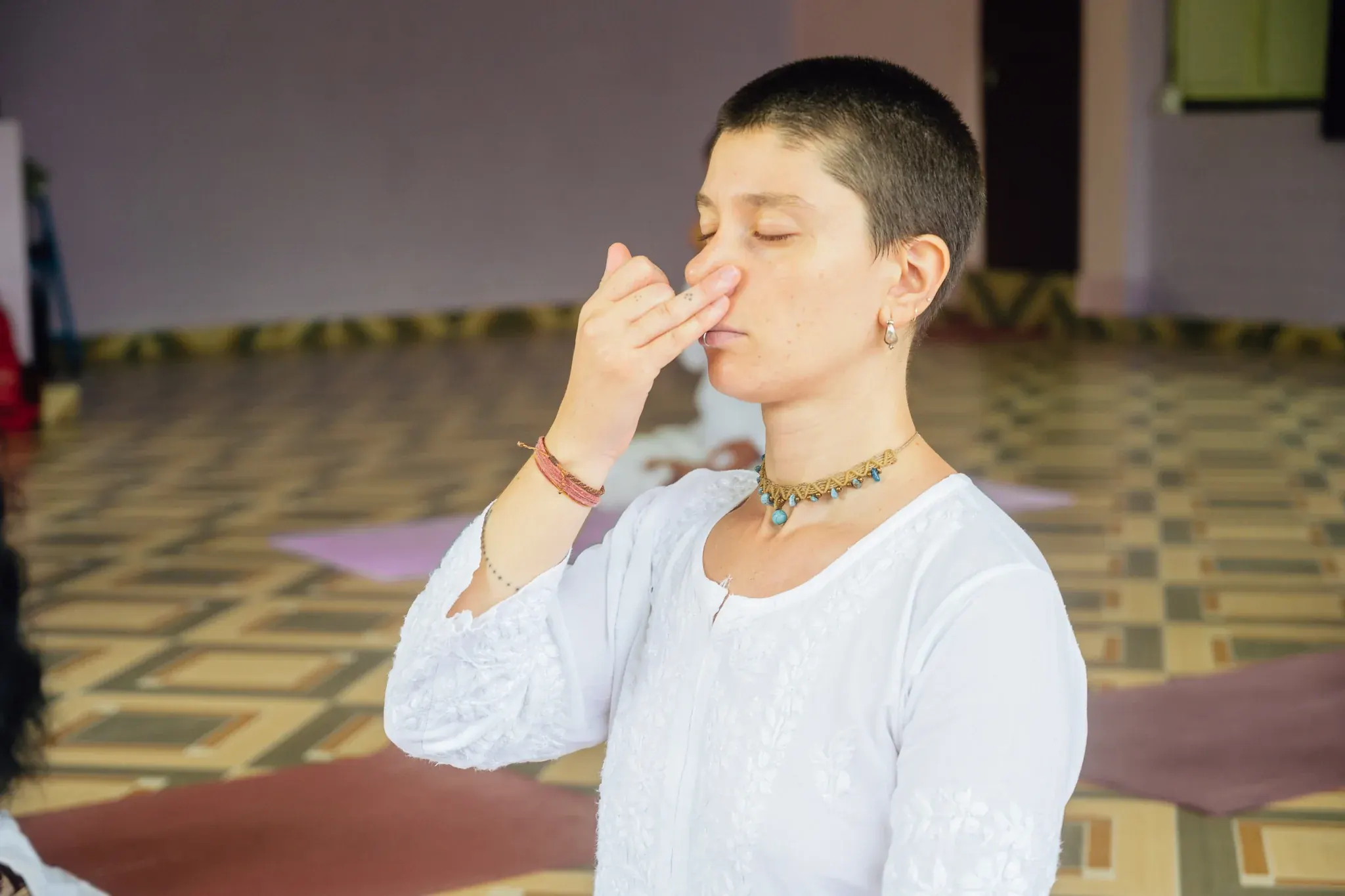
Form Vishnu Mudra with the right hand
Fold the index and middle fingers of the right hand toward the palm (or rest them lightly at the third-eye centre). The thumb will control the right nostril, and the ring finger (with the little finger) will control the left. Keep the hand relaxed and the elbow low so the shoulder does not tense.
For surya bhedana, inhale through the RIGHT nostril
Close the left nostril with the ring finger. Inhale slowly, smoothly, and completely through the right nostril (the solar, pingala channel) for a comfortable count of four. Keep the inhalation silent and even, filling the lungs from the base upward without strain. This right-nostril inhalation is what makes the breath heating.
Optionally retain the breath (kumbhaka)
Once the basic rhythm is comfortable, close both nostrils and hold the breath in for a short, steady count — beginners four to eight counts, experienced practitioners longer. Traditionally surya bhedana is held with jalandhara bandha (chin lock). Never force retention; if you feel any urge to gasp, shorten or omit the hold entirely.
Exhale through the LEFT nostril
Keeping the right nostril closed with the thumb, lift the ring finger and exhale slowly and completely through the left nostril, aiming for an exhale about twice the length of the inhale. The exhalation should be quiet and unhurried, emptying the lungs fully. This completes one round of surya bhedana.
Repeat with the same fixed nostril
For surya bhedana, always inhale right and exhale left — do NOT alternate. Continue for five to ten rounds, gradually building over weeks. Because it is heating, stop if you feel overheated, and never practise it in already hot conditions or with a fever.
For chandra bhedana, simply reverse the sides
To practise the cooling chandra bhedana, mirror every step: inhale only through the LEFT nostril (the lunar, ida channel), optionally retain, then exhale only through the RIGHT. Keep this fixed pattern throughout — inhale left, exhale right — for five to ten rounds. When finished, release the hand, return to natural breathing, and sit quietly for a minute before opening the eyes.
Benefits of Surya Bhedana & Chandra Bhedana
Surya: Boosts Energy & Vitality
By activating the solar pingala channel, surya bhedana is warming and stimulating — traditionally used to lift a dull, sluggish, or low-energy state and increase alertness and drive.Surya: Stimulates Digestion
The heating effect is said to kindle agni (the digestive fire), supporting metabolism and digestion, which is why surya bhedana is often chosen for cold-natured or vata-dominant constitutions.Surya: Sharpens Focus & Warmth
The activating, sympathetic quality of the right-nostril breath supports mental alertness and concentration, and generates internal heat that can help counter cold, damp, or lethargic conditions.Chandra: Cools the Body & Mind
By activating the lunar ida channel, chandra bhedana is cooling and soothing — a natural counter to overheating, excess pitta, and the heat of summer or an agitated system.Chandra: Calms & Reduces Stress
The left-nostril breath is traditionally used to settle mental agitation, and many students feel quieter and more settled afterwards. It is not a treatment for anxiety.Chandra: Supports Restful Sleep
Because it soothes an overactive mind and cools the system, chandra bhedana is often practised in the evening to prepare the body and mind for deep, restful sleep.Conscious Control of Ida & Pingala
Practised together, the pair teaches you to consciously shift your inner state — warming when you are cold and heavy, cooling when you are hot and restless — a foundational skill in yogic self-regulation.Balances the Autonomic Nervous System
Surya bhedana engages the activating sympathetic branch while chandra bhedana engages the restful parasympathetic branch, giving the practitioner a precise tool for either arousal or relaxation.
Precautions: Who Should Avoid Surya & Chandra Bhedana
Because these breaths deliberately push the body toward heat or cold, choosing the wrong one for your condition can aggravate it. Observe these precautions, and practise any retention only when the basic rhythm is comfortable:
- High blood pressure or heat conditions — avoid surya bhedana: Surya bhedana is heating and, with retention, can transiently raise blood pressure. Those with uncontrolled hypertension, heart disease, fever, hyperacidity, or any pitta/heat-aggravated condition should avoid surya bhedana and favour the cooling chandra bhedana instead.
- Low blood pressure, cold conditions or depression — avoid chandra bhedana: Chandra bhedana is cooling and sedating. Those with low blood pressure, chronic cold, sluggish digestion, seasonal or clinical depression, or heavy, lethargic (kapha) states should avoid chandra bhedana and favour the warming surya bhedana instead.
- Pregnancy: Pregnant women should avoid breath retention entirely and are best served by gentle balancing breaths under a qualified prenatal teacher rather than by strongly heating or cooling single-nostril practices.
- Respiratory illness: During asthma flare-ups, colds, or other active respiratory conditions, skip the retention and keep the breath free and unforced until you have fully recovered.
- Beginners forcing retention or the wrong breath: Never extend kumbhaka quickly, and do not practise a heating or cooling breath that opposes your current state. When in doubt, learn the balancing anulom vilom first and add single-nostril work only under experienced guidance.
When to Practise Surya & Chandra Bhedana
Match the breath to the time and the need. Surya bhedana, being warming and energizing, is best practised in the morning on an empty stomach — it helps dispel morning sluggishness, kindles digestion, and brings alertness for the day ahead. Because it is stimulating, it is not suited to the hours before sleep.
Chandra bhedana, being cooling and calming, is ideally practised in the evening or before bed, when its soothing effect helps release the heat and tension of the day and prepares the mind for rest. It is also valuable during hot weather or whenever the body or mind feels overheated. Whichever you choose, allow at least three to four hours after a heavy meal, sit in a clean and well-ventilated space, and keep the practice consistent.
Frequently Asked Questions About Surya & Chandra Bhedana
What is the difference between surya bhedana and chandra bhedana?
Surya vs chandra bhedana — which one should I practise?
Is surya bhedana the same as anuloma viloma (anulom vilom)?
What do the Hatha Yoga Pradipika and ida/pingala have to do with these breaths?
Can beginners practise surya bhedana and chandra bhedana?
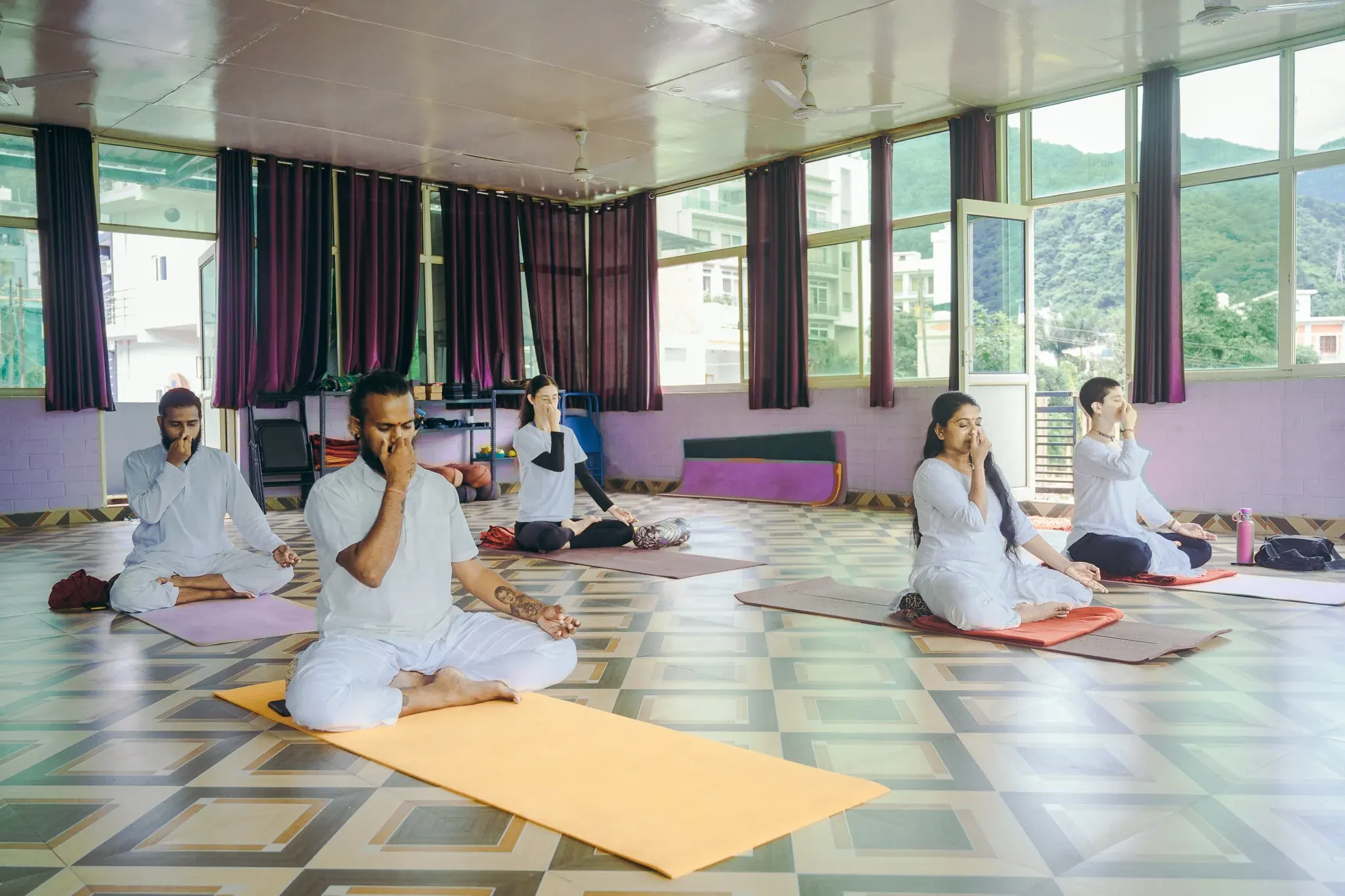
Advanced Pranayama Course
Go deeper: Surya and Chandra nadi bhedana, in person
- 7, 15 or 30 days
- A new start every month
- Taught in English
Tuition149 USD13.000 ₹
Continue Exploring Pranayama
- Anulom VilomThe balancing, retention-free alternate-nostril breath — the ideal foundation before single-nostril work.
- Nadi ShodhanaThe scriptural channel-purification breath with kumbhaka that balances ida and pingala.
- Sheetali & SheetkariThe cooling breaths, drawn in across the tongue or teeth, for heat and agitation.
- 7-Day Pranayama Course in RishikeshChandra and Surya nadi bhedana are part of the 7-day course; the 15-day course adds Ida and Pingala nadi stimulation.
- Kumbhaka: Breath retentionAntar and bahya kumbhaka: holding the breath in and out, with the bandhas, and how to begin safely.