Planning
India Visa Guide for Yoga Teacher Training (2026)
Which India visa do yoga students need, for a short pranayama course or a teacher training? A clear 2026 guide to the e-Tourist visa, the Yoga Visa, applying online, documents, and common mistakes.
SomeshMay 19, 2026
Most international students who come to India for a yoga course, whether a short pranayama course or a month-long teacher training, enter the country on a tourist visa, usually the convenient online e-Tourist visa. India also offers a dedicated Yoga Visa for longer or more formal study. Which one suits you depends on your nationality, the length of your course, and how the program is classified, so it is worth understanding the options before you book your flights.
Which India visa do yoga students actually need?
For a course of one to five weeks, the great majority of students travel on a tourist visa. There are three routes worth knowing about:
- e-Tourist visa — An electronic tourist visa applied for entirely online, available to nationals of well over a hundred countries. It is the fastest and simplest option and is what most yoga teacher training students use for a single short course.
- Regular (sticker) tourist visa — Issued by an Indian embassy or consulate as a physical stamp in your passport. This is the route if your nationality is not eligible for the e-Visa, or if you want a longer-validity multiple-entry tourist visa.
- Yoga Visa — India introduced a dedicated visa category for foreign nationals coming specifically to study yoga at a recognised school. It is intended for longer stays and is generally issued for several months up to a year. It can be a good fit if you are stacking courses (for example a 200-hour followed by a 300-hour) or staying for an extended period of study.
If you are joining our 7-, 15- or 30-day Advanced Pranayama & Yoga Philosophy Course, a tourist visa is almost always the practical choice. The same is true for a single month on our 200-hour yoga teacher training.
e-Visa or sticker visa — what is the difference?
The e-Tourist visa is processed online: you complete a form on the official Indian government e-Visa portal, upload a passport scan and a photograph, pay the fee, and receive an electronic travel authorisation by email, which you print and carry. It is convenient but is granted for tourism purposes and typically limits how long you can stay per visit.
The sticker visa requires submitting your passport to an Indian mission (in person or via an authorised visa centre) and takes longer, but it can offer longer validity and more flexibility. If you plan to leave and re-enter India, or to stay well beyond a single short course, the sticker tourist visa or the Yoga Visa may serve you better.
Can a teacher training course fall outside the tourist visa?
This is the nuance that causes the most confusion, so we want to be honest rather than absolute. A tourist visa is, by definition, for tourism — and a structured certificate course is a form of study. In practice, a great many students complete short yoga teacher training programs on an e-Tourist visa without any issue, and this remains the most common route.
However, India does maintain separate visa categories for study and for the Yoga Visa precisely because formal courses can sit in a grey area. Rules and how they are interpreted at the border can and do change, and the safest course is not to assume. We strongly recommend that you:
- Read the eligibility and permitted-activity notes on the official Indian government e-Visa website carefully before applying.
- Confirm with the Indian embassy or consulate in your home country if you are unsure whether your course is suitable for a tourist visa.
- Contact the Anantadrishti team — we can describe how the course is structured and provide an enrolment letter so you can make an informed choice. Get in touch with us well before you apply.
If in any doubt, the Yoga Visa exists for exactly this purpose and removes the ambiguity entirely.
How do I apply for an India visa?
For the e-Tourist visa, the process is straightforward and done from home:
- Go to the official Indian government e-Visa portal — apply only through the genuine government site, never through unofficial copycat sites that charge inflated fees.
- Complete the application form with your travel details and passport information.
- Upload a clear scan of your passport bio-page and a recent passport-style photograph that meets the stated specifications.
- Pay the visa fee online. Fees vary by nationality and visa duration, so check the current amount on the portal rather than relying on figures you read elsewhere.
- Wait for your electronic visa to arrive by email, then print a copy to carry with you.
For a sticker visa or a Yoga Visa, you apply through the Indian mission or its authorised visa application centre in your country, where you may also need to attend in person and submit your physical passport.
Apply with a comfortable margin — several weeks ahead of departure — so that any delay does not put your travel at risk. Processing times differ by country and by season, so treat published timelines as a guide, not a guarantee.
How long is an India tourist visa valid?
Validity and the permitted length of each stay depend on the visa type and your nationality. The e-Tourist visa is issued in different durations, and the Yoga Visa is generally granted for a longer period suited to extended study. The key point for course planning is the permitted stay per visit, not just the overall validity window — make sure the version you hold comfortably covers your full course plus arrival and departure days.
Because these limits change and vary between countries, confirm the exact validity and maximum-stay rules for your nationality on the official e-Visa portal before you apply.
What documents do I need?
- A valid passport — it should generally be valid for at least six months beyond your intended date of entry, with blank pages for stamps.
- A digital passport scan and a recent photograph meeting the portal's specifications for the e-Visa.
- Proof of onward or return travel and details of where you will be staying.
- An enrolment or confirmation letter from your yoga school, which Anantadrishti can provide once your place is booked. Border officials sometimes ask about the purpose of your visit, and this letter helps you answer clearly.
- Travel insurance — not always a visa requirement, but strongly recommended for any trip to India.
It is wise to carry both digital and printed copies of every document. See our yoga teacher training packing guide for a full checklist.
Common visa mistakes to avoid
- Applying too late. Leaving the application until the last fortnight is the single most common error. Build in a buffer for delays.
- Using unofficial websites. Many lookalike sites charge a hefty markup for the same e-Visa. Use only the official Indian government portal.
- A passport that expires too soon. Check your passport validity early — renewing one takes time you may not have.
- Photo and scan errors. Poor-quality uploads are a frequent cause of rejected or delayed applications.
- Assuming the rules never change. What was true last year may not be true today. Always verify against current official guidance.
- Mismatched travel dates. Make sure your visa covers your full stay, including any extra days before and after the course.
What can the school help with?
Anantadrishti Yoga supports students through the practical side of arriving in India. Once your place is confirmed, we can provide an enrolment or confirmation letter stating your course details and dates, which is useful as supporting documentation and for answering questions on arrival. We can also describe how the program is structured if you need that information for your application or for the embassy.
What we cannot do is decide your visa for you — immigration rules depend on your nationality and on current government policy. We will always point you to the official sources, and we are happy to talk through your situation. Still choosing a program? Our guide on how to choose a yoga teacher training can help.
Arrival and registration in India
When you land, you will pass through immigration with your printed visa, passport, and supporting documents. Most yoga students fly into Delhi and continue to Rishikesh, or fly to Dehradun's Jolly Grant Airport, about 22 km from Rishikesh. We can help arrange a pickup at extra cost if you send us your arrival details.
Be aware that foreign nationals staying in India beyond certain periods may be required to register with local authorities (the FRRO). Whether this applies to you depends on your visa type and length of stay, so check the conditions printed on your visa and confirm anything unclear with the official authorities. For a short tourist-visa course this usually does not apply, but it is worth verifying.
Frequently asked questions
Can I do a 200-hour yoga teacher training on a tourist visa?
Most students do exactly that on an e-Tourist visa, and it is the common route. Because a structured course is technically study, we still recommend confirming suitability with the official e-Visa portal or the Indian embassy, and considering the Yoga Visa if you want certainty.
What is the India Yoga Visa?
It is a dedicated visa category for foreign nationals coming to study yoga at a recognised school in India. It is generally issued for a longer period than the e-Tourist visa and is well suited to extended or stacked courses.
How far in advance should I apply?
Apply several weeks before departure. Processing times vary by country and season, so give yourself a generous buffer.
How much does the visa cost?
Fees depend on your nationality and the visa duration and are subject to change. Check the current fee on the official Indian government e-Visa portal rather than relying on third-party figures.
Where do I get official information?
Always use the official Indian government e-Visa website and, if needed, the Indian embassy or consulate in your country. Visa rules carry real consequences and can change, so verify current requirements before applying — and feel free to contact the Anantadrishti team for guidance and your enrolment letter.
This guide is accurate to the best of our knowledge as of 2026 and is general information only, not legal or immigration advice. Always confirm current requirements with official Indian government sources before you travel.
CategoryPlanning
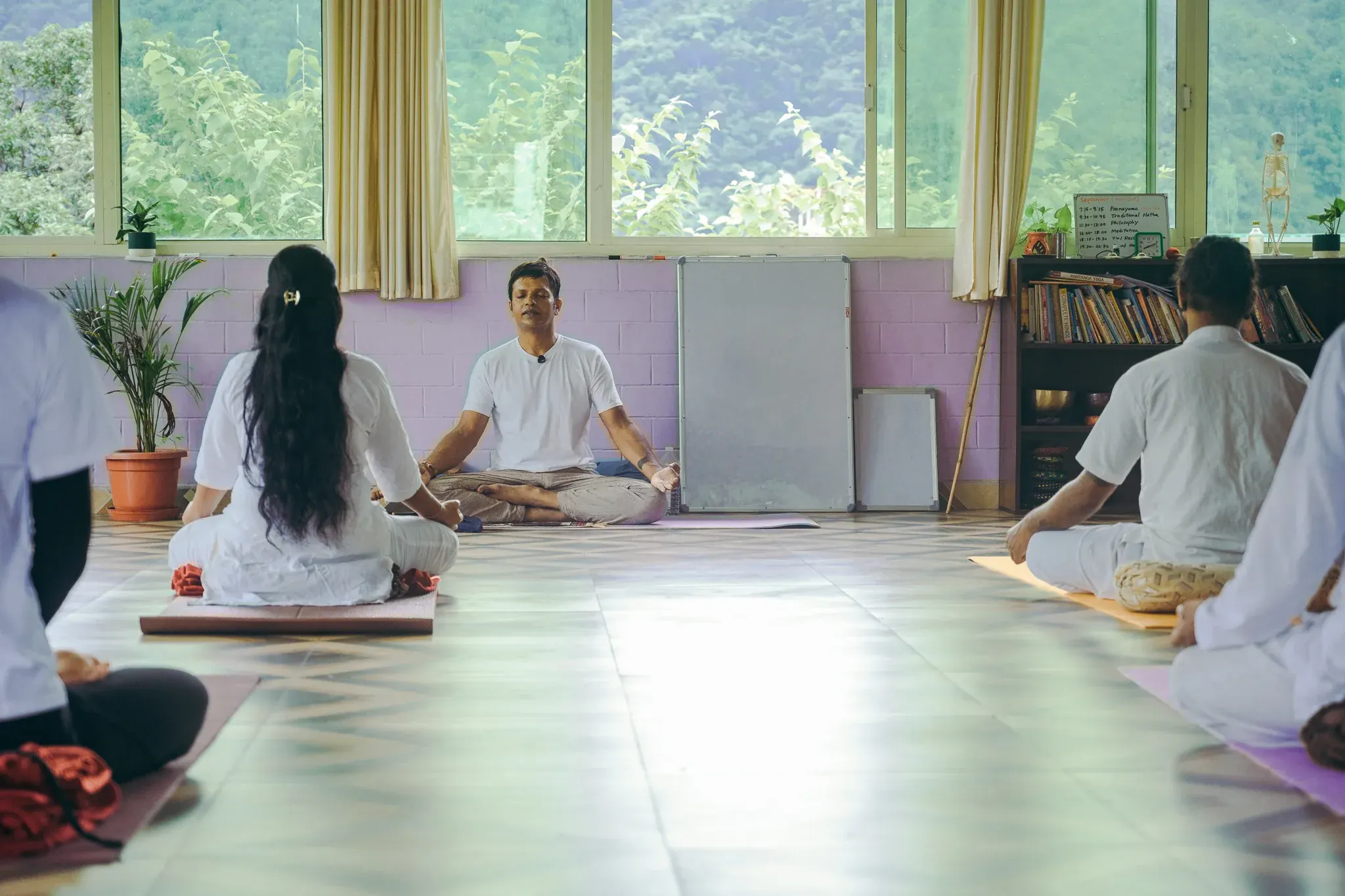
Advanced Pranayama Course
Go deeper: the Advanced Pranayama Course in Rishikesh
- 7, 15 or 30 days
- A new start every month
- Taught in English
Tuition from149 USD13.000 ₹