Philosophy
Bringing Yoga Philosophy into Daily Life
How to apply the Yamas and Niyamas off the mat to live a more balanced and ethical life.
SomeshSeptember 10, 2023

Yoga is far more than physical postures. The Yamas and Niyamas — the ethical restraints and observances described in Patanjali's Yoga Sutras — provide a practical framework for living with integrity, compassion, and mindfulness in the modern world.
The Yamas: How We Relate to Others
The five Yamas guide our interactions: Ahimsa (non-violence) asks us to choose kindness in our words and actions. Satya (truthfulness) reminds us to communicate with honesty. Asteya (non-stealing) extends beyond physical theft to respecting others' time and energy. Brahmacharya (moderation) encourages conscious use of our vital energy. Aparigraha (non-attachment) helps us let go of what no longer serves us.
The Niyamas: Inner Cultivation
The Niyamas turn the lens inward: Saucha (purity of body and mind), Santosha (contentment with what is), Tapas (self-discipline and inner fire), Svadhyaya (self-study and reflection), and Ishvara Pranidhana (surrender to a higher purpose).
Start with one principle each week. Notice how Ahimsa shifts your inner dialogue, or how Santosha changes your relationship with desire. These practices, over time, transform not just your yoga but your entire life.
Patanjali's Yoga Sutras, where the Yamas and Niyamas are set out, is among the classical texts drawn on in the late-morning session of our Advanced Pranayama & Yoga Philosophy Course, which studies yoga philosophy through the breath. To see how they fit into the wider yogic path, read our overview of the 8 limbs of yoga.
CategoryPhilosophy
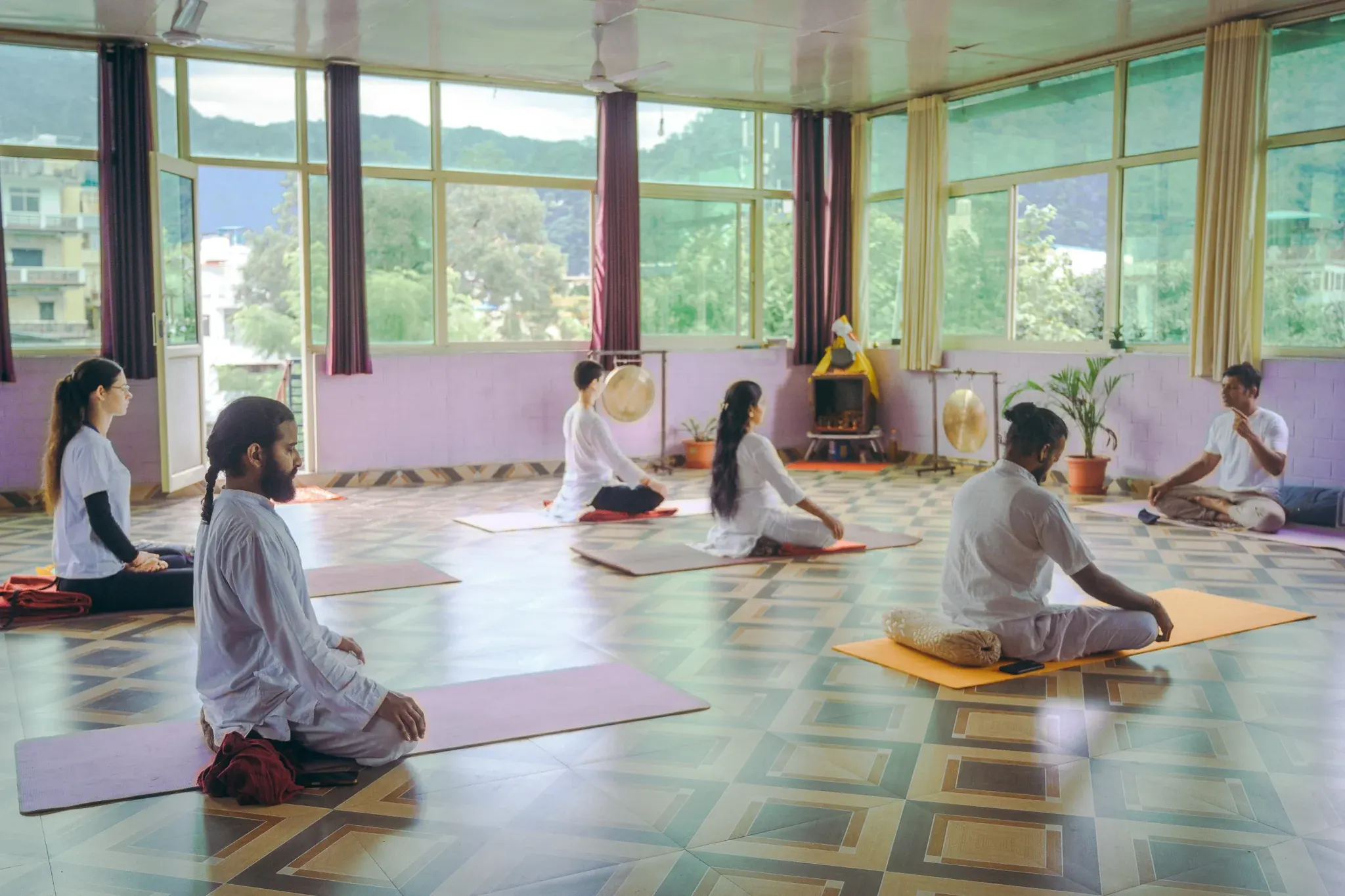
Advanced Pranayama Course
Pranayama and its philosophy, taught together
- 7, 15 or 30 days
- A new start every month
- Taught in English
Tuition from₹13,000US$149