To become a certified yoga teacher you complete a structured yoga teacher training — most commonly a 200-hour course accredited by Yoga Alliance — then register with Yoga Alliance as a Registered Yoga Teacher (RYT 200). From there you can teach classes, and later deepen your qualification with a 300-hour advanced training to reach RYT 500.
What Does a Yoga Teacher Actually Do?
A yoga teacher does far more than demonstrate postures. You design and sequence classes, give clear verbal instructions, offer hands-on or verbal adjustments, modify poses for different bodies and injuries, and hold a safe, welcoming space for students. Beyond the mat, many teachers run workshops, lead retreats, teach pranayama and meditation, and share yoga philosophy. Teaching is a skill of communication and observation as much as it is a physical practice — and like any skill, it is learned through structured training and repetition.
What Is the RYT 200 / RYT 500 Pathway?
The standard route into teaching has clear, recognised stages:
- 200-hour training — The foundational certification and the starting point for almost every yoga teacher. Completing an accredited 200-hour course qualifies you to register as an RYT 200. Explore our 200-hour yoga teacher training for what a full program looks like.
- 100-hour training — A shorter foundation course, ideal if you want to deepen your own practice or test the waters before committing to a full month. Our 100-hour yoga teacher training is a popular first step. Two 100-hour modules can also build toward the 200-hour level.
- 300-hour training — An advanced course for those who already hold an RYT 200. Combined with your 200-hour, it qualifies you for the RYT 500 credential. See our 300-hour yoga teacher training and our comparison of 200 vs 300 hour yoga teacher training.
You do not have to complete the whole pathway at once. Most teachers begin with a 200-hour, teach for a year or two, then return for a 300-hour once they know which direction they want to grow.
What Is Yoga Alliance and Do You Need to Register?
Yoga Alliance is the largest international registry for yoga teachers and schools. It does not run courses itself — instead it sets minimum curriculum standards and maintains a public directory. A school whose curriculum meets those standards becomes a Registered Yoga School (RYS). When you graduate from an RYS, you are eligible to register yourself as a Registered Yoga Teacher (RYT).
Registration is optional but widely valued. Many studios, gyms, and online platforms ask for an RYT credential, and it is internationally recognised, which matters if you plan to teach in different countries. Registering involves an application and a modest annual membership fee. The most important factor is choosing a training that is properly accredited in the first place — verify the school's RYS status before you book.
How Do You Choose the Right Training?
Not all trainings are equal, and the right one depends on your goals. Key factors to weigh:
- Style — Hatha and Vinyasa are the most versatile foundations and the easiest to teach widely. Ashtanga, Yin, and other styles can be specialised later.
- Location — Training in Rishikesh, the yoga capital of the world, means immersive residential study in the birthplace of yoga, often at a fraction of Western prices. Other students prefer to train closer to home.
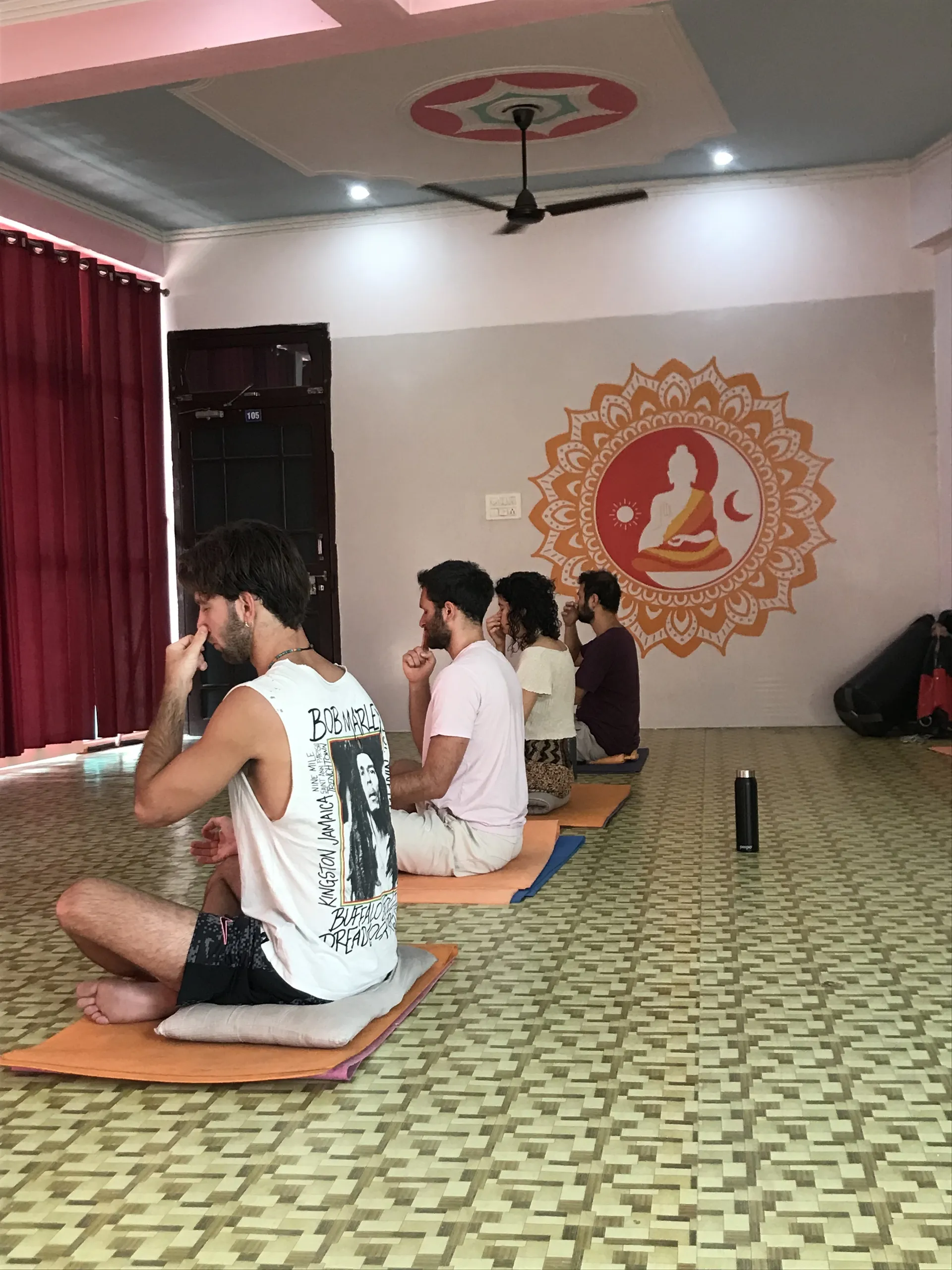
- In-person vs online — In-person immersion offers hands-on adjustment practice, real teaching feedback, and a community that an online course cannot fully replicate. Online courses suit those who cannot travel, but for first-time teachers, in-person training is strongly recommended.
- Faculty and group size — Experienced teachers and small batches mean more personal attention and better teaching feedback.
For a deeper checklist, read our full guide on how to choose a yoga teacher training.
What Does a 200-Hour Curriculum Cover?
A well-rounded 200-hour training is built around several core areas, all of which work together to make you a capable, confident teacher:
- Asana — Practising and learning to teach postures with correct alignment, sequencing, and modifications.
- Pranayama — Breathwork techniques, their effects, and how to guide them safely.
- Yoga philosophy — Foundational texts such as the Yoga Sutras and Bhagavad Gita, and the eight limbs of yoga.
- Anatomy and physiology — How the body moves, common injuries, and how to teach without causing harm.
- Teaching methodology and practicum — Class structure, voice and language, demonstration, observation, adjustments, and supervised practice teaching.
The practicum is where everything comes together: you teach real classes, receive feedback, and gradually build the confidence to lead a room.
How Much Does It Cost and How Long Does It Take?
Costs vary widely by country and format. Training in India is typically far more affordable than equivalent programs in North America, Europe, or Australia — and Indian residential courses usually bundle accommodation and meals into the price, while Western courses often charge tuition only. For a detailed regional breakdown, see our yoga teacher training cost guide.
On timeline, a residential 200-hour intensive is usually completed in around three to four weeks of full-time study. Part-time formats spread the same hours over several months of weekends. A 100-hour course is roughly half the length, and a 300-hour course somewhat longer than a 200-hour.
Do You Need Certification to Teach Yoga?
Legally, in most countries, there is no government licence required to teach yoga, and no law forbids teaching without certification. In practice, however, certification matters a great deal. Reputable studios, gyms, and retreat centres almost always require a recognised qualification, liability insurance providers usually expect one, and most importantly, training gives you the knowledge to teach safely. Guiding others through physical practice without proper grounding in anatomy and methodology risks injuring your students. Certification is not bureaucracy — it is the foundation of responsible teaching.
Frequently Asked Questions
Can a beginner do a 200-hour teacher training?
Yes. A 200-hour course is designed as the entry point and assumes no prior teaching experience. Most schools recommend a few months of consistent personal practice beforehand so the physical pace is manageable, but you do not need to be advanced. If you would like a gentler start, a 100-hour course is an excellent foundation.
Is the RYT 200 valid internationally?
Yes. Yoga Alliance is an international registry, and an RYT 200 earned from an accredited Registered Yoga School is recognised across most countries. Always confirm the school's RYS accreditation before enrolling.
How soon can I start teaching after my training?
Many graduates begin teaching immediately — community classes, friends, or covering studio classes. Confidence builds with practice, so the sooner you start, the faster you grow.
Should I do my training in India?
India offers immersive, residential study in the birthplace of yoga, usually at lower cost and with accommodation and meals included. For many students it is the most authentic and affordable choice — read why Rishikesh is the yoga capital to decide if it fits your goals.
Start your journey: 200-Hour Teacher Training | 300-Hour Advanced Training | How to Choose a YTT
Share this article
Categories
Written by
Somesh
RYT 500 · Yoga Philosophy & Pranayama
An experienced yoga teacher and Registered Yoga Teacher (RYT 500) specializing in yoga philosophy and pranayama at Anantadrishti Yoga in Rishikesh, India.
More articles by Somesh