Pranayama guide
Types of Pranayama: A Complete Guide to Yogic Breathing Techniques
From the 8 classical pranayamas of the Hatha Yoga Pradipika to modern variations: every major yogic breathing technique, with its difficulty and what practitioners describe.
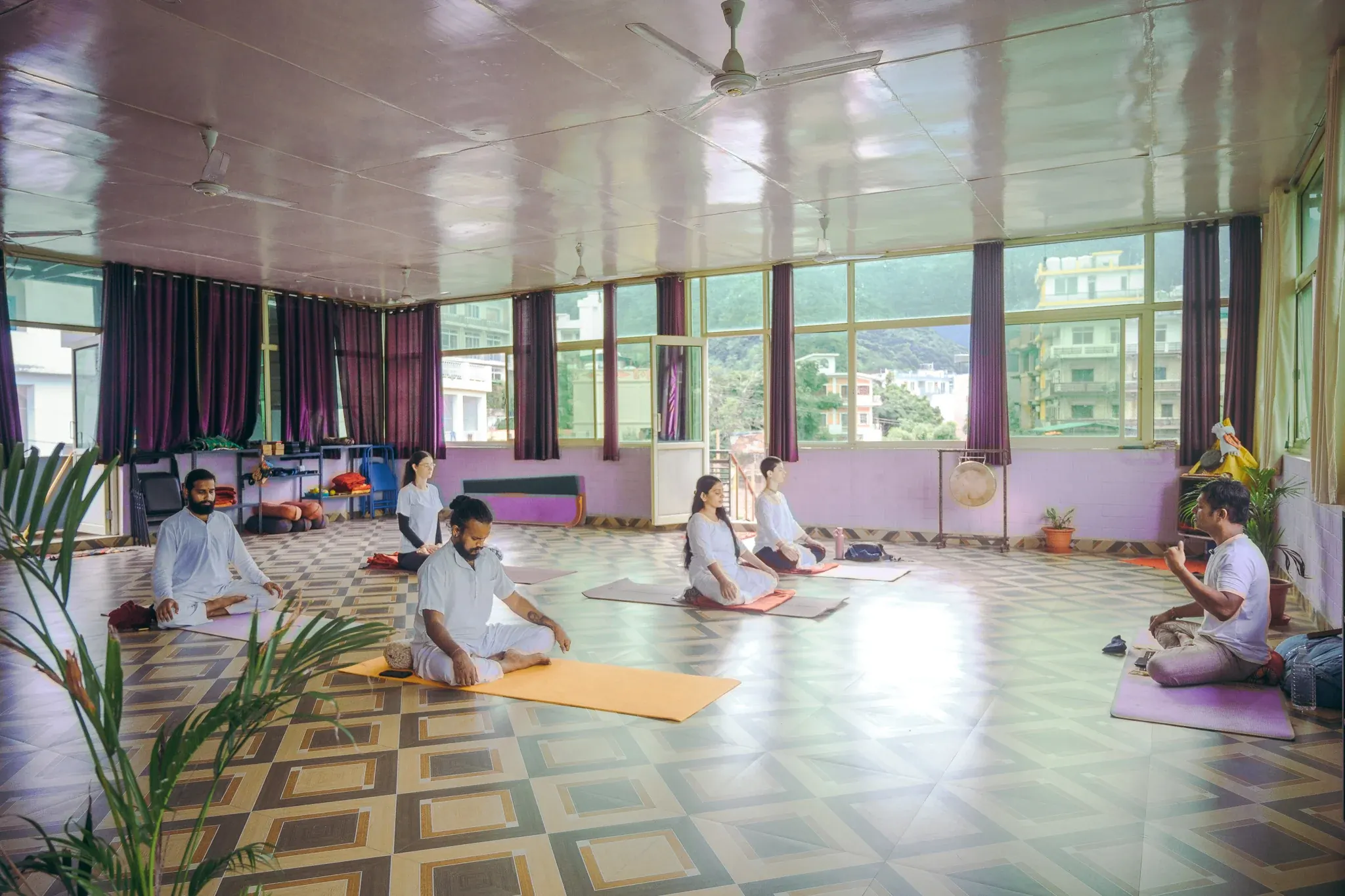
In short
The types of pranayama are the distinct yogic breathing techniques used to control and expand the life-force (prana). The Hatha Yoga Pradipika names 8 classical pranayamas: Surya Bhedana, Ujjayi, Sitkari, Sitali, Bhastrika, Bhramari, Murccha and Plavini. Other widely taught types include Anulom Vilom (Nadi Shodhana), Dirga (three-part breath), Chandra Bhedana and Sama Vritti.
Learn it in RishikeshThe classical practices, taught in sequence: our advanced pranayama course in Rishikesh
The Classical Pranayamas of Hatha Yoga
The Hatha Yoga Pradipika, written by Swatmarama in the 15th century, is the most widely referenced classical text on hatha yoga practices. Its second chapter, dedicated to pranayama, describes eight breathing practices: Surya Bhedana, Ujjayi, Sitkari, Sitali, Bhastrika, Bhramari, Moorchha and Plavini. In the tradition they are practised to purify the nadis (energy channels) and prepare the mind for meditation.
Other important texts, such as the Gheranda Samhita and the Yoga Sutras of Patanjali, describe further techniques and variations. Below are 15 pranayama techniques, from the most commonly practised to the most specialized, each with its English name, difficulty, description and a link to the full guide where there is one.
The 8 classical pranayamas (kumbhakas) of the Hatha Yoga Pradipika
- Surya Bhedana: right-nostril (solar) breathing
- Ujjayi: victorious / ocean breath
- Sitkari: hissing breath
- Sitali: cooling breath
- Bhastrika: bellows breath
- Bhramari: humming bee breath
- Murccha (Moorchha): swooning breath
- Plavini: floating breath
The 8 kumbhakas of the Gheranda Samhita
- Sahita: combined (with retention) breath
- Surya Bhedana: solar / right-nostril breathing
- Ujjayi: victorious breath
- Sitali: cooling breath
- Bhastrika: bellows breath
- Bhramari: humming bee breath
- Murccha: swooning breath
- Kevali (Kevala Kumbhaka): spontaneous retention
The Gheranda Samhita includes Sahita and Kevali in place of Sitkari and Plavini. How retention is practised, with the bandhas and safely: our kumbhaka guide.
Which is not a pranayama?
A common point of confusion: Kapalbhati is technically a shatkarma (a cleansing kriya), not a classical pranayama. In the Hatha Yoga Pradipika it is listed among the six shatkarmas, not among the 8 kumbhakas. So when a question asks which of Bhastrika, Kapalbhati, Dirga or Ujjayi is not a pranayama, the answer is Kapalbhati, although it is so often taught alongside pranayama that many schools group it with the breathing techniques.
15 pranayama techniques, one by one
Bhramari Pranayama
Humming Bee BreathBeginner
Bhramari pranayama involves producing a continuous, low-pitched humming sound during exhalation while gently closing the ears. Named after the Indian black bee (bhramara), this technique creates a soothing internal vibration that directly stimulates the vagus nerve and activates the parasympathetic nervous system. The practice is exceptionally effective for stress relief, anxiety reduction, improved sleep, and preparation for meditation. It is one of the gentlest pranayama techniques; practised without retention, it suits most people. If you are pregnant or have a medical condition, ask your doctor and tell your teacher first.
What practitioners describe: A calmer mind, easier sleep, steadier attention; a classic preparation for meditation
Read the full guide to BhramariAnulom Vilom / Nadi Shodhana
Alternate Nostril BreathingBeginner
Anulom vilom is the practice of breathing alternately through the left and right nostrils using the Vishnu Mudra hand position. The left nostril is associated with Ida nadi (lunar, cooling energy) and the right with Pingala nadi (solar, heating energy). By alternating the breath, this technique balances the two energy channels and harmonizes the hemispheres of the brain. Anulom vilom is practiced without breath retention; when retention (kumbhaka) is added, the practice is called Nadi Shodhana. This is considered the foundational nadi purification technique in the yogic tradition.
What practitioners describe: A balanced, settled state; slower, smoother breathing; preparation for meditation
Read the full guide to Anulom Vilom / Nadi ShodhanaKapalbhati Pranayama
Skull-Shining BreathBeginner to Intermediate
Kapalbhati is technically a shatkarma (cleansing technique) rather than a pranayama, but it is commonly classified among pranayama practices. The technique involves rapid, forceful exhalations through the nose driven by sharp contractions of the abdominal muscles, with passive, automatic inhalations between each expulsion. The name comes from 'kapala' (skull) and 'bhati' (shining/illuminating), referring to the mental clarity and radiance that results from regular practice. In the hatha tradition it is a cleansing practice; students usually notice warmth in the abdomen, alertness and a clear head.
What practitioners describe: Alertness and mental clarity; warmth in the abdomen; a cleansing practice (shatkarma) in the hatha texts
Read the full guide to KapalbhatiUjjayi Pranayama
Victorious Breath / Ocean BreathBeginner
Ujjayi pranayama is performed by slightly constricting the glottis (the back of the throat) during both inhalation and exhalation, producing a soft, whispering oceanic sound. The name derives from 'ud' (upward) and 'jaya' (victory/conquest), sometimes interpreted as 'the breath that leads to victory.' Ujjayi is unique among pranayama techniques in that it is commonly practiced during asana (physical postures) in Ashtanga and Vinyasa yoga styles, where it serves to build internal heat, maintain rhythm, and sharpen concentration throughout the practice.
What practitioners describe: Internal heat generation, improved focus, nervous system regulation, vocal cord strengthening, endurance
Read the full guide to UjjayiBhastrika Pranayama
Bellows BreathIntermediate
Bhastrika means 'bellows' in Sanskrit, and the technique mimics the action of a blacksmith's bellows. Both the inhalation and exhalation are forceful and rapid, driven by vigorous movements of the diaphragm and abdominal muscles. Unlike kapalbhati, where only the exhalation is active, bhastrika involves equal force on both the inhale and exhale. This creates a powerful cleansing and energizing effect on the entire respiratory system. Bhastrika generates significant internal heat (tapas), clears the nadis, and awakens dormant energy. It is one of the eight pranayamas described in the Hatha Yoga Pradipika.
What practitioners describe: A strong sense of energy and internal heat; mental alertness; a cleansing practice in the hatha texts
Read the full guide to BhastrikaSitali Pranayama
Cooling BreathBeginner
Sitali pranayama is a cooling technique in which the practitioner curls the tongue into a tube shape (or slightly protrudes it), inhales through the curled tongue, and exhales through the nose. The air passing over the moist tongue is naturally cooled before entering the body, producing a refreshing, temperature-lowering effect. Sitali is one of the few pranayama techniques where inhalation occurs through the mouth rather than the nose. It is especially beneficial in hot climates and during the summer months. Note that some people are genetically unable to curl the tongue; they can practice sitkari instead.
What practitioners describe: A cooling, soothing effect; traditionally used in hot weather and to balance pitta
Read the full guide to SitaliSitkari Pranayama
Hissing BreathBeginner
Sitkari is the companion technique to sitali and serves as an alternative for those who cannot curl their tongue. In sitkari, the teeth are gently clenched or placed together with the lips slightly open, and the practitioner inhales through the gaps between the teeth, producing a hissing 'sss' sound. The air is cooled as it passes over the moist inner surfaces of the mouth before entering the lungs. Exhalation is performed through the nose. Like sitali, sitkari has a pronounced cooling effect on the body and mind.
What practitioners describe: A cooling effect; a quieter mind; traditionally used in hot weather and to balance pitta
Read the full guide to SitkariSurya Bhedana Pranayama
Right Nostril BreathingIntermediate
Surya bhedana means 'piercing the sun.' In this technique, inhalation is always performed through the right nostril (Pingala nadi, the solar channel), and exhalation is always through the left nostril (Ida nadi, the lunar channel). This pattern activates the sympathetic nervous system and the heating, energizing solar energy in the body. Surya bhedana is one of the eight classical pranayamas mentioned in the Hatha Yoga Pradipika and is traditionally used to build warmth and to counter dullness and lethargy.
What practitioners describe: Warmth and alertness; traditionally used against dullness and lethargy
Read the full guide to Surya BhedanaChandra Bhedana Pranayama
Left Nostril BreathingIntermediate
Chandra bhedana is the lunar counterpart to surya bhedana. Inhalation is always through the left nostril (Ida nadi, the lunar channel), and exhalation is always through the right nostril (Pingala nadi, the solar channel). This pattern activates the parasympathetic nervous system and the cooling, calming lunar energy. Chandra bhedana is traditionally used to reduce a sense of excess heat, to calm an agitated mind and to prepare for rest. It is especially useful during hot weather or for practitioners with pitta constitution.
What practitioners describe: A cooling, calming effect; traditionally practised before rest
Read the full guide to Chandra BhedanaMoorchha Pranayama
Swooning BreathAdvanced
Moorchha pranayama is an advanced technique in which a long, slow inhalation is performed while tilting the head back, followed by a prolonged retention (kumbhaka) with jalandhara bandha (chin lock). The name comes from 'moorchha' meaning 'to swoon' or 'to faint,' referring to the light-headed, blissful state that arises during the retention. This technique produces a deep state of pratyahara (sense withdrawal) and is used to experience the subtle dimensions of consciousness. It should only be practiced under the direct supervision of an experienced teacher due to the risk of dizziness or loss of consciousness.
What practitioners describe: Deep pratyahara, consciousness expansion, mental stillness, blissful states, meditation preparation
Plavini Pranayama
Floating BreathAdvanced
Plavini is one of the rarest and most advanced pranayama techniques. The practitioner swallows air into the stomach (not the lungs), filling the abdominal cavity until the body becomes so buoyant that it can float in water — hence the name 'plavini' (floating). The Hatha Yoga Pradipika describes this as a technique that allows the yogi to float effortlessly on water. In modern practice, plavini is sometimes adapted as a technique of filling the entire body with prana through deep, expansive breathing. This practice is extremely specialized and should only be attempted under expert guidance.
What practitioners describe: Buoyancy, digestive stimulation, unique pranic experience, described in classical texts as a siddhis-enabling practice
Dirga Pranayama
Three-Part BreathBeginner
Dirga pranayama (also called dirga swasam) is the foundational yogic breathing technique and is often the first pranayama taught to new practitioners. The 'three parts' refer to three zones of the torso that are filled sequentially during inhalation: the lower abdomen, the ribcage/mid-chest, and the upper chest. During exhalation, the process reverses. This technique teaches diaphragmatic breathing, increases lung capacity, and provides a foundation for all other pranayama practices. Many people habitually breathe shallowly into only the upper chest; dirga pranayama corrects this pattern.
What practitioners describe: Full lung utilization, stress reduction, improved posture, foundation for all pranayama, body awareness
Sama Vritti Pranayama
Box Breathing / Equal Ratio BreathingBeginner
Sama vritti means 'equal fluctuation' or 'equal movement.' In this practice, the inhalation, retention, exhalation, and suspension are all performed for the same duration — for example, inhale for 4 counts, hold for 4, exhale for 4, hold for 4. This creates a perfectly symmetrical breathing pattern that profoundly calms and balances the nervous system. Sama vritti (commonly known as 'box breathing' in Western contexts) is used by military special forces, first responders, and high-performance athletes for stress management and focus. In the yogic tradition, it is a preparatory practice for more complex breathing ratios.
What practitioners describe: Nervous system regulation, focus enhancement, stress management, emotional stability, accessible to beginners
Vishama Vritti Pranayama
Unequal Ratio BreathingIntermediate to Advanced
Vishama vritti is the counterpart to sama vritti, using unequal ratios for the different phases of breathing. The most common pattern is extending the exhalation to be longer than the inhalation (e.g., inhale 4, exhale 8), which activates the parasympathetic nervous system and produces a deep calming effect. More advanced ratios include breath retention: inhale 4, hold 8, exhale 8, or the classical 1:4:2 ratio (inhale 4, hold 16, exhale 8). Vishama vritti is the framework within which most advanced pranayama practice occurs and forms the basis for the graduated training system described in the Hatha Yoga Pradipika.
What practitioners describe: Deep relaxation, advanced nervous system training, meditation preparation, progressive capacity building
Kevala Kumbhaka
Spontaneous RetentionAdvanced
Kevala kumbhaka is considered the highest form of pranayama and the ultimate goal of all breathing practices. Unlike sahita kumbhaka (deliberate retention), kevala kumbhaka arises spontaneously — the breath naturally suspends itself without any effort or will from the practitioner. This occurs when the mind reaches a state of perfect stillness and the prana is fully balanced. The Hatha Yoga Pradipika states: 'When kevala kumbhaka is mastered, there is nothing in the three worlds that is unattainable.' It is not a technique to be practiced but a state that emerges from years of dedicated pranayama and meditation practice.
What practitioners describe: Spontaneous meditation, complete mental stillness, described as the gateway to samadhi, mastery of prana
Read the full guide to Kevala Kumbhaka
Classifying pranayama techniques
Energizing (Brmhana)
Kapalbhati, Bhastrika, Surya Bhedana. These raise alertness and are best practised in the morning or when energy is low. Avoid them before bedtime.
Calming (Langhana)
Bhramari, Anulom Vilom, Chandra Bhedana and extended-exhalation breathing. Slow, calm practices that settle the nervous system; ideal before meditation, in the evening or in stressful periods.
Heating (Ushna)
Bhastrika, Surya Bhedana, Ujjayi, Kapalbhati. They build internal heat (tapas) and stimulate agni, the digestive fire; useful in cold weather or for a kapha constitution.
Cooling (Sheetala)
Sitali, Sitkari, Chandra Bhedana. Valued in hot weather, after vigorous exercise or for a fiery (pitta) constitution; they are used to reduce a sense of excess heat.
Purification (Shodhana)
Kapalbhati, Bhastrika, Nadi Shodhana: practices the tradition describes as cleansing the breath and the nadis, the body's energy channels.
Balancing (Samana)
Anulom Vilom, Sama Vritti, Ujjayi. They even out the breath and steady the nervous system.
Spiritual (Adhyatmika)
Kevala Kumbhaka, Moorchha, advanced Nadi Shodhana with bandhas: practised, in the tradition, as preparation for deep meditation (samadhi).
Frequently asked questions about types of pranayama
How many types of pranayama are there in yoga?
What are the 8 types of pranayama in the Hatha Yoga Pradipika?
Which is NOT a type of pranayama — Bhastrika, Kapalbhati, Dirga, or Ujjayi?
What are the types of pranayama in the Gheranda Samhita?
What is the difference between Surya Bhedana and Chandra Bhedana?
Which pranayama is best for beginners?
What is the difference between calming and energizing pranayama?
Can different types of pranayama be practiced together in one session?
How long does it take to master pranayama?
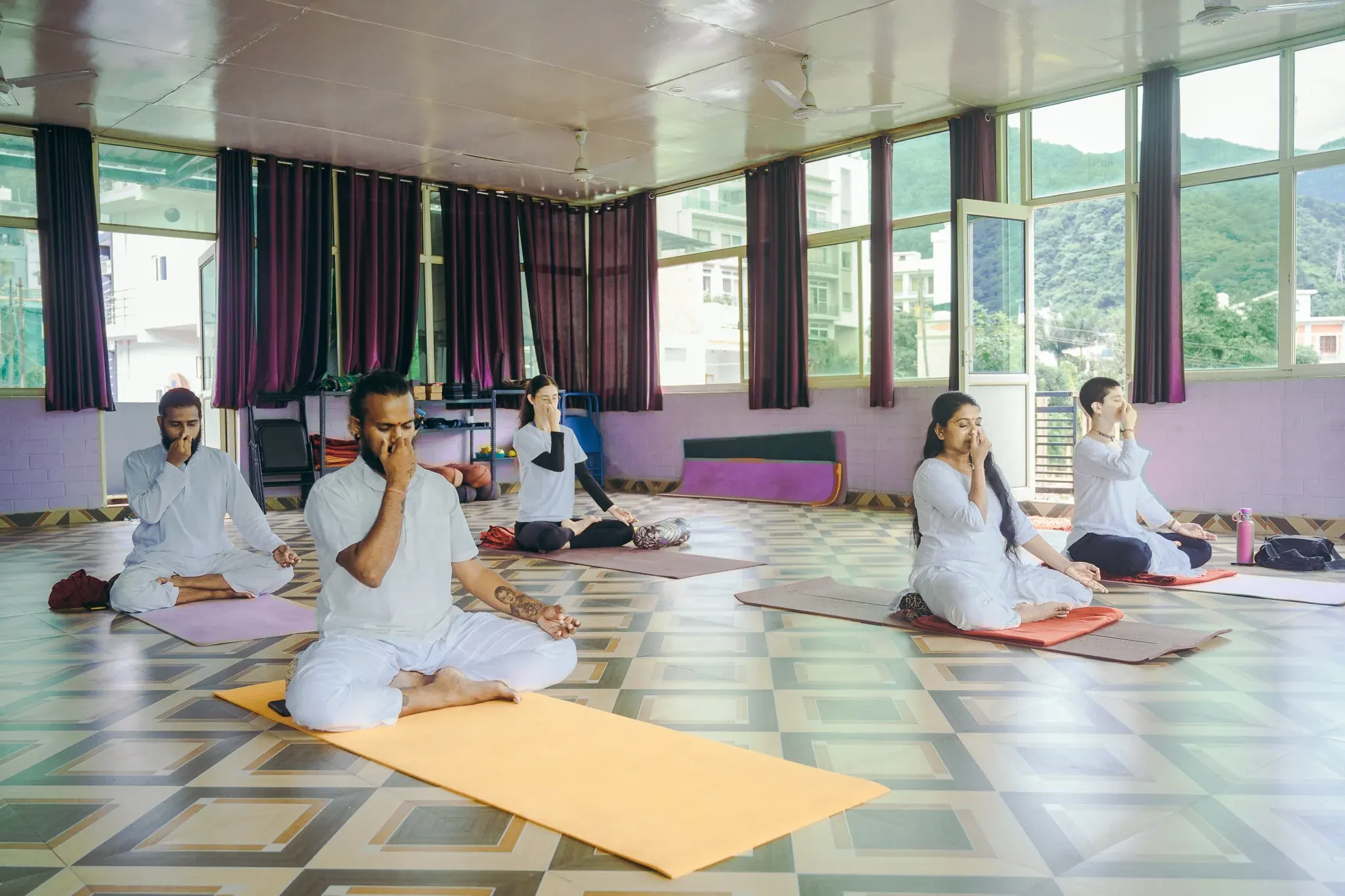
Advanced Pranayama Course
Study the classical pranayamas in Rishikesh
- 7, 15 or 30 days
- A new start every month
- Taught in English
Tuition fromUS$149₹13 000
Explore individual technique guides
- Bhramari PranayamaHumming bee breath, step by step.
- Anulom VilomAlternate nostril breathing for balance and calm.
- Kapalbhati PranayamaThe skull-shining breath, a cleansing practice.
- Ujjayi PranayamaThe victorious breath, also used in Ashtanga and Vinyasa.
- Kumbhaka: breath retentionAntar and bahya kumbhaka with the bandhas, and how to begin safely.
- The bandhasMula, Uddiyana, Jalandhara and Maha bandha: yoga's energy locks.