Pranayama guide
Bhramari Pranayama: The Complete Guide to Humming Bee Breath
A powerful yogic breathing technique that uses the resonance of sound to calm the mind, soothe the nervous system, and prepare for deep meditation.
Learn it in RishikeshGo further with a teacher: our advanced pranayama course in Rishikesh
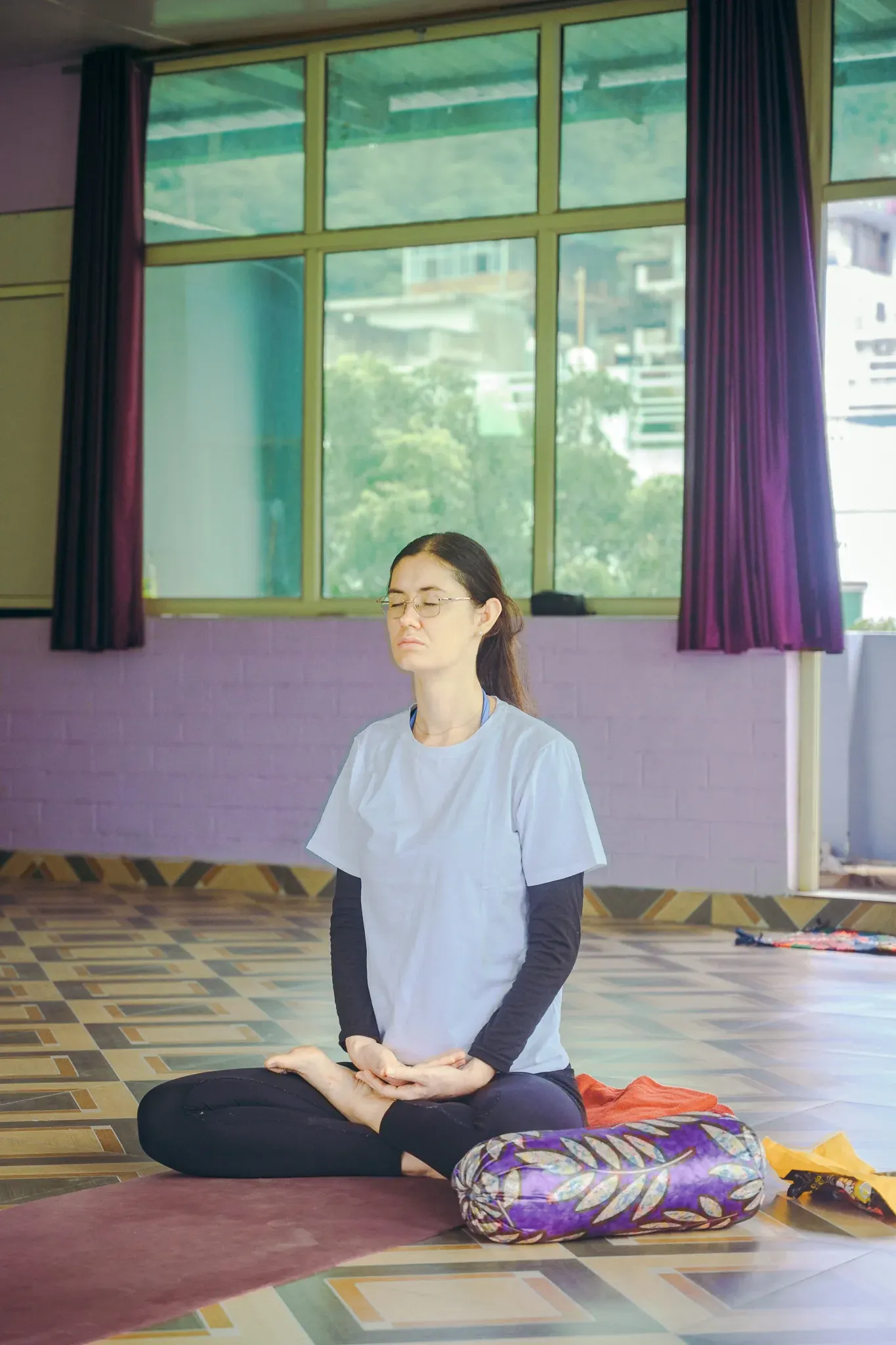
What is Bhramari Pranayama?
Bhramari pranayama is an ancient yogic breathing technique named after the Indian black bee, called "bhramara" in Sanskrit. The practice gets its name from the characteristic humming sound produced during exhalation, which resembles the gentle buzzing of a bee. This technique is described in the Hatha Yoga Pradipika (Chapter 2, Verse 68) as one of the eight classical pranayama practices and is praised for its ability to bring about a state of deep inner peace and mental stillness.
In the yogic tradition, bhramari is considered one of the most accessible and immediately effective pranayama techniques for calming the mind. Unlike more advanced practices that require breath retention or complex ratios, bhramari can be safely practiced by almost anyone from the very first session. The tradition prizes the vibration of the hum for the way it soothes and quiets the mind.
The Gheranda Samhita (5.78-82) describes bhramari as a practice that fills the practitioner with bliss. When the ear canals are closed and the humming sound reverberates through the skull, external distractions fall away and the practitioner is drawn into a state of pratyahara (sense withdrawal) — the fifth limb of yoga. This makes bhramari an excellent bridge practice between active pranayama and seated meditation.
Research on bhramari is still small but interesting. Humming has been shown to raise the level of nitric oxide in the nasal passages, and studies suggest that the long, humming exhalation may increase parasympathetic, rest-and-digest activity. Most students feel calmer after a few rounds.
How to Practice Bhramari Pranayama: Step-by-Step
Sit in a comfortable position
Find a stable seated posture such as Sukhasana (easy pose), Padmasana (lotus pose), or Vajrasana (thunderbolt pose). You may also sit on a chair with your feet flat on the floor. Keep your spine erect, shoulders relaxed, and chin slightly tucked. Close your mouth gently so the teeth are slightly apart but the lips remain sealed.
Close your eyes and relax
Gently close your eyes. Take two or three natural breaths to settle into the posture. Release any tension in the jaw, forehead, and shoulders. Bring your awareness inward and set an intention for your practice. Allow the body to become still and the mind to become quiet.
Place your fingers on the tragus of each ear
Raise your hands and place your index fingers or thumbs gently on the tragus (the small pointed flap of cartilage) of each ear. Press lightly to close the ear canal. This is the basic hand position. For the Shanmukhi Mudra variation, place thumbs on the tragus, index fingers lightly on the eyelids, middle fingers on the sides of the nose, ring fingers above the upper lip, and little fingers below the lower lip.
Inhale deeply through your nose
Take a slow, deep inhalation through both nostrils. Fill your lungs completely, expanding the abdomen first, then the ribcage, and finally the upper chest. The inhalation should be smooth, steady, and silent. Allow the breath to be full but not forced or strained. This deep inhalation provides the air supply needed for the extended humming exhalation.
Exhale while making a steady humming sound
With the ear canals gently closed, begin to exhale slowly through the nose while producing a smooth, continuous, low-pitched humming sound — like the buzzing of a bee. The sound should come from the throat, not the nose. Keep the humming steady and even throughout the entire exhalation. Feel the vibration resonating through the skull, sinuses, and the entire head. The exhalation should be longer than the inhalation. Maintain a calm, focused awareness on the sound and vibration.
Repeat for 5 to 7 rounds
At the end of each exhalation, pause briefly, then inhale deeply again and repeat the humming exhalation. Practice 5 to 7 complete rounds. After completing your rounds, lower your hands to your knees, keep your eyes closed, and sit in silence for 1-2 minutes. Observe the residual vibration, the stillness of the mind, and any sensations in the body. This period of silence after practice is considered an important part of bhramari.
Benefits of Bhramari Pranayama
Quick Calm
The humming exhalation is long and slow, and many students feel calmer after only a few rounds. Research suggests slow, humming breaths may increase parasympathetic, rest-and-digest activity.Improved Sleep Quality
Practicing bhramari before bedtime helps quiet the mental chatter that prevents restful sleep. The technique shifts the nervous system from sympathetic (fight-or-flight) to parasympathetic (rest-and-digest) dominance.Blood Pressure: What Studies Report
Some small studies report lower heart rate and blood pressure after bhramari practice. It does not replace medical care: if you have high blood pressure, keep your doctor informed and never change your medication on your own.The Inner Sound
With the ears closed, attention rests on the hum itself, which draws the senses inward. Some people who live with ringing in the ears find the sound soothing while they practise; it is not a treatment for tinnitus.Enhanced Concentration
The practice of focusing on the internal humming sound develops ekagrata (one-pointed concentration). This makes bhramari an excellent preparation for dharana (concentration) and dhyana (meditation).The Nasal Passages
Humming raises the level of nitric oxide in the nasal passages and sinuses, as studies have measured. Many practitioners say the nose feels clearer afterwards.Reduction of Anger and Irritability
Bhramari has a uniquely soothing quality that helps dissolve reactive emotional states. The combination of slow breathing, internal focus, and vibration breaks the cycle of agitation and brings the mind to a state of equanimity.Calms the Nervous System
The extended exhalation in bhramari activates the parasympathetic branch of the autonomic nervous system. This promotes rest, recovery, and a deep sense of safety in the body.Supports Meditation Practice
By withdrawing the senses (especially hearing) and focusing on internal sound, bhramari naturally induces pratyahara — the fifth limb of yoga. This creates ideal conditions for entering deeper meditative states.Releases Facial Tension
Bhramari relaxes the face, jaw and temples, where tension commonly gathers. Many students find it soothing when they feel tense; it is not a treatment for headaches or migraine.Strengthens the Voice
Regular practice of the humming exhalation strengthens the vocal cords and improves resonance. Singers, teachers, and public speakers often find that bhramari enhances vocal clarity and endurance.
Variations of Bhramari Pranayama
Shanmukhi Mudra Variant
Shanmukhi Mudra (also called Yoni Mudra) is a more advanced hand position used with bhramari pranayama. In this variation, both hands are raised to the face and the six openings of the head are gently sealed: thumbs close the ears, index fingers rest lightly on the closed eyelids, middle fingers rest on the sides of the nostrils (without pressing), ring fingers rest above the upper lip, and little fingers rest below the lower lip.
This mudra amplifies the inward-drawing quality of bhramari by creating a more complete sense withdrawal (pratyahara). When all the sensory gateways are gently closed, the humming vibration becomes the only focus of awareness, and the practitioner is drawn into a profoundly deep meditative state. This is the variation described in most classical texts.
Bhramari with Kumbhaka (Breath Retention)
In this intermediate-to-advanced variation, the practitioner adds antara kumbhaka (internal breath retention) between the inhalation and the humming exhalation. After inhaling fully, the breath is held for a comfortable duration (beginning with 4 to 8 seconds and gradually increasing) before the humming exhalation begins.
The addition of kumbhaka intensifies the energetic effects of the practice and further calms the mind. However, this variation should only be practiced under the guidance of an experienced teacher, as incorrect breath retention can create strain. Never force or extend the retention beyond your comfortable capacity. Beginners should master the basic bhramari technique for several weeks before attempting this variation.
Contraindications and Precautions
Bhramari pranayama is one of the safest pranayama techniques and is suitable for most people. However, there are certain conditions where caution is advised or the practice should be avoided:
- Active ear infection: Do not press on or close the ears if you have an active ear infection, ear pain, or any ear surgery recovery. The pressure can aggravate the condition. You may practice the humming without closing the ears.
- Severe ear pain or injury: Any acute pain in the ear canal or damage to the eardrum is a contraindication for the ear-closing aspect of the practice. Consult your physician before practicing.
- Epilepsy: Some traditions caution against bhramari for those with epilepsy, as the intense internal vibration and sensory withdrawal may potentially trigger episodes in susceptible individuals. Consult your neurologist.
- During menstruation (traditional view): Some traditional yoga lineages advise women to avoid vigorous pranayama, including the kumbhaka variation of bhramari, during menstruation. The basic bhramari without retention is generally considered gentle enough to practice during this time. Listen to your body and follow the guidance of your teacher.
- Chest pain or heart conditions: While gentle bhramari is generally safe, those with serious cardiac conditions should practice under supervision and avoid forceful humming or extended breath retention.
As with all pranayama practices, bhramari should be practiced on an empty stomach (wait at least 2 to 3 hours after a full meal). Never practice lying down unless specifically instructed by a teacher. If you feel dizzy, nauseous, or uncomfortable at any point, stop immediately and return to natural breathing.
Frequently Asked Questions About Bhramari Pranayama
How long should a bhramari pranayama session last?
What is the best time to practice bhramari pranayama?
Can bhramari pranayama be practiced during pregnancy?
How many rounds of bhramari should I practice daily?
What is the difference between bhramari and other pranayama techniques?
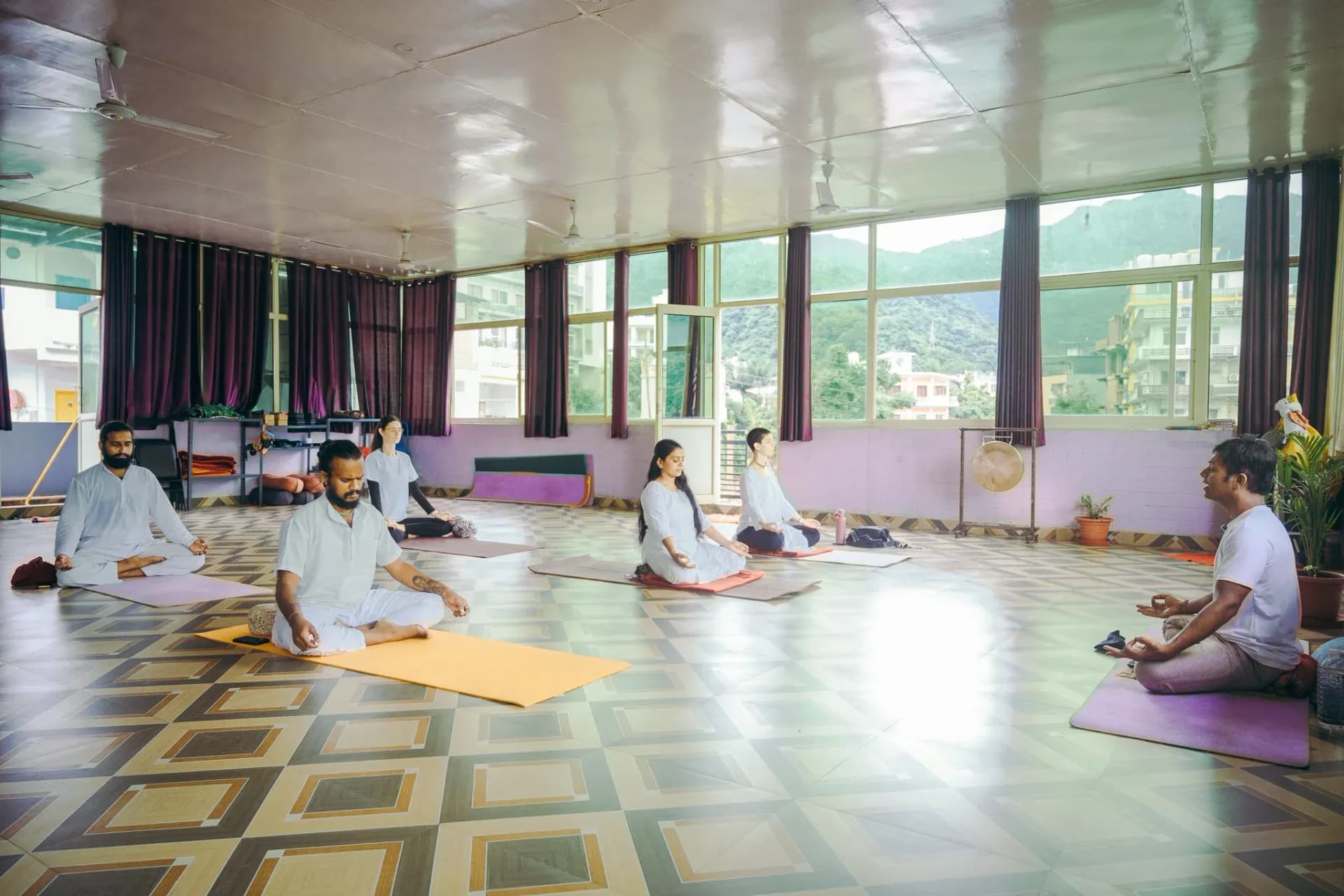
Advanced Pranayama Course
Go deeper: a structured pranayama course in Rishikesh
- 7, 15 or 30 days
- A new start every month
- Taught in English
Tuition fromUS$149₹13 000
Continue Your Pranayama Journey
- Pranayama: Complete GuideOverview of yogic breathing science, the five pranas, and all our pranayama programs.
- Anulom Vilom PranayamaMaster alternate nostril breathing for balance, calm, and improved respiratory function.
- Types of PranayamaDiscover all 15+ classical and modern pranayama techniques with difficulty levels and benefits.
- Ujjayi PranayamaThe victorious breath: a gentle throat constriction and an ocean-like sound that steadies attention.
From the breathwork library