Mental Health
Breathwork for Anxiety: 5 Techniques to Try
The breathing techniques most often used for anxiety, with step-by-step instructions and an honest note on what the research suggests.
SomeshApril 1, 20267 min read
If you've experienced anxiety, you know the breath is often the first thing to change: it becomes shallow, rapid and chest-centered. The relationship can also work the other way. Slowing the breath on purpose is one of the simplest ways to help the body settle, and many people find it takes the edge off an anxious moment within minutes.
Why Breathwork Can Help with Anxiety
Anxiety often comes with a body leaning toward sympathetic, fight-or-flight activity, even when there's no actual threat. Breathing techniques with a long, slow exhale are thought to favour the parasympathetic ("rest-and-digest") nervous system, partly through the vagus nerve. Reviews of the research suggest slow breathing may reduce feelings of anxiety for some people. Breathwork complements care from a doctor or therapist; it does not replace it.
Technique 1: Extended Exhale Breathing (4-7-8)
Inhale for 4 counts. Hold for 7 counts. Exhale for 8 counts. The long exhale is the key: it slows the whole breath and is thought to favour the calming branch of the nervous system. Do 4 rounds, and shorten the hold if it feels uncomfortable.
Technique 2: Bhramari (Humming Bee Breath)
Close your ears with your thumbs and rest your fingers lightly over your eyes. Inhale through the nose, then exhale slowly while making a steady, low hum like a bee. Do 5–7 rounds.
The humming exhale of Bhramari lengthens the breath, and its vibration is thought to stimulate the vagus nerve. Research on Bhramari is still limited, mostly small studies of short-term effects such as a slower heart rate. The sound also gives the mind a sensory anchor that draws attention away from anxious thoughts.
Technique 3: Nadi Shodhana (Alternate Nostril Breathing)
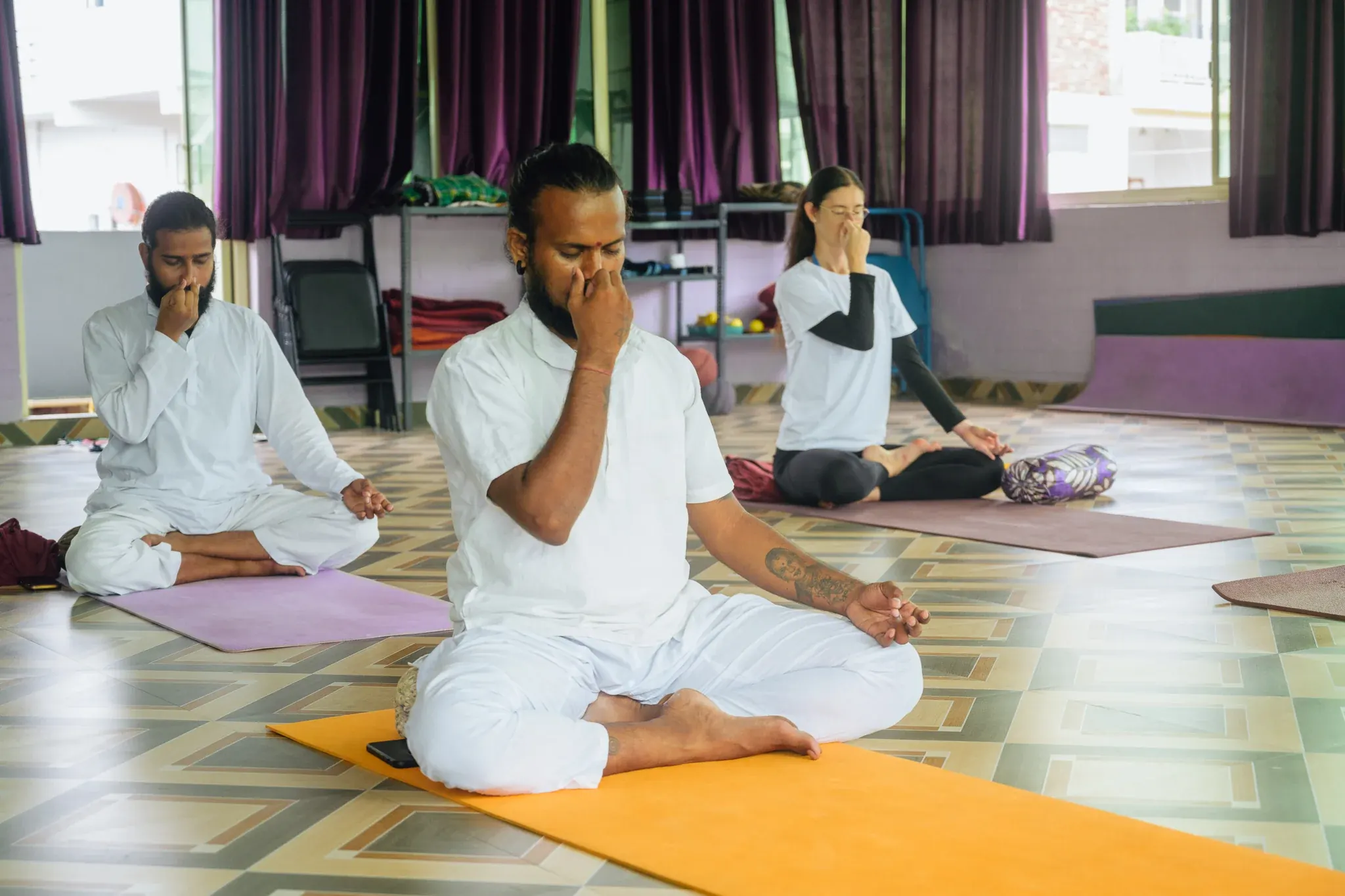
Close the right nostril with your thumb and inhale through the left. Close the left with your ring finger and exhale through the right. Inhale through the right, switch, and exhale through the left. That is one round.
In the yogic tradition, Nadi Shodhana is said to balance the two sides of the body and mind. Its slow, even rhythm makes it a gentle way to settle, and 5 minutes is enough for a short calming routine.
Technique 4: Box Breathing (4-4-4-4)
Inhale 4 counts, hold 4, exhale 4, hold 4. Many people find that the equal, predictable count gives a sense of control when anxiety feels chaotic.
Technique 5: Physiological Sigh
Two quick inhales through the nose followed by a long exhale through the mouth. In a 2023 Stanford study in Cell Reports Medicine, from researchers including Dr. Andrew Huberman, five minutes a day of this "cyclic sighing" improved daily mood more than the same time spent in mindfulness meditation. It is a single study, so treat the result as promising rather than proven.
Building a Daily Practice
For anxiety management, consistency matters more than intensity:
- Morning: 5 minutes of Nadi Shodhana to start the day calmly
- Midday: 2 minutes of extended exhale breathing if stress builds
- Evening: 5–10 minutes of Bhramari before bed
If anxiety is severe, persistent or getting in the way of daily life, talk to a doctor or a mental-health professional.
Related: 12 Benefits of Breathwork | Meditation for Beginners | Pranayama Benefits
CategoryMental Health
Advanced Pranayama Course
Go deeper: a breathwork course rooted in classical pranayama
- 7, 15 or 30 days
- A new start every month
- Taught in English
Tuition from149美元₹13,000