Philosophy
Yoga Philosophy Course in Rishikesh (2026): Short, In-Person Options
Looking for a short, in-person yoga philosophy course in Rishikesh? What is actually on offer in 2026, how philosophy is taught alongside pranayama, and how to choose between one week, two weeks or a month.
Somashekar
Written by Somashekar, founder and head teacher of Anantadrishti Yoga. Disclosure: the course described here is our own, and we've tried to be honest about what it does and doesn't offer.
Many people come to Rishikesh wanting to understand yoga, not only to practise it. They search for "a yoga philosophy course" and find mostly teacher trainings, where philosophy is one subject among many, or online courses. If you want something short and in person, with a teacher in the room, it helps to know how philosophy is actually taught here, and what to ask before you book.
At a glance
| Detail | Advanced Pranayama & Yoga Philosophy Course |
|---|---|
| Where | Anantadrishti Yoga, Lower Tapovan, Rishikesh |
| Lengths | 7, 15 or 30 days |
| Tuition | US$149 (₹13,000) / US$229 (₹20,000) / US$349 (₹30,000), tuition only |
| Philosophy session | 11:30–13:00, Monday to Saturday: corrections plus the science and philosophy of pranayama |
| Practice session | 07:30–09:00, Monday to Saturday |
| Texts drawn on | Patanjali's Yoga Sutras, the Hatha Yoga Pradipika and other classical texts |
| Format | In person, in English, small groups |
| Separate philosophy course? | No: philosophy is woven into the pranayama course |
Is there a short yoga philosophy course in Rishikesh?
Short philosophy-only courses taught in person are uncommon in Rishikesh, so most students study philosophy as part of a practice course. That isn't a bad thing. In the yoga tradition, philosophy was never meant to be separate from practice. The texts describe what happens when you practise; practice lets you test what the texts say.
So the useful question is not only "where is a philosophy course?" but "where will I study philosophy seriously, every day, connected to what I'm practising?"
How is philosophy taught in the Advanced Pranayama & Yoga Philosophy Course?
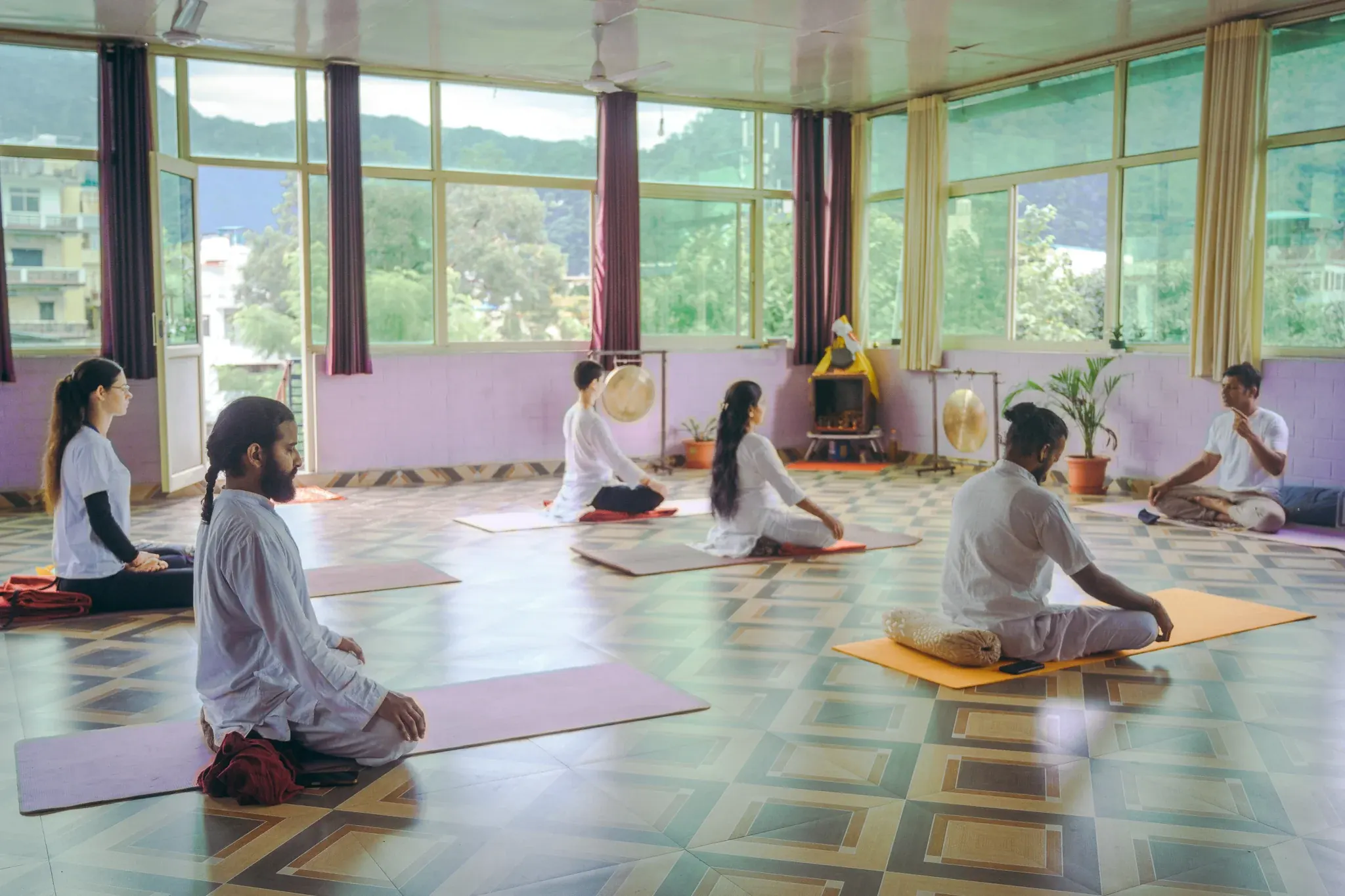
Philosophy is taught as the philosophy of pranayama, in a session of its own on every teaching day. The morning session, 07:30 to 09:00, is pranayama practice. The late-morning session, 11:30 to 13:00, is for corrections and for the science and philosophy of pranayama. In it, we look at how classical yoga texts, such as Patanjali's Yoga Sutras and the Hatha Yoga Pradipika, describe prana, the breath and the mind, and we set those ideas beside what you have just observed in your own practice.
We should be clear about what it isn't. It isn't a chapter-by-chapter study of one text, and it isn't a separate philosophy course. If you want to read the Yoga Sutras line by line for two weeks, this is not that. If you want to understand why the practices are done, and what the tradition says they do, it is.
What does a teaching day look like?
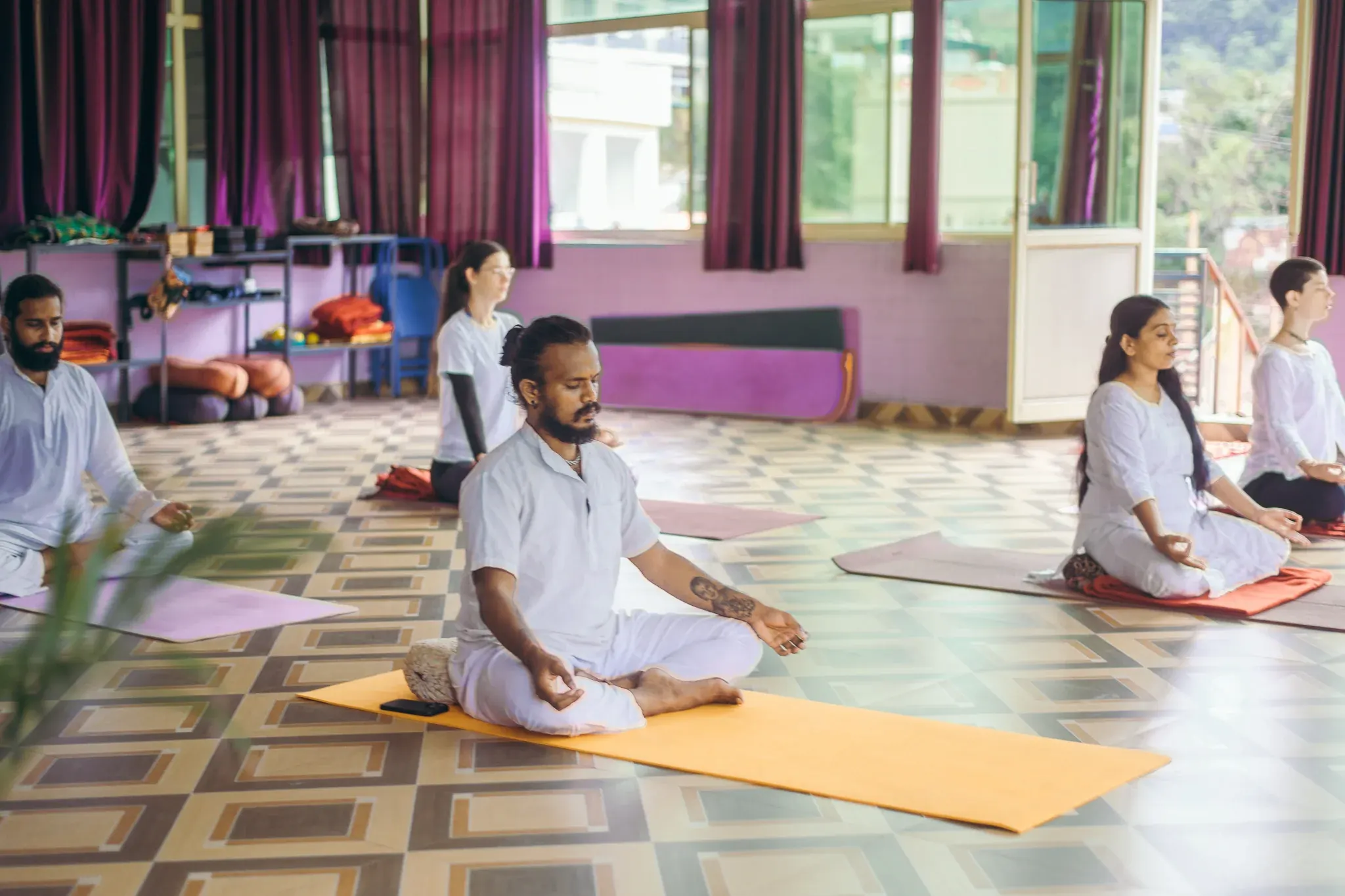
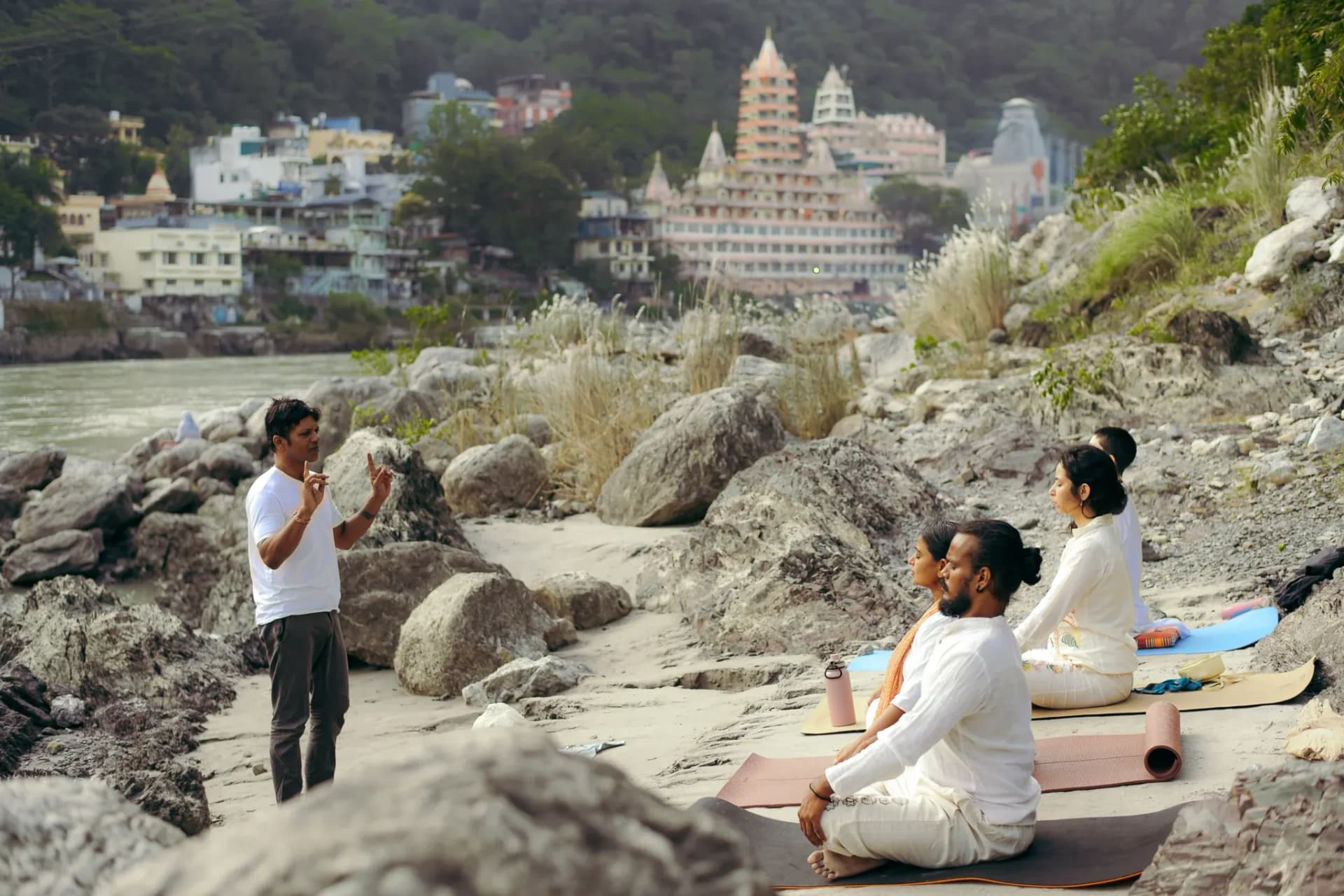
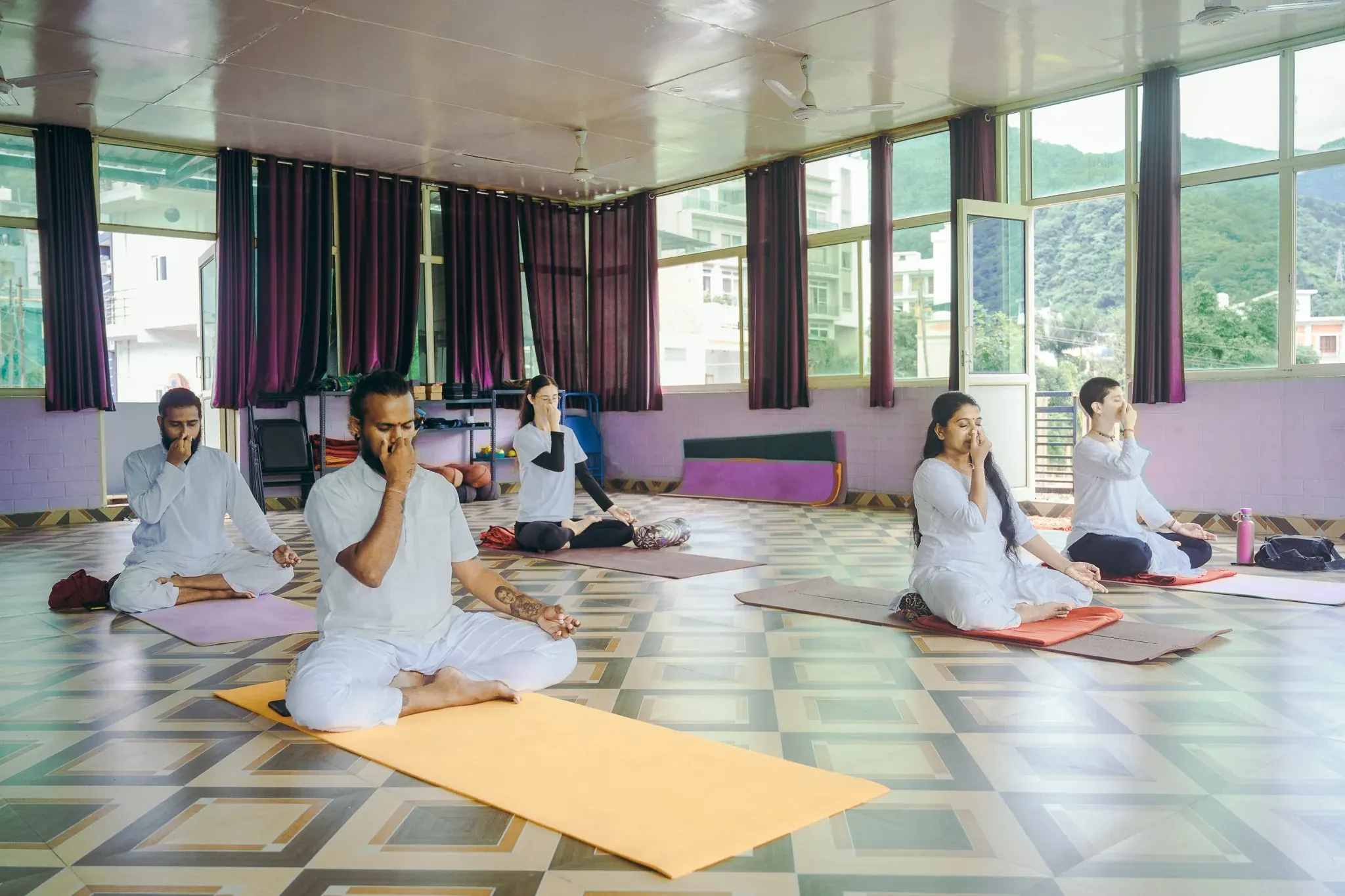
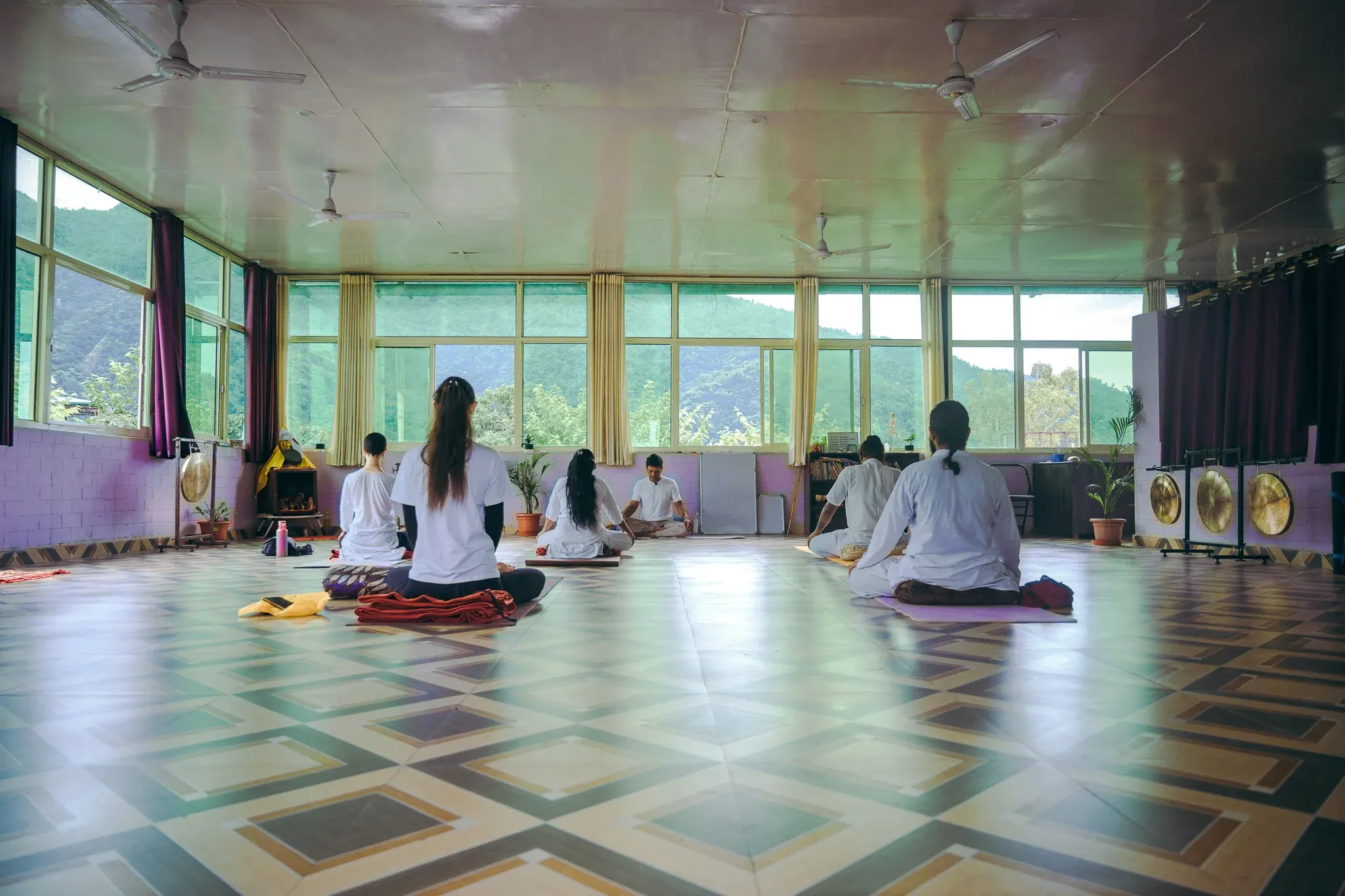
A teaching day has two sessions of about ninety minutes each, with a long break between them. At 07:30 the group practises the day's techniques in sequence, with the bandhas, mudras and bija mantras. The break that follows gives you time to eat and let the practice settle. At 11:30 you come back for corrections and more practice, then the science and philosophy of pranayama, until 13:00. The afternoon is free for rest, reading or a walk by the Ganga.
This rhythm runs Monday to Saturday, and Sunday is a rest day. It means the philosophy always arrives a few hours after the practice it explains, while your own experience of it is still fresh. That is the point: you are not only told what the texts say about the breath and the mind, you are asked to notice it for yourself, in the mind, the nervous system, the body and the energies.
Why do the Yoga Sutras and the Hatha Yoga Pradipika matter for pranayama?
These two texts are where much of the classical thinking about breath is set down. In the Yoga Sutras, pranayama is the fourth of the eight limbs, the step between posture and the turning inward of the senses; our article on the 8 limbs of yoga explains the sequence. The Hatha Yoga Pradipika gives a whole chapter to pranayama, including its eight classical kumbhakas.
Reading them alongside practice changes how you hear them. A line about steadiness of breath means more when you have just spent ninety minutes working on it, and a description of the bandhas is clearer once you've felt them.
Should you choose 7, 15 or 30 days for philosophy?
Choose by how much time you have, knowing that the philosophy deepens as the practice does. All three lengths start together on the 1st of the month (Monday the 2nd when the 1st is a Sunday) and share the same first week.
- 7 days (US$149): six teaching days, about 18 guided hours. A real introduction to the ideas behind the foundation practices.
- 15 days (US$229): thirteen teaching days, about 39 guided hours. Time for the discussion to go beyond first principles as the practices join the bandhas.
- 30 days (US$349): 25 or 26 teaching days, about 75–78 guided hours, with daily study of the science and philosophy of pranayama alongside the chakra pranayamas.
Fees are tuition only. Accommodation isn't included, but we help you find a room nearby in Tapovan.
What if you want philosophy inside a teacher training?
Choose a teacher training only if you also want to teach. Our 50-Hour Advanced Pranayama & Bhakti Yoga Meditation Teacher Training runs once, on 2–8 November 2026, at US$600 all-inclusive (tuition, accommodation and meals). It is guided by Patanjali's Yoga Sutra II.1, which names tapas (disciplined effort), svadhyaya (self-study) and Ishvara pranidhana (devotion and surrender), and it combines advanced pranayama, meditation, scientific understanding, teaching methodology and Bhakti Yoga, including Vedic mantra chanting and kirtan. Places are by enquiry.
How do you judge any yoga philosophy course?
Ask each school the same few questions, and compare the answers:
- Which texts are taught, and how? Line by line, by theme, or as background to practice?
- How many hours a day go to philosophy? Ask for the timetable.
- Who teaches it? Ask about the teacher's own study and years of teaching.
- Is it connected to practice? Philosophy without practice can stay abstract.
- What language is it in? Ours is taught in English, with Sanskrit terms explained.
- Is it in person? Discussion in a small group is different from watching a recording.
Can you start studying yoga philosophy before you come?
Yes, and it helps. Read a little about the eight limbs, and think about how the ideas apply to an ordinary day; our article on yoga philosophy in daily life is a gentle place to start. Our yoga philosophy page explains how philosophy sits within the course, and you can read about Somashekar, who teaches it, before you enquire.
When you're ready, the Advanced Pranayama & Yoga Philosophy Course page has the full curriculum, dates and an enquiry form.
Frequently asked questions
Is there a short yoga philosophy course in Rishikesh?
Stand-alone philosophy courses of one or two weeks are hard to find; most Rishikesh schools teach philosophy inside a practice course or a teacher training. At Anantadrishti Yoga, the Advanced Pranayama & Yoga Philosophy Course (7, 15 or 30 days, from US$149) gives a daily late-morning session to the science and philosophy of pranayama.
Does Anantadrishti Yoga run a separate yoga philosophy course?
No. Philosophy is woven into the Advanced Pranayama & Yoga Philosophy Course rather than taught as a separate course. The 11:30–13:00 session on each teaching day covers corrections and the science and philosophy of pranayama.
Which texts are studied?
The philosophy sessions draw on how classical yoga texts, such as Patanjali's Yoga Sutras and the Hatha Yoga Pradipika, describe prana, the breath and the mind, and set those ideas beside what you observe in practice. It is not a chapter-by-chapter study of one text.
Is the philosophy course taught in English, and do I need Sanskrit?
It is taught in English. You don't need to know Sanskrit: the practices keep their Sanskrit names, and each one is explained.
Is the course in person or online?
In person, at the school's shala in Lower Tapovan, Rishikesh, a short walk from Laxman Jhula and the Ganga. Classes run Monday to Saturday, with Sunday as a rest day.
CategoryPhilosophy