Bhakti · the path of devotion
Bhakti Yoga in Rishikesh
The yoga of the heart: kirtan, mantra, puja and service. In Rishikesh, by the Ganga, devotion is part of daily life.
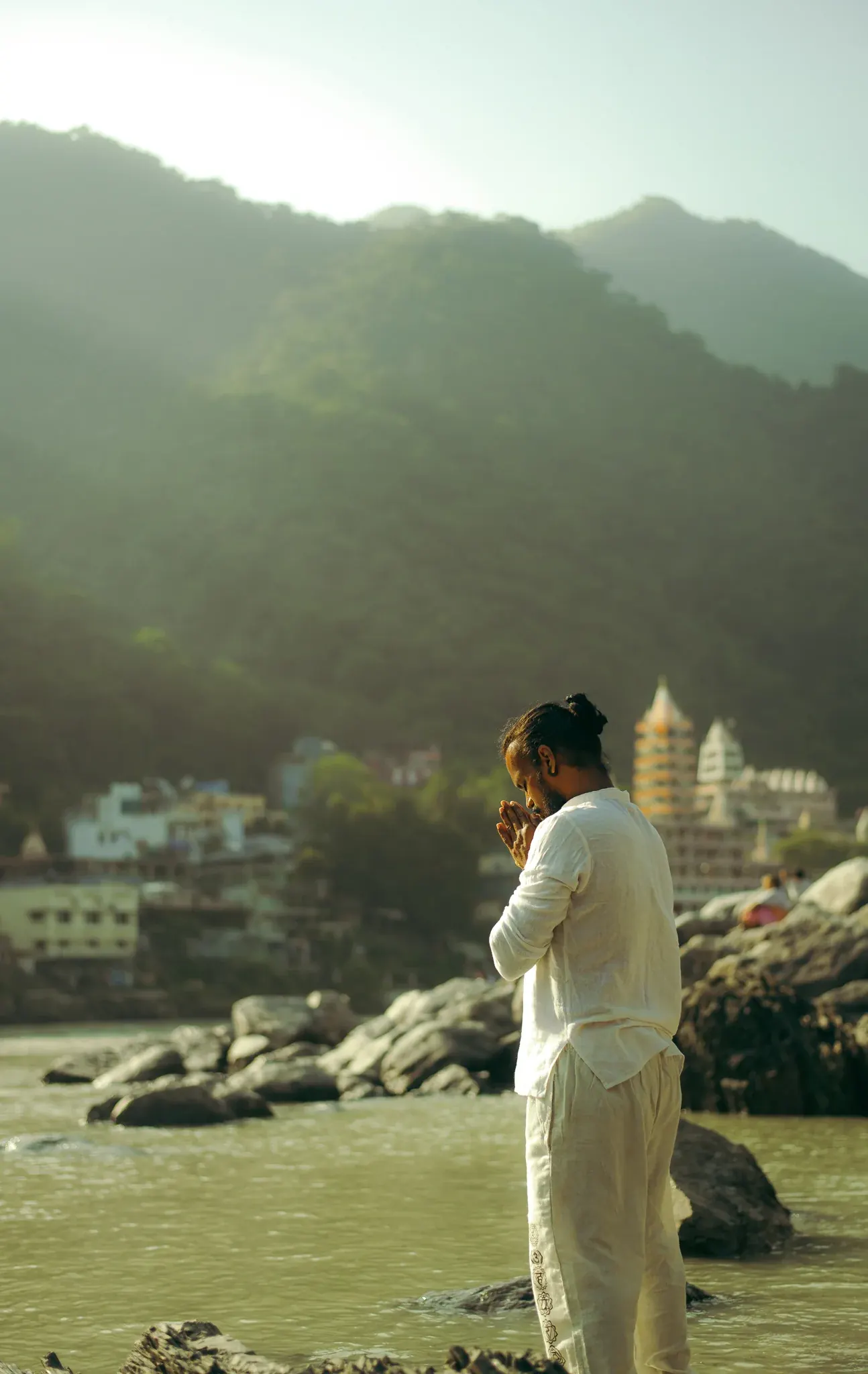
The heart of yoga
Bhakti Yoga is the path of devotion, one of the four classical paths of yoga beside Jnana (knowledge), Karma (action) and Raja (meditation). It is the yoga of the heart, in which love and devotion become the means of liberation.
Its practices are simple and old: singing, repeating a name, offering a flower or a light, serving others. What they share is attention turned toward the sacred.
भक्त्या मामभिजानाति यावान्यश्चास्मि तत्त्वतः
bhaktyā mām abhijānāti yāvān yaś cāsmi tattvataḥ
Through devotion one comes to know Me as I truly am.
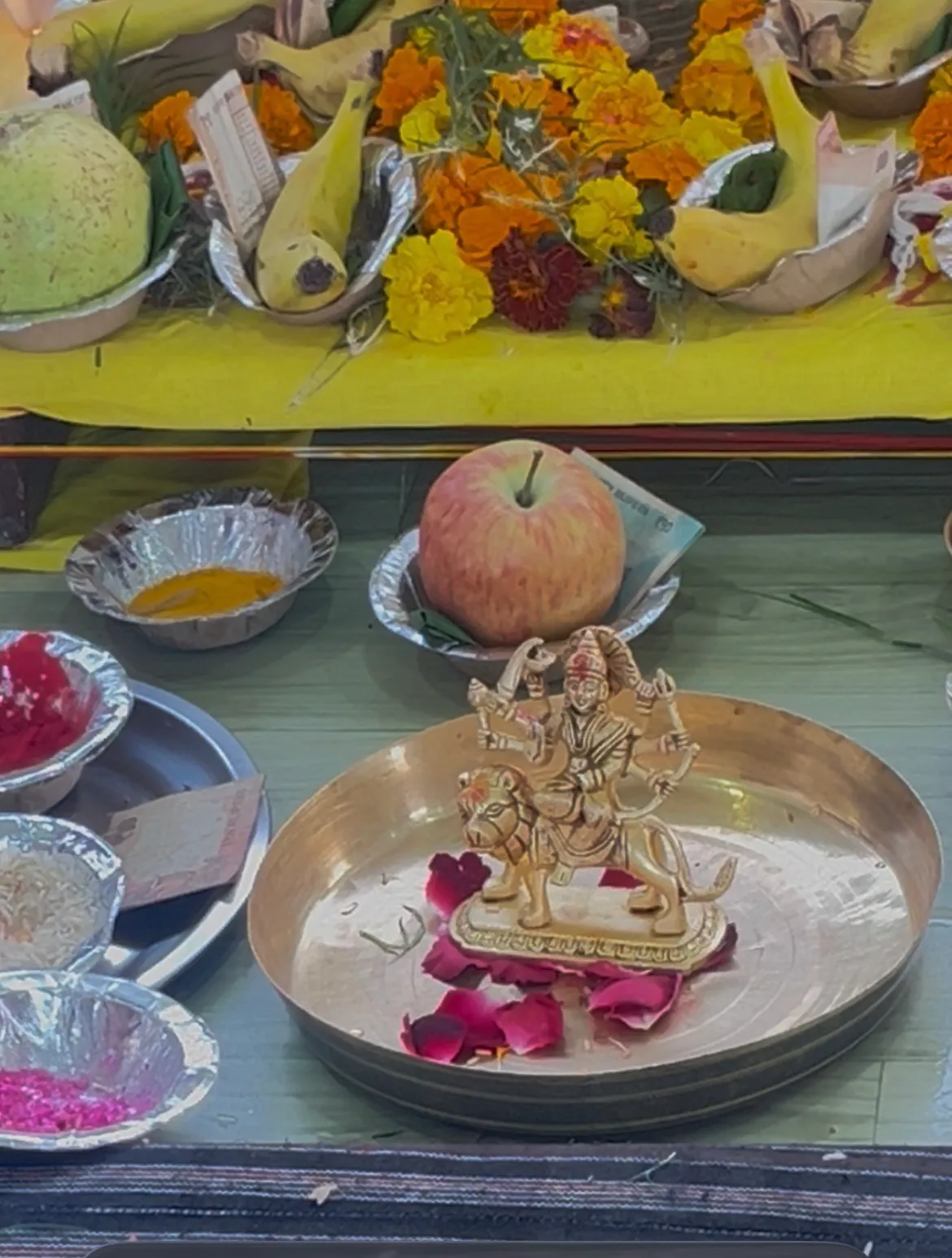
Bhakti practices
Six ways to cultivate devotion
Kirtan
Call-and-response singing of divine names, sung together.
Japa
Repetition of a mantra, often counted on a mala of beads.
Puja
Worship with flowers, incense, light and food.
Svadhyaya
Study of sacred texts such as the Bhagavad Gita, the Ramayana and the poetry of the saints.
Seva
Selfless service, offered as worship.
Satsang
Gathering in the company of seekers for reading, discourse and song.
Sacred teachings
The essence of bhakti
सर्वधर्मान्परित्यज्य मामेकं शरणं व्रज
sarva-dharmān parityajya mām ekaṃ śaraṇaṃ vraja
Abandon all varieties of dharma and take refuge in Me alone.
मन्मना भव मद्भक्तो मद्याजी मां नमस्कुरु
man-manā bhava mad-bhakto mad-yājī māṃ namaskuru
Fix your mind on Me, be devoted to Me, worship Me and bow down to Me.
Nāda yoga
Kīrtana: the yoga of sound
Kirtan is not a performance. When people chant together, attention gathers on one sound, and many find that the busy, self-concerned voice in the head grows quieter.
Sound and breath are closely joined. In the Advanced Pranayama & Yoga Philosophy Course, bija mantras (seed syllables) and mudras are coordinated with the pranayama practices, and students observe their influence on the mind, the nervous system, the body and energy.
What chanting asks of you
- Attention: the mind is given one sound to rest on.
- Feeling: emotion is turned toward devotion, bhāva.
- Company: many voices become one.
Advanced Pranayama & Yoga Philosophy Course
Breath, mantra and mudra, taught together in Rishikesh
- 7, 15 or 30 days
- A new start every month
- Tuition only; we help you find a room nearby
Tuition from149 USD13.000 ₹
Read about Vedic rituals and satsang, or contact us with a question.